Summarize this article with
When should the grapes be picked? Should they be destemmed? Which yeast should be used, and how many months of ageing are needed? A winemaker faces these questions every year, often alone with their vines. On a small estate in the Rhône Valley, an entire community now answers them. With Vinae, wine lovers shape the wine, decision after decision, until the bottles born of their choices arrive at their door. Here is how this participatory wine works, what you get to decide, and why this new way of running a vineyard changes the way you look at a bottle.
Vinae, the wine app that bottles your winemaking decisions
Vinae grew out of a simple idea from its founder, Jean-Christophe, a winemaker in the Rhône Valley and author of the La Petite Cave newsletter: to make a wine estate truly interactive. The concept works in three stages.
At each key stage of the year, a decision is put to a vote among the app’s users.
Every option is explained, with its advantages, its risks and technical insights from the winemaker, so that everyone can vote with full knowledge of the facts.
Once the vote closes, the decision is carried out for real. No simulation: Jean-Christophe puts the majority’s choice into practice on the ground and shares a report in the app.
The cycle continues all year round, from vineyard to cellar. In the end, the community gets a unique wine whose style it has chosen, and each member can take home their own bottles.
A real vineyard: a micro-plot of Grenache noir in the Rhône Valley

There is nothing virtual about this project. Domaine Vinae is a 0.1-hectare (1,000 m²) plot in the Laudun cru, in the Rhône Valley, not far from Châteauneuf-du-Pape. Only one grape variety is grown there: Grenache noir.
What stands out is the level of rigour chosen for a plot of this size.
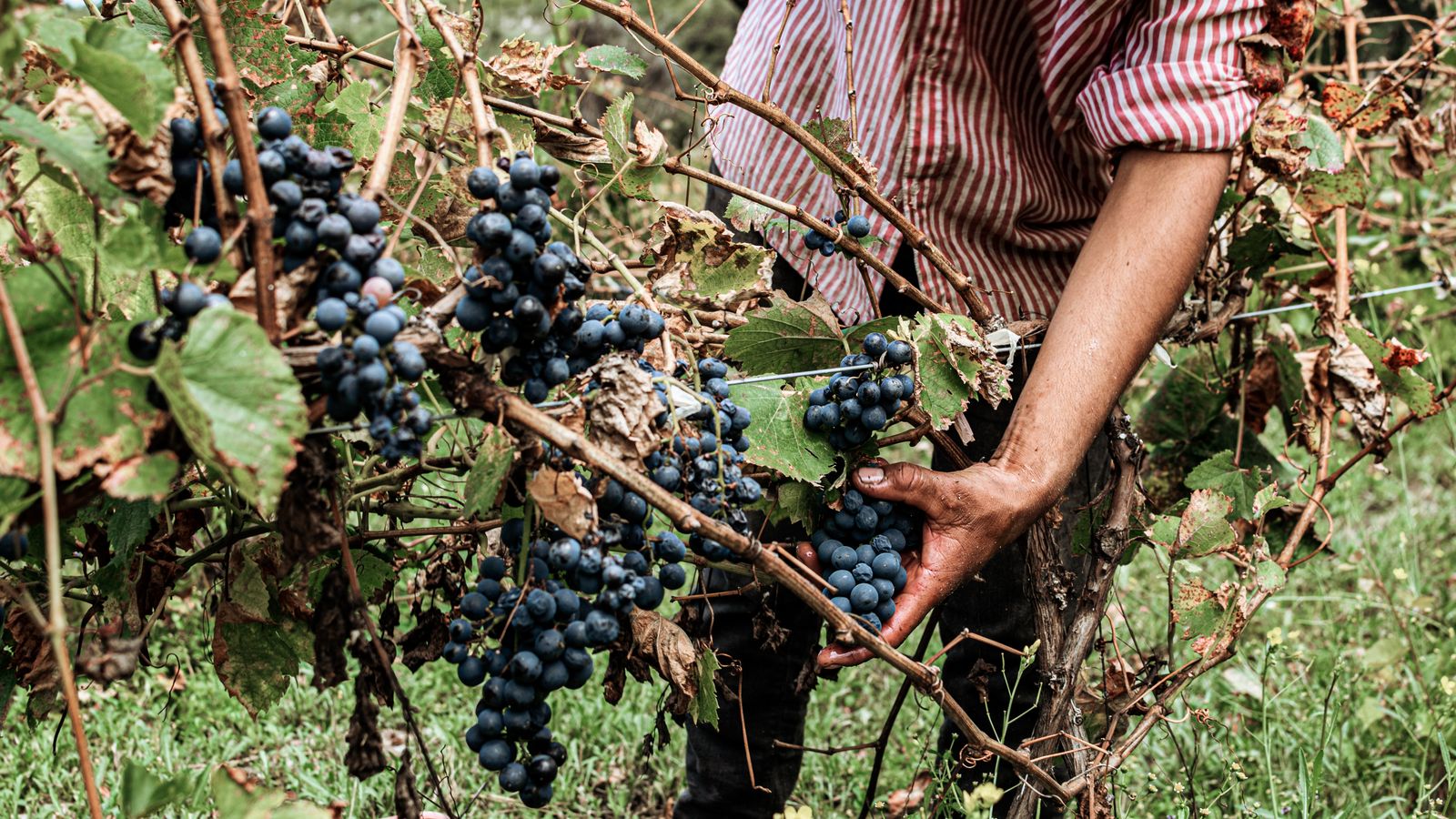
100% manual cultivation. No tractor ever enters the vines; everything is done by hand with secateurs.
No chemical inputs, with an approach inspired by biodynamics and permaculture. The plot was registered as organic from the moment it was planted.
Deliberately low yields, below 30 hl/ha, to concentrate the fruit.
Fewer than 400 numbered bottles a year.
A constraint of scale that becomes a strength: at this size, every bunch can be seen, touched and sorted by hand before it even reaches the cellar.
How does this participatory vineyard work?
In the app, the experience is built on two complementary features: Decisions and Activities.
Decisions: you vote, the winemaker acts
A Decision is a vote open to the community, with several possible options. Each one is presented with its pros and cons, written by the winemaker. The aim is not to guess the right answer (there often isn’t one) but to understand what each option changes in the glass.
Each vote stays open for a few days, with a countdown shown in the app. The winemaker can flag the recommended option, or rule out a choice that has become impossible in practice, such as machine harvesting on a plot worked by hand. Whether you follow that advice is up to you: the majority decides.
Decisions are sorted by vintage and by theme, vineyard or cellar. They range from major style choices to very practical growing questions: should a cover crop be sown after the harvest, should a biodynamic preparation be applied in summer, should downy mildew be treated with Bordeaux mixture or with a reduced dose of copper?
Activities: a real report on your choices
Every closed decision leads to an Activity: a post published in the app’s feed describing what the winemaker actually did in the vineyard or the cellar. Photos, explanations, hands-on work: you see exactly what your vote led to.
Activities are not limited to votes. The winemaker also uses them to describe the work in the vineyard through the seasons, such as mulching, suckering and disbudding in the plot’s first year, each time explaining why the task matters.
When an Activity follows a vote, it links back to the corresponding Decision. This lets you connect a choice, such as the intensity of sorting, to what actually happened in the rows on harvest day.
The estate in real time
Between votes, the app lets you follow life on the plot: temperature, weather, moon phases, and past, current and upcoming stages. Enough to understand why no season is ever like the last, and why every vintage is unique.
On the cellar side, a timeline shows the wine’s stages, from ageing to bottling and labelling, with the current stage and the planned period for each one. You always know where the cuvée you helped shape stands.
From vine to cellar: every winemaking decision the community makes
What sets Vinae apart from a simple estate Instagram account is the range of decisions entrusted to its users. They cover the entire production cycle.
In the vineyard and at harvest
The harvest date. Pick early to preserve freshness and acidity, or wait another fortnight or so for full phenolic ripeness, at the risk of unpredictable weather. At Domaine Vinae, the proposed date also takes the lunar calendar into account, favouring a “fruit day”.
The level of sorting. Strict berry-by-berry sorting on a sorting table, sorting by eye in the vineyard, or no sorting at all. It is a trade-off between quality and volume, and a very sensitive one on an estate producing fewer than 400 bottles.
Destemming. None, partial or full. This choice has a direct influence on the tannic structure and aromas of the future wine.
To understand what is at stake in this first choice, read our article Harvest 2026: why five days can change an entire wine.

During winemaking and ageing
Once the grapes are in, the decisions continue in the cellar.
Yeasts: indigenous or selected. They shape the aromatic profile and how safely the fermentation runs.
Type of fermentation: in tank or entirely in barrel, for more or less complexity.
Intensity of punching down: this controls the extraction of tannins and colour.
Malolactic fermentation: blocked, natural or encouraged, to balance acidity and roundness.
Ageing vessel: tank, new oak barrel or used barrel. It affects oxygenation, texture and aromas.
Length of ageing: 3, 6 or 9 months, which influences complexity and ageing potential.
Racking and filtration: more or less extensive, for the wine’s clarity and stability.
The cork: agglomerated or natural cork, which determines how the wine evolves in bottle.
And that’s not all: the community also helps choose the cuvée’s name and design the label. The wine thus bears the signature of those who imagined it, right down to the bottle.

Why participatory wine is a new way of running a vineyard
Participatory wine is not an entirely new idea: there are already schemes for sponsoring vines and crowdfunding estates. But in most of these formats, wine lovers fund or adopt, then wait for their bottle. With Vinae, they decide. Three things really change.
Total transparency. Every technical choice is explained, voted on and then documented. You see what most consumers never see: the trade-offs behind a wine.
Learning by doing. Voting on malolactic fermentation or on the length of ageing forces you to understand what they do. It is one of the most hands-on ways to learn about winemaking without owning a hectare.
A direct link between winemaker and wine lover. We already discussed this disconnect between producer and consumer with Armand Heitz, in our interview on agronomy and sustainable viticulture. Vinae simply does away with it.
How much does Vinae cost, and how do you get your bottles?
The Vinae app is free on iPhone and Android. It lets you follow the estate in real time and take part in the decisions open to everyone.

To go further, the Cercle Privé is available for €14.99 a year. It gives you access to:
the most far-reaching decisions, such as choosing the style of the wine, the type of ageing (tank, barrel), etc.;
12 private newsletters over the year;
the right to buy the wines of Domaine Vinae, in numbered bottles and in very limited quantities.
The decision cycle begins with the harvest and generally ends the following summer, when the bottles are shipped to members.

What it means for your cellar
Once your Vinae bottles arrive, a new story begins: cellaring them. Add your cuvée to the Oeni wine cellar app, follow how it evolves, record your tasting notes year after year and compare the vintages you yourself helped to shape.

Few wine lovers can say, on opening a bottle, why the wine has that texture or that freshness. With Vinae, you will know: you will have voted on every step. To join the estate, download the Vinae app for free.
Frequently asked questions about Vinae and participatory wine
What is participatory wine?
It is a wine whose making involves a community of wine lovers. With Vinae, this participation is concrete: users vote on growing and winemaking decisions, and the winemaker genuinely applies them on the estate.
Where is Domaine Vinae?
In the Laudun cru, in the Côtes du Rhône, not far from Châteauneuf-du-Pape. It is a 0.1-hectare micro-plot planted with Grenache noir.
Are the votes really applied?
Yes. Once the vote closes, the winemaker applies the majority decision on the ground. Each decision leads to an Activity, a report published in the app showing what was done.
Do you need any knowledge of oenology to take part?
No. Each option comes with its advantages, its risks and technical explanations written by the winemaker. In fact, it is an excellent way to learn how wine is made.
How much does Vinae cost?
The app is free. The Cercle Privé, at €14.99 a year, gives you access to the most important decisions, 12 private newsletters and the right to buy the estate’s bottles.
How many bottles are produced each year?
Fewer than 400 numbered bottles a year, 100% Grenache noir. They are reserved for Cercle Privé members, while stocks last.
When do you receive your bottles?
The cycle begins at harvest and generally ends the following summer, once ageing and bottling are complete. The bottles are then shipped to members.
Good to know:
The best way to get better at tasting is to write down what you taste: colour, nose, palate, and above all what you thought of it. Over time, your notes reveal your preferences far better than any guide. In Oeni, every bottle in your cellar has its own tasting sheet, ready to fill in within seconds.