Résumer cet article avec
Raclette, cheese fondue, tartiflette, a Mont d'Or fresh out of the oven: what these dishes share is hot, generous cheese that coats the mouth and leaves little room for anything else. The wine that goes alongside has to be able to hold its own. Here is how to choose it, dish by dish, and why mountain vineyards nearly always have the right answer.
Why melted cheese calls for acidity rather than tannin
When cheese heats up, its fat is released and lines the palate. That is what makes raclette so comforting, and also what wears you down after a few mouthfuls. The wine's job here is not to add power to a dish that already has plenty of it: it is there to refresh the mouth between bites. And what "cleans up" fat is acidity. A crisp white works like a squeeze of lemon on fried fish: it cuts through the richness, wakes up the taste buds and makes every new mouthful as clean as the first.
Tannins do the opposite. A firm, oaky red, rich in extract, piles onto the density of the cheese instead of lightening it, and the whole thing quickly turns heavy (we explain what tannins are and how they work in our article on the role of tannins in the taste of wine). That is why the big reds we recommend for slow-cooked winter dishes such as boeuf bourguignon or civet struggle here. The general rule holds, incidentally, for most wine and cheese pairings: white gets along with cheese far more often than people assume.
Then there is a question of geographical logic. These cheeses come from the Alps and the Jura, and the vineyards around them have spent centuries producing wines designed for the same table. Altitude, cool nights, soils that are often limestone or stony: these conditions give grapes that hold on to their acidity, which partly explains why mountain wines taste so distinctive. The regional pairing is not an affectation: it is often the most technically sound choice.
Raclette, between Valais and Savoie
Raclette was born in Switzerland, in the Valais, where half a wheel of cheese was melted in front of the fire before its surface was "scraped" (racler, in French) over potatoes. In France it took root in Savoie, and Raclette de Savoie is now protected by a PGI (IGP): a raw cow's-milk cheese, pressed and uncooked, with a creamy melt and fairly gentle, milky aromas. Served with potatoes and cured meats, it makes a rich, salty dish, yet one of great aromatic simplicity.
The grape that suits it best is Jacquère, the most widely planted white variety in Savoie. It gives light wines, often modest in alcohol, with notes of citrus, white flowers and flint, and a frank acidity that does exactly the job described above. You will find it under the named crus of the Vin de Savoie appellation: Apremont and Abymes, on the limestone scree below Mont Granier, or Chignin. These limestone soils reinforce the tension in white wines, something we explain in our article on the influence of limestone soil on white wines. If Savoie wines are hard to find where you live, look for the same profile: a dry, crisp white with little or no oak, such as a Chablis, a dry Riesling, a Grüner Veltliner or a Picpoul de Pinet.
On the Swiss side, the traditional Valais pairing is Chasselas, known locally as Fendant: a rounder white, less acidic than Jacquère but very pure, which accompanies raclette without ever smothering it. If you have some in your cellar, this is a chance to rediscover what makes Swiss wines so distinctive. And if your platter leans heavily on smoked charcuterie, a slightly broader white, such as a Roussette de Savoie, will stand up better to the salt and smoke. Our advice on pairing wine with charcuterie applies here almost word for word.

Cheese fondue and the wine it already knows
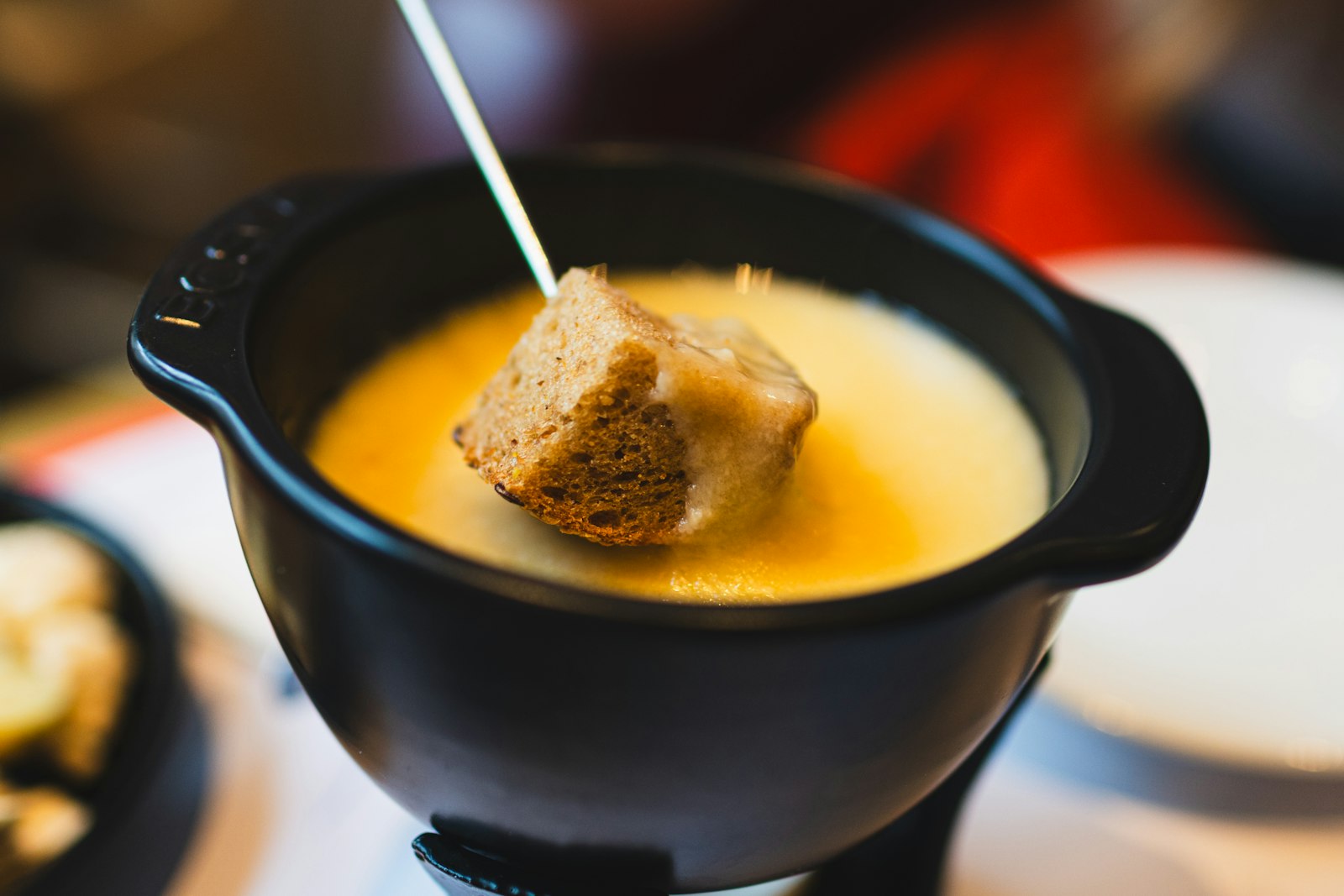
Cheese fondue has one feature that is easily forgotten: wine is already part of the recipe. It usually combines Beaufort, Comté and Emmental de Savoie, melted in a garlic-rubbed caquelon with a dry white wine. That wine is not there by chance. Its acidity helps the cheese melt evenly and stops it turning stringy, which makes fondue one of the cases where cooking with wine genuinely changes the texture of the dish.
The safest rule is to serve at the table the same type of wine that went into the pot: the pairing is then built in from the cooking stage. A Jacquère works very well, but fondue, denser and more aromatic than raclette thanks to aged Beaufort and Comté, can also take a more structured white. This is where Altesse comes in, the grape behind Roussette de Savoie, with its notes of fresh almond, bergamot and light honey, along with Roussanne, known locally as Bergeron, which gives Chignin-Bergeron, richer and broader. These two varieties, little known outside the region, are among those rare grape varieties that deserve a place in your cellar.
The Comté in the fondue also offers a bridge to the neighbouring Jura. A topped-up (ouillé) Jura Chardonnay, meaning one aged in a vessel that is regularly refilled to prevent oxidation, brings tension and a silkier texture that answer perfectly to cooked, pressed cheeses. Comté, France's leading PDO (AOP) cheese by volume, has after all shared its terroir with the wines of the Jura for centuries.
Tartiflette, a richer dish than it looks
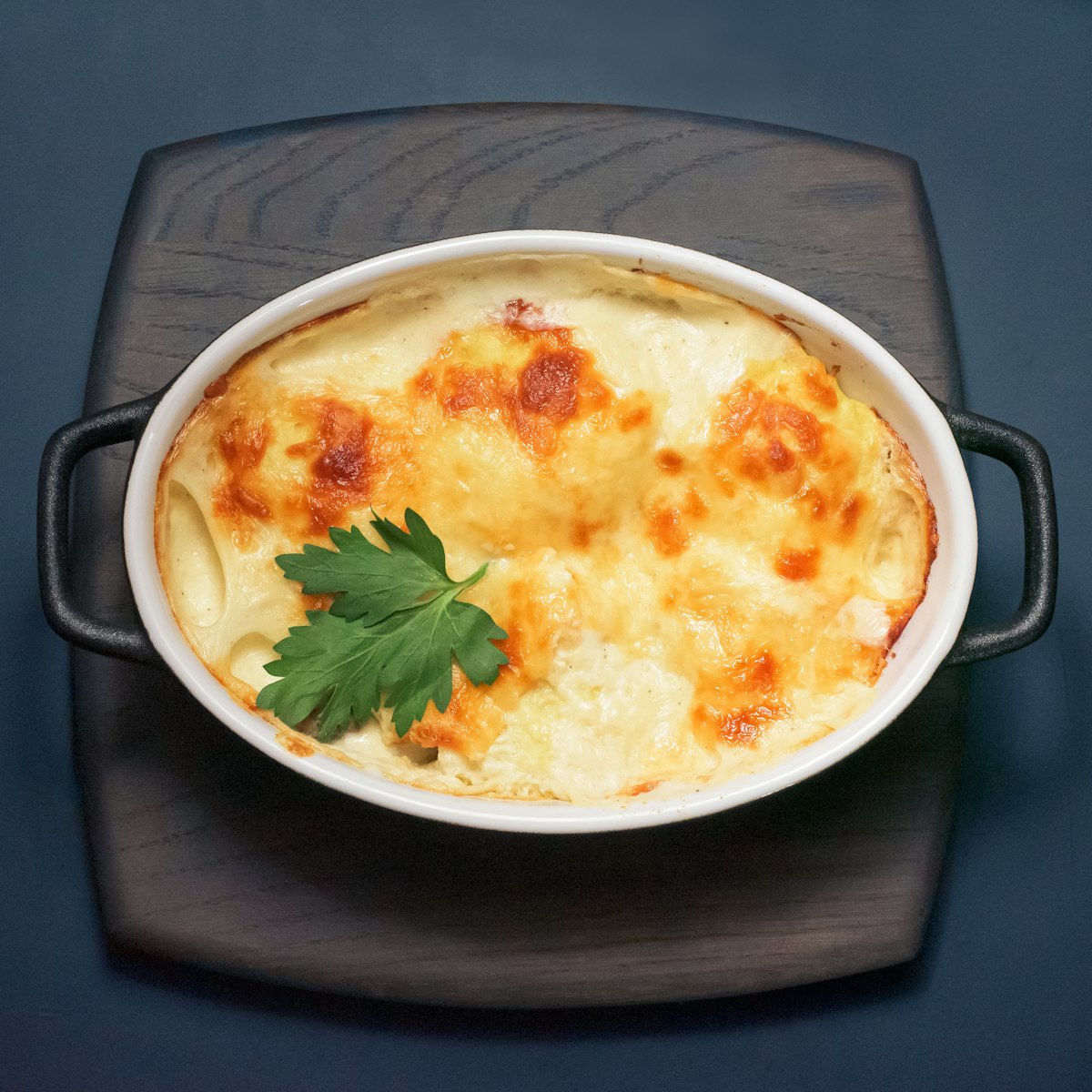
Tartiflette is the youngest of the three dishes. It draws on a peasant preparation from the Aravis made with potatoes, onions and cheese, but its current form took hold in the 1980s, largely promoted by the reblochon industry, before it conquered the ski resorts. Reblochon PDO, a raw-milk, washed-rind cheese, brings a stronger smell and a deeper flavour than raclette, nutty and slightly animal. Add lardons, softened onions and sometimes cream, and it becomes the fattiest and most aromatic of the three.
So it needs a white with a little more generosity than raclette does, without losing freshness. Roussette de Savoie is an excellent choice here, as is a Chignin-Bergeron, whose roundness matches the melting texture of the reblochon while its acidity keeps everything in balance. If you would rather stay with Jacquère, pick a cuvée from old vines or one with some lees ageing, which will have more substance than a current-vintage Apremont.
Tartiflette is also the dish most willing to open the door to red, provided you stick to light wines with little tannin. The lardons and caramelised onions bring toasty, slightly sweet flavours that a Savoie Gamay or a young Mondeuse accompany well. We come back to this just below.
Mont d'Or, the Jura and the question of red
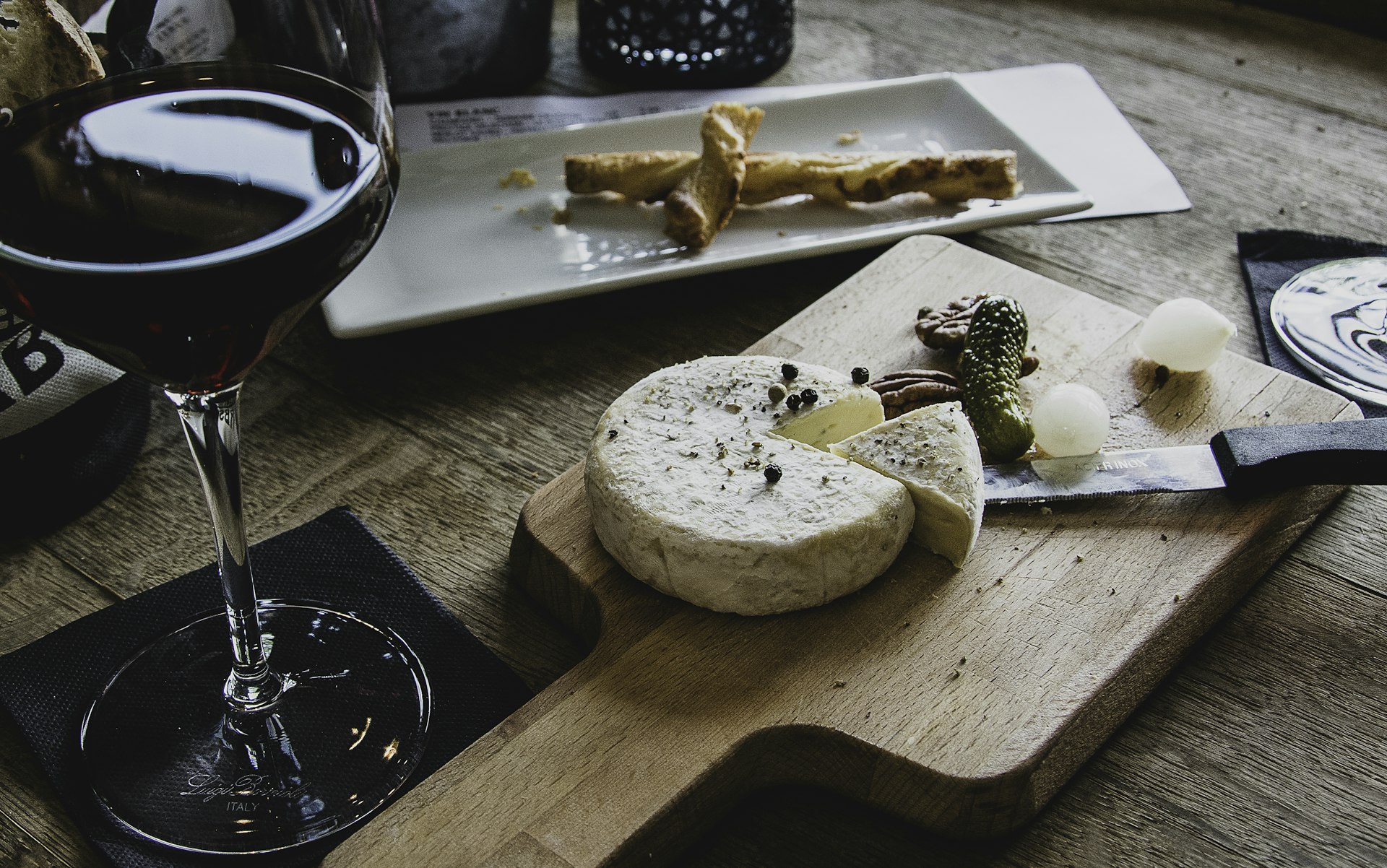
One cheese is missing from this list: Mont d'Or, baked in the oven directly in its spruce box with a clove of garlic and a splash of white wine. This cheese from the Haut-Doubs is seasonal by nature: its specification restricts sales to the period from 10 September to 10 May, making it one of the emblems of the cold season. Its runny texture and woody notes, inherited from the spruce band around it, naturally call for a Jura wine. A topped-up Savagnin or an Arbois Chardonnay brings the freshness it needs, and those who like wines with more character can try an oxidative-style Savagnin, whose walnut notes echo those of the cheese. The Comité interprofessionnel des vins du Jura sets out these appellations and their styles, and we have devoted an article to discovering the vineyards of the Jura.
Now to red, since that is often the real question at the table. It is not off limits, but it has to meet the same demands as the white: acidity, low tannin, no obvious oak. In Savoie, Mondeuse is the natural candidate. This local grape, grown notably at Arbin, gives reds with aromas of small black fruits, violet and pepper, and a freshness that suits the cured meats of raclette and the lardons of tartiflette. Savoie Gamay, lighter still, also works. In the Jura, Poulsard, a pale and delicate red, accompanies Mont d'Or without overwhelming it; Trousseau, deeper in colour and a little more structured, also works, ideally in a cuvée without obvious oak. Outside Savoie and the Jura, a Beaujolais cru or a light, unoaked Pinot Noir plays exactly the same role.
On the other hand, it is better to keep age-worthy Bordeaux, northern Rhône Syrah or the concentrated reds of the South for other dishes. This is not a question of quality but of balance: against melted cheese, their structure becomes a handicap. It is in fact one of the mistakes we list in our 9 tips for nailing your food and wine pairings.
Outside Europe, some of these cheeses are hard to come by. In the United States, raw-milk cheeses aged for less than 60 days cannot be sold, which rules out traditional reblochon and Mont d'Or. The same wines work just as well with easier-to-find stand-ins: a locally made raclette cheese for raclette, a pasteurised washed-rind cheese such as Taleggio for tartiflette and, for the oven, a soft spruce-wrapped cheese such as Harbison from Vermont, or simply a whole Camembert baked in its box. Fondue is the easy one: Gruyère, Comté and Emmental are aged long enough to travel almost anywhere.
Serving these mountain wines well
The whites of Savoie and the Jura are served cool, at around 8 to 10 °C for a Jacquère and a little warmer, around 11 to 12 °C, for a Roussette, a Chignin-Bergeron or a Jura Chardonnay, whose aromas need a touch of warmth to show themselves. With a hot, rich dish, the coolness of the wine contributes to the balance of the pairing. We explain why white wines are served cooler in a dedicated article. Light reds such as Mondeuse, Gamay or Poulsard also benefit from being served slightly chilled, at around 14 °C. A young Mondeuse can be decanted half an hour before the meal to aerate it and help it open up.
These wines have another advantage: they are generally reasonably priced, and most are drunk young. A Jacquère is best appreciated in its first two or three years for its fruit and liveliness. Roussette and Chignin-Bergeron, on the other hand, often gain from a few years in the cellar, and a good Mondeuse can develop over a decade. If you already have bottles like these in your cellar, our article on a wine's peak will help you work out which ones to open now.
This is exactly the kind of choice the Oeni app makes simpler. Its Food & Wine Pairing section starts from the dish you are cooking and points you to the bottle already in your cellar that will suit it best. You can even plan your meals around the wines you have: the next time a raclette is on the cards, you will know which bottle to bring out.
Frequently asked questions
What wine goes with raclette?
A dry, crisp white from Savoie, ideally a Jacquère (Apremont, Abymes, Chignin). Its acidity refreshes the mouth against the melted cheese and cured meats. Valais Chasselas, known as Fendant, is the traditional pairing on the Swiss side. Failing that, any dry, crisp white without oak will do, such as a Chablis, a dry Riesling or a Grüner Veltliner.
Can you serve red wine with raclette?
Yes, as long as you choose a light, fresh red with little tannin, such as a young Mondeuse or a Savoie Gamay, served at around 14 °C. Powerful, oaky reds weigh down a dish that is already very rich.
What wine goes with cheese fondue?
The same type of dry white wine used to melt the cheese, most often a Jacquère. For a fondue rich in aged Beaufort and Comté, a broader Roussette de Savoie or Chignin-Bergeron works very well.
What wine goes with tartiflette?
A Savoie white with some roundness, such as a Roussette de Savoie or a Chignin-Bergeron, which matches the character of the reblochon while keeping its freshness. For red, a Mondeuse or a Savoie Gamay goes well with the lardons and onions.
What wine goes with baked Mont d'Or?
A Jura white: Chardonnay or topped-up Savagnin for freshness, or oxidative-style Savagnin for its walnut notes. For red, a pale, delicate Poulsard accompanies the cheese without overpowering it; a slightly more structured Trousseau also works.
Why does white wine pair better than red with melted cheese?
Hot cheese releases its fat, which coats the palate. The acidity of a crisp white cuts through that fat and refreshes the mouth, whereas the structure of a tannic red adds to the density of the dish instead of lightening it.
What temperature should Savoie wine be served at?
Between 8 and 10 °C for a Jacquère, around 11 to 12 °C for a Roussette or a Chignin-Bergeron. Light reds such as Mondeuse or Gamay are served slightly chilled, at around 14 °C.
Should you use the same wine for cooking fondue and for the meal?
It is the safest rule: a dry white wine of the same style in the pot and at the table builds the pairing from the cooking stage. Just avoid a wine that is too oaky or too aromatic in the caquelon, as it would mark the taste of the cheese.
Main photo: Camille Brodard, Unsplash.