Summarize this article with
The Israeli wine scene is winning over more and more enthusiasts. Blending ancient traditions with a boldly modern spirit, this country keeps surprising people. Its geographic diversity, unique climate, and innovative techniques are helping drive the revival of Israeli wine.
If articles about the world of wine interest you, download our app on iOS or Android. It gives you access to our wine glossary, our articles, and our innovative solution, designed for every wine consumer and collector.
An ancient history with biblical roots
Wine has accompanied Israel’s history for thousands of years. The Bible already mentions vines cultivated in the hills of Judea. Back then, wine held a sacred dimension, tied to religious rites. Those traditions have endured through the centuries.
After the Ottoman period, however, viticulture declined. It wasn’t until the late 19th century that it began to flourish again, thanks to the drive of Edmond de Rothschild. The French banker financed the first modern cellars, laying the foundations for today’s Israeli wine tasting scene.
An exceptional terroir for a wide range of wines
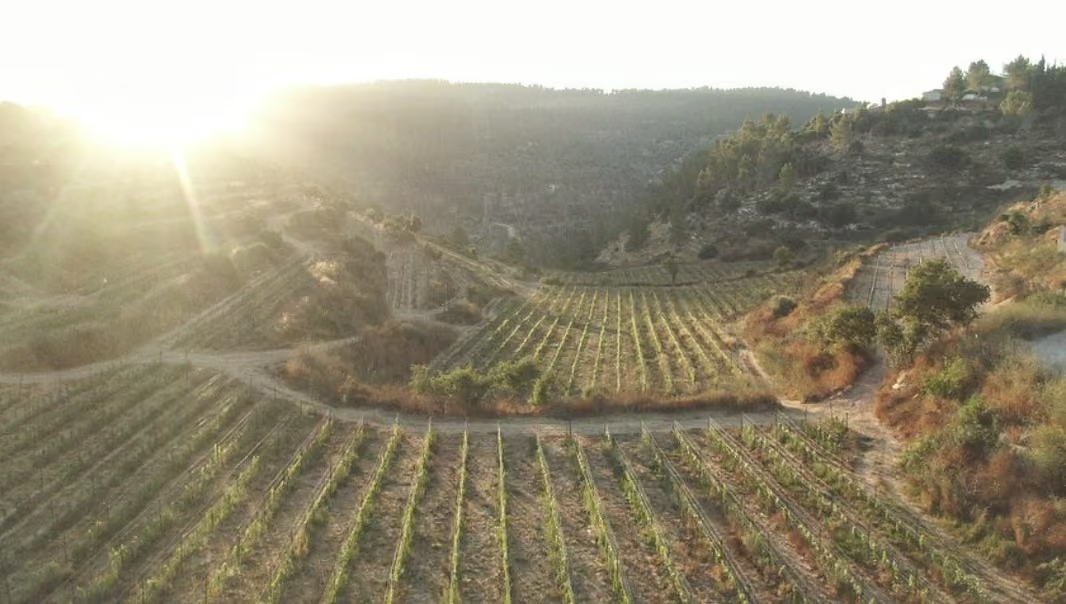
Israel isn’t limited to a single climate. The country brings together several zones well suited to viticulture. You’ll find vineyards on the Golan Heights, in the Negev Desert, and near the hills of Jerusalem. Each offers its own character.
In the north, the Golan Plateau stands out for its volcanic soils and cool nights. The wines gain structure and finesse there. Farther south, the desert produces surprising cuvées. Thanks to precise irrigation techniques, the Israeli vineyards worth discovering produce powerful, concentrated reds.
International and native grape varieties
Israeli domaines rely on a broad palette of grape varieties. Cabernet Sauvignon, Merlot, and Syrah remain safe bets. They give rise to deep, expressive reds suited to international tastes.
But some winegrowers are betting on authenticity. They’re bringing back ancient varieties native to Israeli soil. Marawi, for example, yields bright, mineral whites. These choices strengthen the identity of Israeli wines.
Know-how that keeps evolving
Over the past twenty years, quality has improved dramatically. Israeli winegrowers travel widely. They draw inspiration from the best practices seen in Burgundy, California, and Australia.
They’re also investing in modern equipment. Gentle pressing, long macerations, and amphora fermentation make it possible to create a range of styles. As a result, Israeli wine tasting appeals to both seasoned connoisseurs and curious newcomers.
Iconic domaines to visit
For a complete introduction, several cellars are well worth the detour. Golan Heights Winery, one of the most renowned, offers guided tastings. Carmel Winery, the oldest, traces the history of Israeli viticulture.
Other producers, more discreet, are steadily gaining recognition. One example is Flam, tucked into the hills of Judea. Its elegant cuvées reflect the richness of the Israeli vineyards worth discovering.
The rise of wine tourism in Israel
Wine tourism is growing fast. More and more travelers want to combine culture, landscapes, and Israeli wine tasting. Some wine routes wind through the Carmel Heights or the Golan. They let you pair scenic walks with meetings with the winegrowers.
The estates are also focusing on hospitality. Many offer personalized visits, paired with meals designed around food and wine pairings. The experience becomes immersive, authentic, and deeply rewarding.
A strong cultural identity
Wine is part of Jewish religious life. It accompanies festive meals, weddings, and Sabbath rituals. That spiritual dimension still influences production today.
Many domaines therefore produce kosher wines. Far from lowering quality, this label guarantees strict respect for hygiene and production rules. Israeli wines made within this tradition also hold their own on export markets.
Growing international recognition
International competitions are rewarding more and more Israeli cuvées. Some bottles now stand alongside great French or Italian wines.
That’s proof the quality is there. The style of these wines wins people over with its balance. Between freshness and structure, Israeli wine tasting becomes a sensory experience in its own right.
How to enjoy these wines at the table
White wines made from local grape varieties are a perfect match for grilled fish. For red meat, it’s better to choose a Golan Cabernet or a Judean Syrah.
Lighter reds can pair beautifully with Mediterranean cooking, full of herbs and spices. These pairings reveal the full richness of Israeli wines, still little known to the wider public.
A diversity within reach of every budget
Whatever your budget, there’s a bottle to suit you. Many domaines offer a wide range, from 10 to 60 euros.
The goal is simple: make these wines more accessible. By exploring the Israeli vineyards worth discovering, you can find your favorite style. Lovers of new discoveries often uncover some wonderful surprises.
Toward more sustainable viticulture
In the face of climate change, producers are adapting their methods. Some are choosing organic farming. Others are exploring ways to reduce irrigation.
The commitment to preserving terroir remains strong. Israeli wines are therefore moving in step with a more environmentally respectful approach. That’s helping drive the renewal of an ambitious industry.
If you enjoyed this article, don’t hesitate to read the next one, "Tasting wines from a single hillside: an experience in Côte-Rôtie", which might interest you too!
Good to know:
The best way to get better at tasting is to write down what you taste: colour, nose, palate, and above all what you thought of it. Over time, your notes reveal your preferences far better than any guide. In Oeni, every bottle in your cellar has its own tasting sheet, ready to fill in within seconds.