Summarize this article with
Entering the world of wine can feel intimidating. Between the regions, grape varieties, and appellations, it’s hard to know where to begin. Yet you don’t need to be an expert to learn how to appreciate a good bottle.
If articles about the world of wine interest you, download our app on iOS or Android. It gives you access to our wine glossary, our articles, and our innovative solution, designed for every wine consumer and collector.
Start by listening to your palate
Before you read a guide or buy one, you need to taste. Wine is learned through the palate. Every tasting brings a new experience. Little by little, you discover what you like: maybe a dry white or a fruity red, light or full-bodied, crisp or sweet.
Take mental notes or write them down. It helps you build your own language. Even without technical vocabulary, you can describe what you feel. You’re the first judge of your own tastes.
Taste in the right conditions
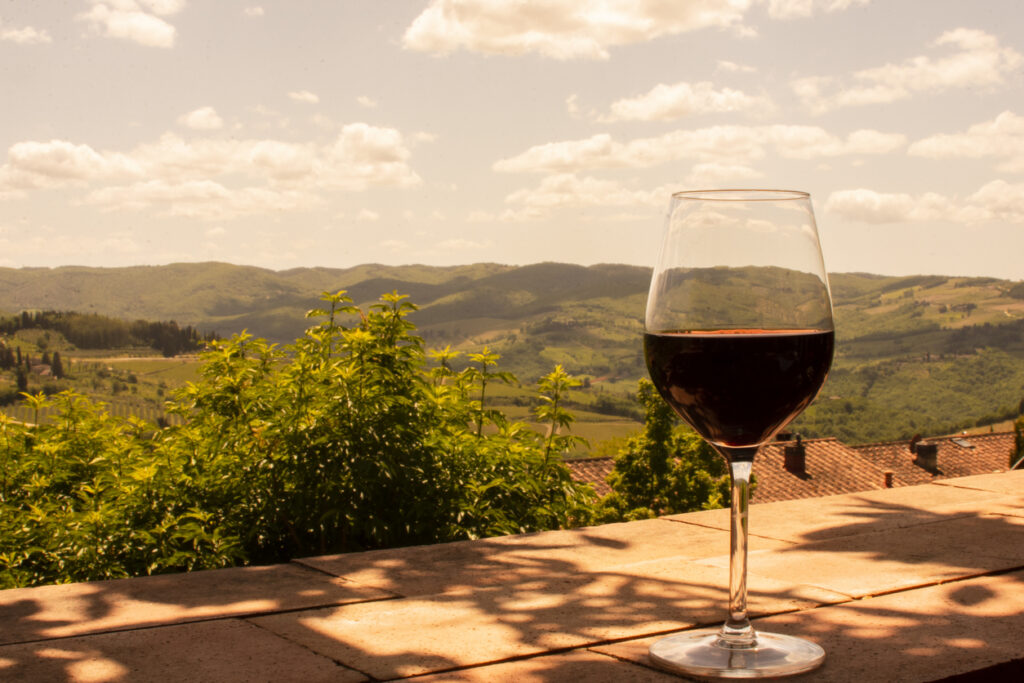
A beginner’s tasting needs a little preparation. Serve the wine in the right glass, ideally clear and tulip-shaped. Avoid strong smells around you. Taste reds at room temperature, whites a little cooler.
Take time to look at the appearance, smell the aromas, then taste in small sips. It sharpens your senses and your concentration. The more you repeat the exercise, the more refined your perception becomes.
Get to know the main wine families
To learn about wine properly, it helps to group styles into families. Start by discovering:
- Light reds (Gamay, Pinot Noir, Cinsault)
- Powerful reds (Syrah, Cabernet Sauvignon, Malbec)
- Dry whites (Sauvignon Blanc, unoaked Chardonnay, Muscadet)
- Aromatic whites (Gewurztraminer, Viognier, Riesling)
- Rosés from Provence or the Loire
- Sparkling wines (Crémant, Champagne, Prosecco)
- Sweet wines (Monbazillac, Muscat, Porto)
This gives you a clear overview and helps you pinpoint your preferences.
Learn the basics of wine vocabulary
Wine vocabulary can seem complex. Yet it rests on simple ideas: fruit, acidity, bitterness, tannins, length, roundness, balance. You can learn these terms gradually by linking them to what you sense.
For example, a “round” wine feels soft and enveloping. A “dry” wine contains very little sugar. A “long” wine leaves a lasting impression after the sip. The more you use these words, the more naturally they become your own.
Use visual tools to help you
Diagrams and aroma wheels make things easier to remember. You can picture the aroma families: fruit, flowers, spices, wood, minerality. These tools make learning more engaging. They help you identify more clearly what you smell or taste.
Wine vocabulary then becomes concrete. It connects with your own sensory reference points. That helps you describe a wine more precisely, even without professional training.
Join guided tastings
A beginner’s tasting led by a wine merchant or sommelier helps you progress quickly. You discover several wine styles, compare them, and ask questions. You’re guided without any pressure.
Many wine shops offer introductory workshops. You can also take part in local events or wine fairs. These are ideal opportunities to learn about wine in a hands-on, friendly way.
Buy smart to discover more
There’s no need to start with grand cru wines. Focus on accessible appellations, IGP wines, and lesser-known domaines. A successful beginner’s tasting is about variety, not price.
Put together small themed selections: three reds from different regions, two dry whites and one sweet wine, or a discovery case. It lets you compare and gradually build your wine knowledge.
Read to deepen your knowledge
Once you’ve had those first sensory experiences, reading helps complete the learning process. Simple, illustrated books explain the basics. You discover the regions, grape varieties, and winemaking techniques.
You also expand your wine vocabulary. You better understand what “oak-aged,” “malolactic,” or “terroir” means. You connect theory with what you taste. That builds confidence and enjoyment.
Use an app to find your way
Some apps offer support for learning about wine. They help you record your tastings, recognize labels, or access fact sheets on each wine. It’s a great way to track your progress.
You can build a personal notebook this way. Compare your impressions. Track how your tastes evolve. Your wine vocabulary grows alongside your cellar and your curiosity.
Surround yourself with fellow enthusiasts
Wine is best discovered together. Talk with friends, wine merchants, restaurateurs, or club members. These exchanges feed your discoveries and deepen your enjoyment.
You become more open-minded. You taste unexpected things. You dare to ask questions. A beginner’s tasting then becomes a real social moment: simple and rewarding.
Take your time without judging yourself
There’s no right or wrong way to discover wine. The main thing is to listen to what you want, respect your own pace, and enjoy yourself. You’re allowed not to like a wine with a great reputation. You’re allowed to love a light rosé or a sweet white.
Each beginner’s tasting brings you closer to your own style. Wine is a personal journey. It grows out of respect for yourself, your senses, and your story.
If you enjoyed this article, don’t hesitate to read the next one, "Why are wine appellations a guarantee of typicity?", which might interest you too!
Good to know:
The best way to get better at tasting is to write down what you taste: colour, nose, palate, and above all what you thought of it. Over time, your notes reveal your preferences far better than any guide. In Oeni, every bottle in your cellar has its own tasting sheet, ready to fill in within seconds.