Summarize this article with
Wine has moved through human history as a sacred drink and symbolic ritual. In many cultures, it represents far more than simple pleasure. It becomes an expression of faith, collective memory, and an act of communion between humankind and the divine.
The Ancient Origins of Sacred Wine
The earliest traces of sacred wine date back to Mesopotamian and Egyptian civilizations. Wine was already being offered in funeral ceremonies and rites dedicated to deities. In ancient Greece, Dionysus, the god of wine, symbolized ecstasy, transformation, and fertility. Among the Romans, Bacchus embodied celebration, excess, and the bond between humans and gods. Wine was not merely drunk; it was revered.
The Role of Wine in Judaism
In Jewish tradition, wine holds a central place. Kiddush, the blessing over wine, opens every Sabbath and religious festival. This ritual affirms the sacredness of the moment. The wine must be kosher, produced in keeping with strict dietary laws. Wine seals commitments and marks births, weddings, and Passover. In this setting, sacred wine becomes a living memory of the people of Israel.
Wine and Christianity: The Institution of the Eucharist
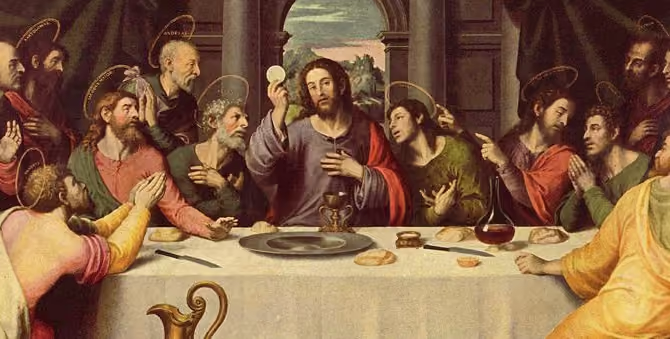
Christianity elevated wine to a mystical rank. At the Last Supper, Jesus blessed the wine, symbol of his blood. That gesture established the Eucharist, the heart of the Christian Mass. The faithful drink the wine in remembrance of the sacrifice. This tradition has continued for two thousand years in Catholic and Orthodox churches around the world. The Christian wine tradition is rooted in this liturgy.
The Expansion of Monastic Wine Traditions
In the Middle Ages, monks developed a wine tradition of exceptional quality. Abbeys such as Cluny and Cîteaux planted vines, selected grape varieties, and made liturgical wines. These wines served the Mass, but they also became a source of income and influence for the monasteries. Knowledge of wine became both spiritual and technical. This wine culture has crossed the centuries and lives on today.
Islam and Wine: Between Prohibition and Mysticism

The Quran forbids the consumption of alcohol to prevent the mind from straying. And yet wine and religion share a subtle link in Islam. Sufi poetry, especially that of Rûmî and Hafez, often evokes wine as a metaphor for divine love. This wine is not material but mystical. It speaks of an inward quest, an intoxication of the soul, and communion with God.
Wine in Hinduism and Buddhism
In Hindu traditions, soma, the sacred drink of the gods, recalls the importance of the divine liquid. While wine is not always central, it can accompany certain specific rites. In Buddhism, the relationship to wine varies according to the school. Some traditions advocate abstinence. Others allow wine in tightly controlled ritual settings. Sacred wine can then embody a symbolic offering.
Wine in Major Religious Celebrations
Many religious festivals include wine in their rituals. The Jewish Sabbath, the Christian Mass, Orthodox weddings, and certain Hindu celebrations all use wine as a sacred marker. This sacred wine brings participants together in a shared experience. It seals faith, community, and tradition. Wine becomes an instrument of spiritual communion.
Wine Tradition and Its Religious Requirements
In every religion, wine made for ritual use follows precise rules. These rules govern the harvest, fermentation, and storage. The wine must contain no forbidden additions. It must reflect a symbolic purity. This requirement gave rise to a strict wine tradition, often passed down from generation to generation within religious communities.
Wine as a Bridge Between the Sacred and the Profane
Wine and religion embody a constant tension between pleasure and elevation. Wine brings joy, but it also invites moderation. It expresses celebration, but it also calls for reflection. That paradox makes it a powerful symbol. It is both an earthly drink and a sacred nectar. It brings together people, nations, and eras around the same mystery.
Religious Wine Today
Even today, wine still holds its place in the great traditions. Mass wine, kosher wine, monastic wines, and Sufi cuvées continue to be produced. Some religious estates are reviving ancient wine traditions with exacting standards of quality. Sacred wine is not just a memory of the past. It lives on and reinvents itself in the present.
A Universal Cultural Heritage
The bond between wine and religion forms a global cultural heritage. It crosses continents, centuries, and beliefs. From the wine of ancient sacrifices to modern Eucharistic wines, the vine remains a powerful symbol. It embodies transformation, life, memory, and transcendence. Every sip recalls a story, a faith, and a legacy.
If you enjoyed this article, feel free to read the next one, "Spanish Wines: The Best Appellations to Know", which may also interest you!
Good to know:
The best way to get better at tasting is to write down what you taste: colour, nose, palate, and above all what you thought of it. Over time, your notes reveal your preferences far better than any guide. In Oeni, every bottle in your cellar has its own tasting sheet, ready to fill in within seconds.