Summarize this article with
Wine aeration is an essential step for revealing a wine’s aromas and enhancing the tasting experience. When a wine has been sealed in a bottle for months, or even years, it may need to be oxygenated before you drink it. This step helps soften some of its more closed notes and lets its full aromatic potential shine through.
But why do some wines need decanting, while others are ready to enjoy straight after opening? Which wines should you aerate, and how do you do it properly? Here’s everything you need to know about wine aeration.
Why aerate a wine?
Wine oxygenation plays a key role in balancing flavors and aromas. When a wine comes into contact with air, several chemical reactions take place, influencing its structure and taste.
- Reducing unwanted aromas : Some young wines, or wines that have spent a long time in bottle, show closed aromas or signs of reduction (sulfurous, vegetal smells). Aeration helps clear away these faults.
- Opening up the aromas : A wine sealed in its bottle can have concentrated aromas that don’t show immediately. Aeration helps release its fruity, spicy, or oaky notes.
- Softening the tannins : Tannic red wines can feel too astringent when tasted without oxygen. Decanting helps round out those tannins for a more enjoyable tasting.
- Balancing the flavors : A well-oxygenated wine shows better harmony between acidity, fruit, and tannic structure.
Which wines should be aerated?
Not every wine needs extended aeration. Here’s how to identify the ones that do.
Young, powerful red wines
Some red wines, especially those with high tannin levels, benefit greatly from wine oxygenation. These include:
- Young Bordeaux (Cabernet Sauvignon, Merlot)
- Barolo (Nebbiolo)
- Rhône Syrah
- Cahors wines (Malbec)
These wines gain in suppleness and expressiveness after 1 to 2 hours of aeration.
Great age-worthy wines
Decanting is often recommended for great Burgundy, Bordeaux, or Italian wines that have aged for several years. However, aerating them for too long could strip away subtle aromas. A gentle aeration of 30 to 45 minutes is ideal.
White wines and sparkling wines
Young, aromatic white wines, such as Sauvignon Blanc or Riesling, generally don't need aeration. On the other hand, a great Chardonnay or an oak-aged white wine can gain in complexity after a light oxygenation.
Champagne and sparkling wines should not be decanted, since that would reduce their effervescence.
How do you aerate a wine properly?
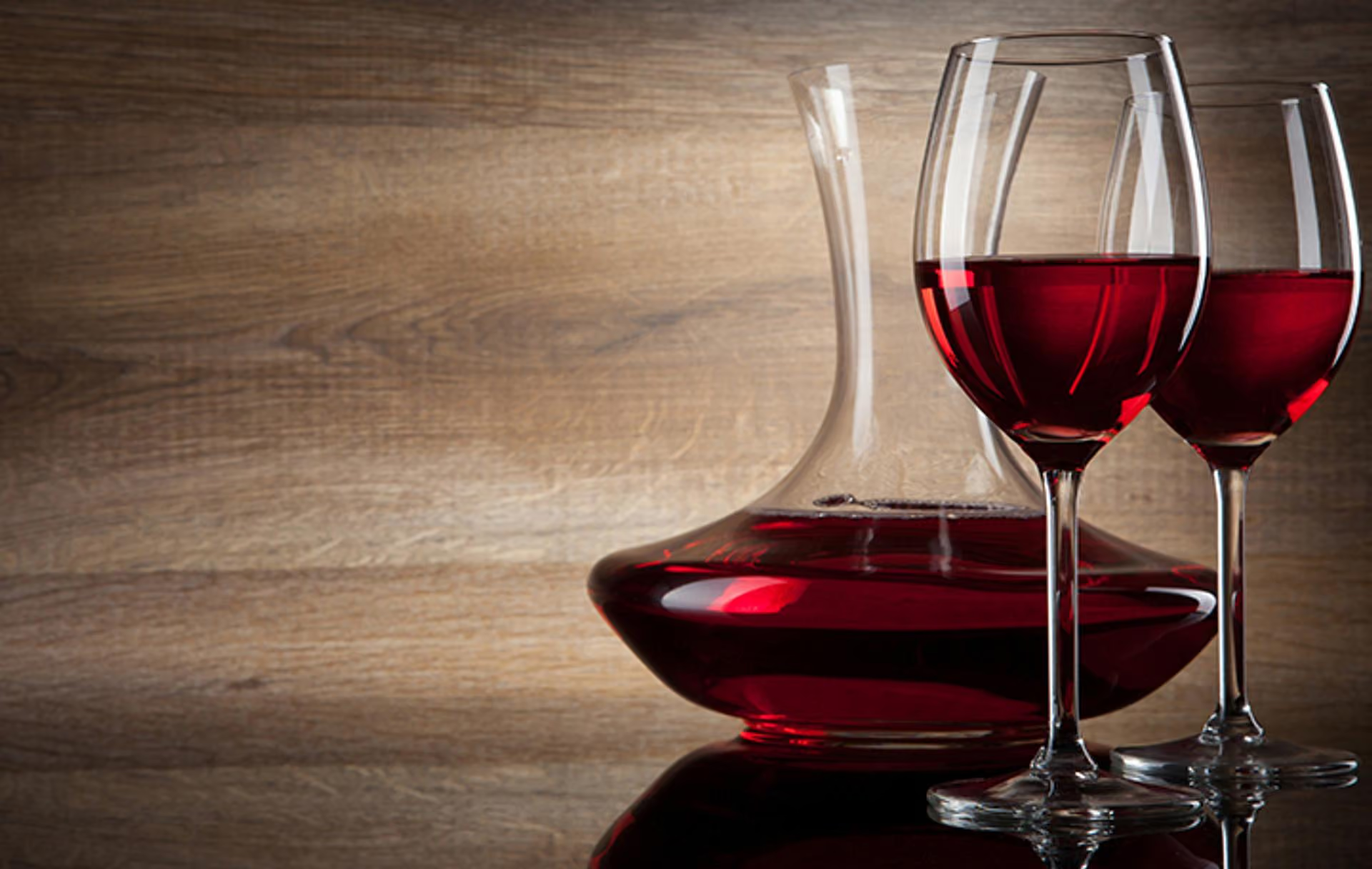
There are several ways to oxygenate a wine, depending on its type and age.
Let it breathe in the glass
If you don't have a decanter, you can simply pour the wine into a glass and wait a few minutes. This method works well for young red wines or complex whites.
Use a decanter
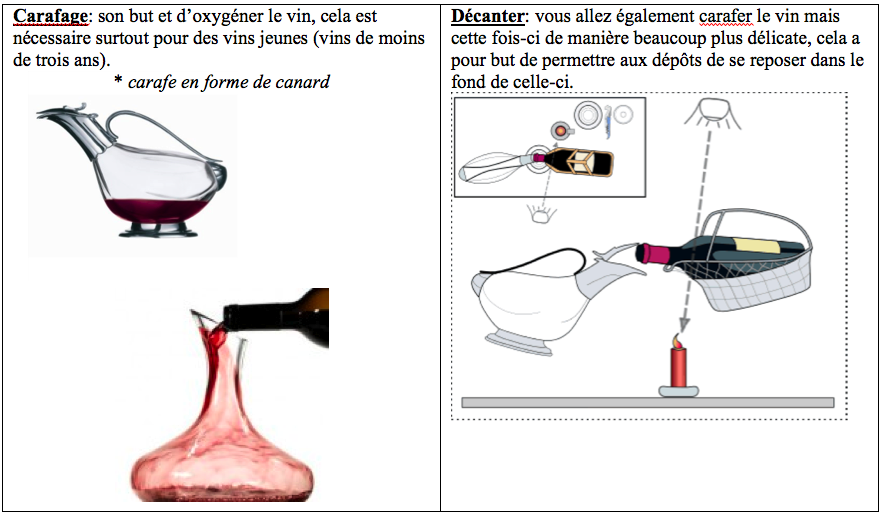
Decanting is the most effective way to oxygenate a wine quickly. Several types of decanters are suited to different wine styles:
- Wide-neck decanter : Ideal for powerful red wines that need strong aeration.
- Tall, narrow decanter : Suitable for older wines, to avoid overly abrupt oxygenation.
Pour the wine slowly into the decanter and let it rest for 30 minutes to 2 hours, depending on the wine.
Use a wine aerator
Wine aerators speed up the process by exposing the wine to oxygen as you pour. This tool is handy when you want to taste a wine right away.
Mistakes to avoid when oxygenating wine
While aeration can improve the tasting experience, certain mistakes can spoil a wine.
- Aerating an old wine for too long : Old wines are fragile. Too much oxygen can make their most delicate aromas disappear. It's better to pour them straight into a glass and watch how they evolve.
- Automatic decanting : Not every wine needs decanting. Some delicate wines, such as Pinot Noir, can lose their finesse if they are over-oxygenated.
- Oxygenating a sparkling wine : Champagne or Crémant should not be aerated, since that would reduce its bubbles and freshness.
- Not tasting the wine before aerating it : Before aerating a wine, it's a good idea to taste it. Some wines are already open and don't need extended oxygenation.
Wine aeration: how long should you wait?
The ideal length of wine oxygenation depends on its type and age.
- Young, tannic red wines : 1 to 2 hours
- Mature red wines : 30 to 45 minutes
- Complex white wines : 15 to 30 minutes
- Light white wines and rosés : Not necessary
- Old red wines (more than 15 years) : 15 minutes maximum
Aeration should be adjusted according to how the wine evolves in the glass.
Wine aeration: an essential ritual for elevating the tasting experience
Wine aeration is a crucial step that can transform how you perceive a wine. Good decanting softens the tannins, opens up the aromas, and improves the tasting experience. Since every wine has its own needs, it's essential to adapt the length and method of oxygenation to its characteristics.
Whether you're tasting a young, tannic Bordeaux or a refined old Burgundy, properly oxygenating the wine before serving it guarantees the best possible sensory experience.
If you enjoyed this article, don't miss the next one, "Dessert wines: a selection to pair with your sweet treats", which might interest you too!
Good to know:
The best way to get better at tasting is to write down what you taste: colour, nose, palate, and above all what you thought of it. Over time, your notes reveal your preferences far better than any guide. In Oeni, every bottle in your cellar has its own tasting sheet, ready to fill in within seconds.