Summarize this article with
The art of wine tasting is full of nuances and subtleties. Every detail, from choosing the grape variety to the way you serve it, has its own particularities.
In this context, two terms come up often: "decanting" and "aerating." Although they’re frequently used interchangeably, they actually refer to two distinct processes that affect wine in different ways. Let’s take a closer look at both methods to better understand the difference.
Aerating Wine
Aerating is a widely used practice, especially when it comes to young wines. Its main purpose is to help these wines develop and reveal their flavors and aromas.
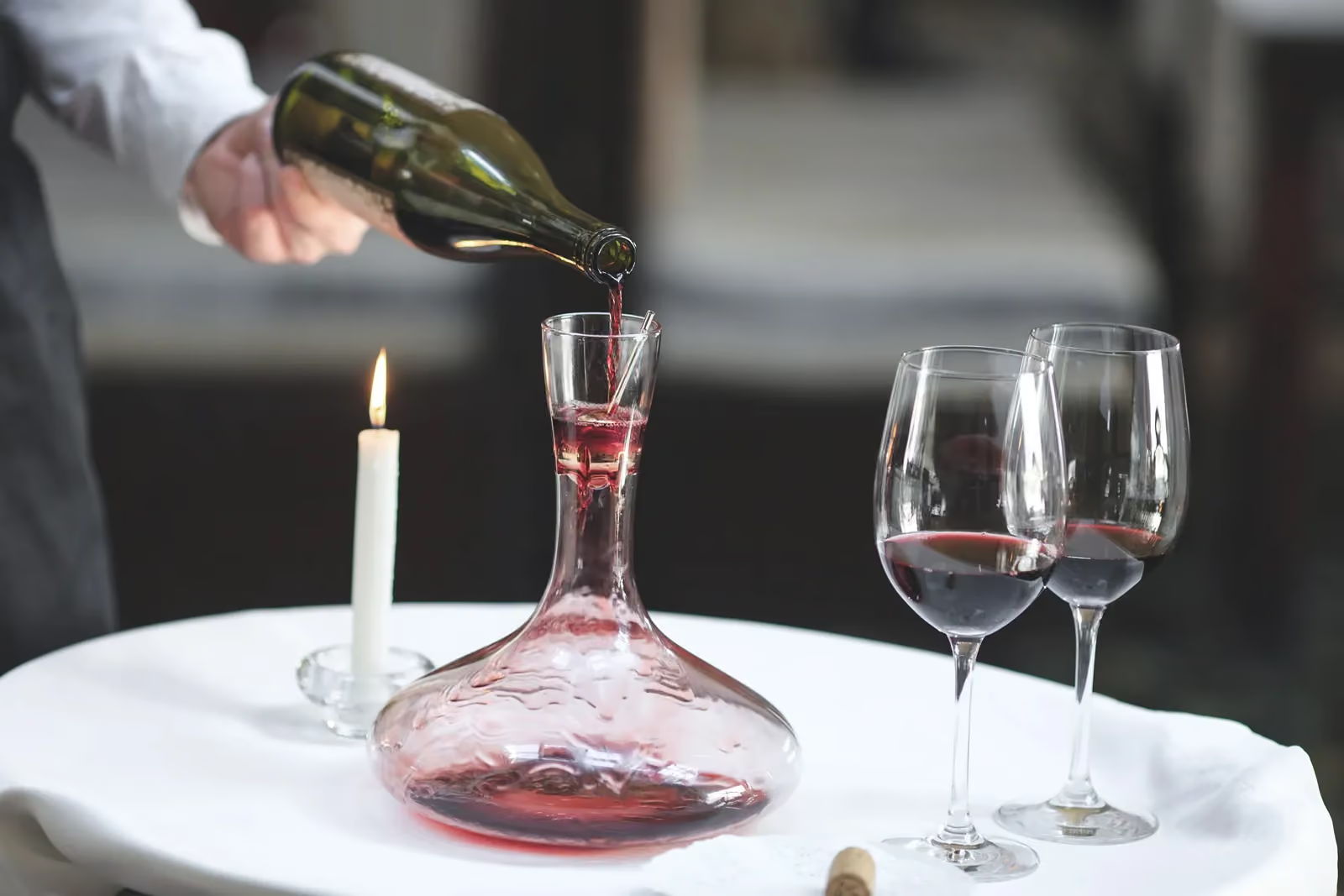
Aerating involves pouring the wine into a decanter with a wide base. This shape maximizes the surface area exposed to air, encouraging oxygenation. When wine comes into contact with air, it "breathes," which helps open up and release its aromas. This technique works especially well with young, tannic red wines, which can feel somewhat aggressive when they’re fresh. Aerating helps soften their flavors, making the tasting experience more enjoyable.
Decanting Wine
Decanting, on the other hand, is usually reserved for older wines. Over time, wines can develop sediment, solid particles that can cloud the wine’s clarity and, in some cases, affect its taste.
Decanting involves pouring the wine gently and methodically into a decanter, so the sediment stays behind in the original bottle. The wine that ends up in the decanter is clearer and cleaner, free of the sediment that can taste bitter or unpleasant.
The Differences Between Aerating and Decanting
If you had to point to one major difference between these two processes, it would be their purpose. Aerating is meant to improve the flavor and aroma of young wines, while decanting aims to remove unwanted sediment from older wines. The pouring method also differs between the two.
When aerating, the wine is poured relatively quickly into the decanter to encourage exposure to air, whereas when decanting, the wine is poured slowly and carefully to avoid disturbing the sediment.
In terms of timing, aerating is generally done just before serving, since oxygenation is a fairly quick process. Decanting, by contrast, can take much longer. You need to give the sediment time to settle at the bottom of the bottle, a process that can take several hours, or even a full day for some wines.
Conclusion
In short, aerating and decanting are two distinct ways of preparing wine, each with its own benefits. Aerating can help release the aromatic potential of a young wine, while decanting removes unwanted sediment from older wines, improving both clarity and taste.
Understanding these nuances can greatly enrich your wine tasting experience and help you fully appreciate every bottle. So the next time you open a bottle, you’ll know exactly how to prepare it for the best possible tasting experience. And Oeni will be there to help you. Don’t wait and download it on iOS or Android.
Good to know:
The best way to get better at tasting is to write down what you taste: colour, nose, palate, and above all what you thought of it. Over time, your notes reveal your preferences far better than any guide. In Oeni, every bottle in your cellar has its own tasting sheet, ready to fill in within seconds.