Summarize this article with
Taking part in the grape harvest is attracting more and more wine lovers. This seasonal form of travel offers far more than a simple countryside getaway. It gives you an authentic winegrower experience, right at the heart of French winegrowing traditions.
If articles about the world of wine interest you, download our app on iOS or Android. It gives you access to our wine glossary, our articles, and our innovative solution, designed for every wine consumer and collector.
Understanding the concept of participatory grape harvesting
Participatory grape harvesting brings wine lovers into the harvest alongside the domaines. In exchange for their help, these volunteers spend a day or a weekend with the winegrowers. This format appeals to the curious, as well as to wine lovers eager to learn.
Many domaines open their doors in early autumn. Dates vary by region, but September remains the busiest period. Some estates offer all-inclusive packages with accommodation, meals, and activities. That makes for a fully immersive experience.
Why choose this form of harvest tourism
This harvest tourism puts human connection front and center. You work the vines, discover the gestures, and gain a better understanding of the effort behind every bottle. Far from the usual tourist routes, this experience is built on conviviality and the sharing of knowledge. Beginners don’t need any experience. The winegrower explains everything as soon as you arrive.
This format also appeals to city dwellers looking for something more meaningful. It brings the consumer closer to the finished product. Wine is no longer just a product. It becomes the result of a collective effort, shared between professionals and newcomers alike.
A winegrower experience between effort and pleasure
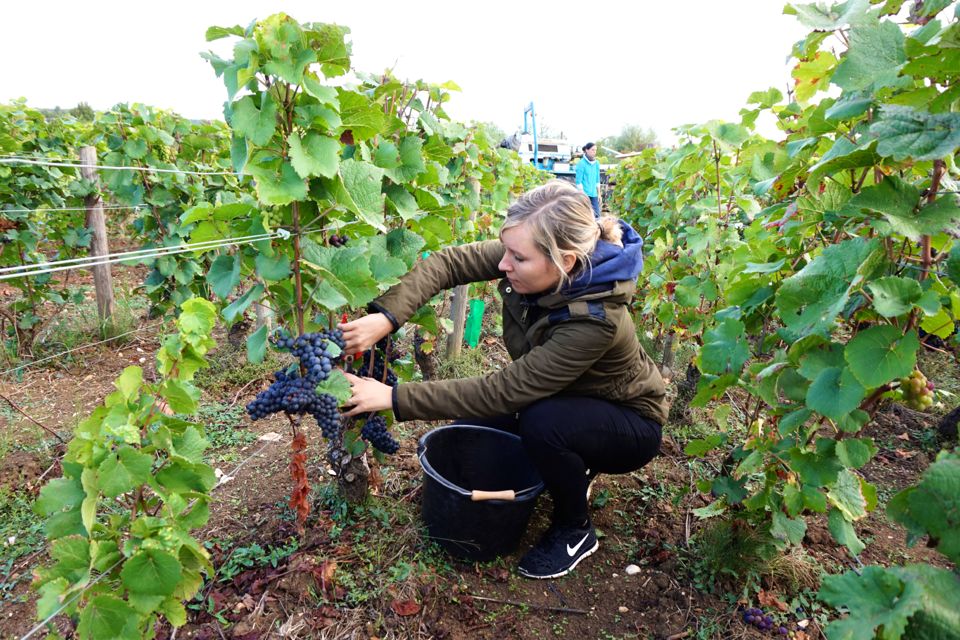
The day starts early. After a shared coffee, everyone gets their pruning shears. You’re shown the right way to cut the bunches. The work is physical, but not out of reach. The group moves row by row, often in high spirits.
Breaks punctuate the morning. It’s a chance to chat with the other participants, who often come from all over France. At midday, a harvest lunch awaits everyone. It’s often generous, prepared on site, and served with the domaine’s wines.
The afternoon continues with picking and conversation. Some domaines then host tasting workshops or cellar visits. That extends the winegrower experience beyond the work in the vines.
Where can you experience participatory grape harvesting in France?
These initiatives are flourishing in France’s major wine regions. In Burgundy, several family-run houses offer this kind of immersion. The rolling landscapes and distinctive climats appeal to nature lovers.
In Bordeaux, some prestigious properties welcome volunteers in a refined setting. Other, more modest domaines favor simplicity and authenticity. There’s something to suit every taste.
The Loire Valley, Alsace, and Beaujolais round out the offer. Everywhere, winegrowers want to share their know-how. Some even organize night harvests to avoid the heat and create a unique atmosphere.
How to prepare for harvest tourism
Before you go, you need the right gear. Comfortable clothes, a good pair of shoes, and gloves are essential. The weather can change quickly. It’s best to bring a light rain jacket.
It’s also wise to book ahead. Places are limited, and domaines often select participants based on their profiles. Be sure to mention any physical or dietary constraints. That allows the winegrower to plan ahead and keep the atmosphere relaxed and enjoyable.
Don’t forget your camera. The vineyards offer stunning autumn views. Capturing those moments lets you relive the pleasure when you get home.
The benefits of participatory grape harvesting

Taking part in a participatory harvest changes the way you see wine. You gain a better understanding of the production process. You see the impact of climate, soil, and manual work on quality. It changes the consumer’s perspective.
What’s more, this kind of trip creates strong bonds. You share effort, laughter, and stories. Some people come back every year, build lasting friendships, or even discover a professional calling.
Finally, the stay helps you choose your wines more wisely. After seeing, smelling, and tasting, you become more attentive to origin and style. You develop a real emotional connection with certain bottles.
A responsible and human approach
Harvest tourism fits into a sustainable approach. It encourages short supply chains, highlights local heritage, and supports small producers. It offers an alternative to impersonal travel.
What’s more, this practice attracts a wide range of people. Families, groups of friends, but also retirees and students. Everyone can find something to enjoy. What matters most is the desire to take part and discover.
Some regions now certify these offers to guarantee their credibility. That reassures participants and highlights a job well done.
A memory that lasts
Participatory grape harvesting leaves a lasting impression. You go home with bottles, stories, and emotions. You come to respect vineyard work more deeply. You develop an intimate bond with wine.
It’s also a distinctive way to travel. You discover wine regions differently, at the pace of the pruning shears and shared meals. You often come back changed.
If you enjoyed this article, don’t hesitate to read the next one, "Discovering the Wines of Lebanon", which might interest you too!
Good to know:
The best way to get better at tasting is to write down what you taste: colour, nose, palate, and above all what you thought of it. Over time, your notes reveal your preferences far better than any guide. In Oeni, every bottle in your cellar has its own tasting sheet, ready to fill in within seconds.