Summarize this article with
Wine seduces first with its taste, but it often begins with the eye. Today, some cuvées compete boldly for our attention. Wine bottle design has become a field of innovation. It reflects an identity, tells a story, and catches the consumer’s eye.
If articles about the wine world interest you, download our app on IOS or Android. It will give you access to our wine glossary, our articles, and our innovative solution, designed for every wine consumer and collector.
When aesthetics become a driver of differentiation
On a supermarket shelf or in an online store, a bottle stands out through its appearance. Wine bottle design then becomes strategic. It conveys the image of the domaine. It creates a first impression, sometimes a decisive one.
Some producers favor restraint. Others dare to use unexpected shapes, bold colors, or unusual materials. Wine marketing understands this visual challenge well. The goal isn’t to betray the product, but to showcase it with coherence.
Bottles that break with traditional codes
In Georgia, winegrowers use clay bottles inspired by ancient amphorae. This approach evokes tradition, but in a completely new package. In California, some cuvées are enclosed in rectangular bottles, resembling perfume flacons.
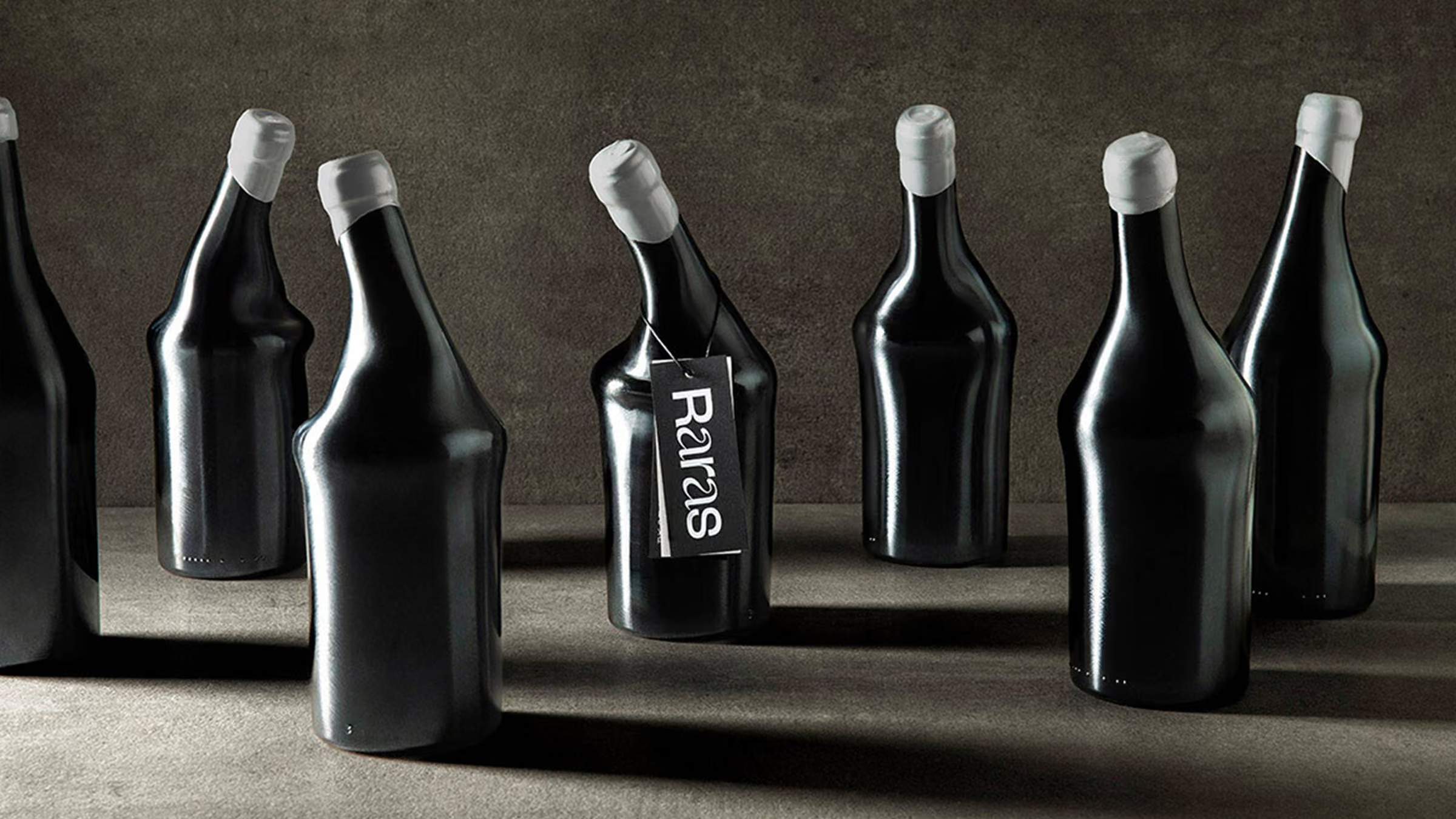
In Spain, the Casa Mariol domaine offers entirely black wine packaging with modern typography. The label reads vertically. This visual break catches the eye, especially among a young, urban audience.
Wine bottle design becomes a creative act, almost an artistic one. It doesn’t just inform. It offers a visual experience.
Innovative shapes in service of the brand

Some houses play with shapes to strengthen their world. The London-based Stranger & Stranger domaine designs custom bottles for several clients. Each project tells a story. A South African cuvée features a zebra skull on a gold background. Another displays a stylized snake wrapped around the neck.
This kind of wine packaging turns each bottle into a collector’s item. Wine marketing thus highlights the product’s uniqueness. Enthusiasts are no longer buying just a wine, but also a powerful visual message.
Interactive and technological labels
Wine bottle design no longer stops at the visual. Some domaines are integrating technology into their labels. In Australia, producer 19 Crimes offers bottles whose portraits come to life with a mobile app. Each wine tells the story of a convict sent to Australia in the 19th century.
By scanning the label, the consumer triggers a video. This interaction leaves a lasting impression. Wine marketing becomes immersive, almost playful. You remember the experience as much as the taste.
Eco-design: a rising trend
Faced with environmental challenges, more and more producers are rethinking their wine packaging to reduce their impact. They use recycled cardboard, natural corks, or plant-based inks. Some bottles feature compostable labels or lighter formats.
Wine bottle design is evolving toward greater responsibility. It proves that aesthetics and ecology can go hand in hand. This approach appeals to a new generation of consumers who care about ethics.
Committed messages through visuals
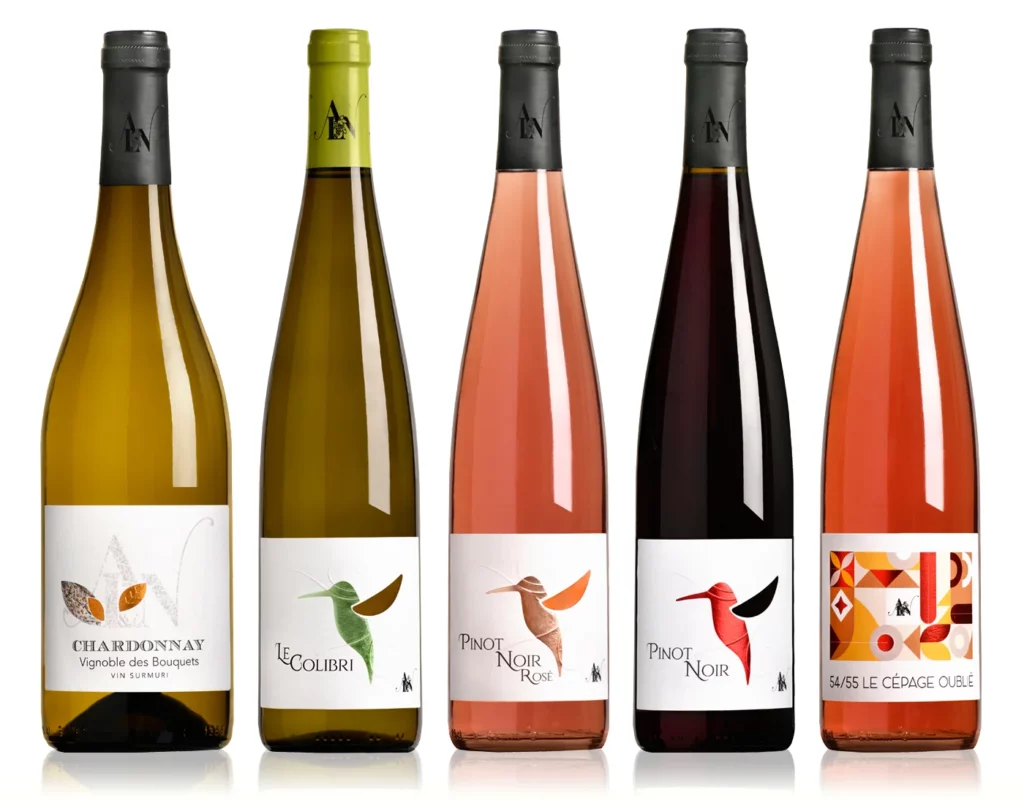
Beyond appearance, some bottles deliver a message. Château Puech-Haut offers a collection of wipe-clean labels that you can personalize with chalk. This idea encourages creativity. It turns wine packaging into a medium for expression.
Other domaines choose graphics that evoke freedom, diversity, or inclusivity. Wine marketing then becomes a mouthpiece. It expresses contemporary values without altering the quality of what’s inside.
Limited editions: between art and exclusivity
Some houses collaborate with artists to create limited series. In France, Mouton Rothschild entrusts its label each year to a renowned painter. Picasso, Warhol, and Haring have all signed these creations. Wine bottle design becomes a work of art in its own right.
These editions attract collectors. They strengthen the wine’s symbolic value. Here, wine marketing plays on rarity, emotion, and culture. A bottle becomes both a visual and emotional investment.
Wine in a can, tube, or pouch
To appeal to a new audience, some producers are completely breaking the mold. Wine in a can has become a real success in the United States. It comes in rosé, sparkling, or dry white versions. Practical, lightweight, and easy to carry, this format appeals to a younger clientele.
Other brands are launching tasting tubes, perfect for sampling or gift sets. Some festivals offer wine in pouches, with a playful design. Wine packaging is adapting to on-the-go lifestyles. It’s reinventing the relationship with the product.
The importance of design for export
Internationally, wine bottle design plays a crucial role. It helps brands stand out in highly competitive markets. It helps showcase a domaine’s origin, history, or innovation.
Some producers adapt their labels depending on the country. They simplify the language, adopt more universal symbols, or change the colors. Wine marketing becomes more global, while still paying attention to cultural specifics.
Design in service of the experience
Ultimately, wine bottle design doesn’t replace the quality of the wine. But it does enhance the overall experience. It creates an emotional connection. It extends the pleasure of tasting even before the first sip.
Producers who innovate in this area aren’t just trying to sell. They want to make an impression, surprise, and build loyalty. Their wine packaging becomes a signature, an asset, a visual promise.
If you enjoyed this article, don’t hesitate to read the next one, "The role of INAO in the recognition of appellations", which may also interest you!
Good to know:
The best way to get better at tasting is to write down what you taste: colour, nose, palate, and above all what you thought of it. Over time, your notes reveal your preferences far better than any guide. In Oeni, every bottle in your cellar has its own tasting sheet, ready to fill in within seconds.