Summarize this article with
The world of fine wine is both captivating and complex. It’s full of terms that are widely used, yet often misunderstood or misread.
Two of those terms, “Grand Cru” and “Premier Cru,” sit at the heart of French wine culture, and their precise meanings are worth exploring. This article, brought to you by Oeni, your personal sommelier available on iOS and Android, aims to lift the veil on these two classifications and help you better understand the subtle differences between Grand Cru and Premier Cru wines.
Origins and Historical Context
The emergence of the terms “Grand Cru” and “Premier Cru” is tied to the development of the French wine classification system. This system was created to assess and reflect a wine’s quality and prestige. It rests on the concept of terroir, which brings together the environmental, geographic, and human factors that shape a wine’s character.
Terroir includes the nature of the soils (often limestone-rich in Burgundy, as in some Champagne hillsides), the climate, the vineyard’s topography, the vines’ exposure, and the winemaking methods used by each winegrower. It was precisely this notion of terroir that the INAO (Institut National de l'Origine et de la Qualité) codified within the framework of appellations d'origine contrôlée (AOC/AOP), guaranteeing the authenticity and typicity of each wine.
“Grand Cru” literally translates as “great growth,” and “Premier Cru” as “first growth.” But it’s important not to misread these terms. A Premier Cru is not “first” in terms of quality. Instead, it’s a designation that places it in second position, behind Grand Cru.
This system, which dates back to the 19th century, was born in Burgundy in eastern France before being adopted in Champagne, Alsace, and other wine regions. It is based on the precise delimitation of lieux-dits and parcels, known as “Climats” in Burgundy, a term now listed as a UNESCO World Heritage site.
The Founding Role of Monks and History
Before it became a matter of rankings and appellations, Grands Crus were first and foremost the product of a long human history. In Burgundy, it was the Cistercian monks of the Middle Ages who first mapped and delimited the finest parcels of the Burgundian vineyard. Clos de Vougeot, fully walled and cultivated by the monks of Cîteaux as early as the 12th century, perfectly embodies this monastic legacy. These men of the vine had already understood that each climat had its own identity, and that a wine’s quality was inseparable from the soil it grew in.
This passing down of knowledge from winegrower to winegrower, generation after generation, made it possible to refine winemaking practices, adapt grape varieties to specific parcels, and craft cuvées of remarkable consistency and typicity. Even today, Burgundy’s winegrowers carry these traditions forward while enriching them with modern advances in oenology.
The Classification System and Its Regional Variations
In Burgundy, the cru classification distinguishes several levels. Grand Cru wines come from the most prestigious vineyards (Chambertin in the Côte de Nuits, Corton-Charlemagne or Montrachet in the Côte de Beaune, the legendary Clos de Vougeot) and account for only about 1% of total production. Premier Cru wines come from vineyards of excellent quality, one step below, and make up around 10% of total production.
The dominant grape varieties are Pinot Noir for reds and Chardonnay for whites. Some winegrowers also work with Aligoté, a white grape variety that is quintessentially Burgundian.
Alsace
In Alsace, the Alsace Grand Cru system classifies 51 lieux-dits with exceptional terroirs. Alsace crus stand out for the diversity of their noble grape varieties: Riesling, Gewurztraminer, Pinot Gris, and Muscat, often made as late-harvest wines for maximum aromatic concentration. Alsace wines develop great freshness, lively acidity, and complex aromas of citrus, flowers, and spice.
Bordeaux
In Bordeaux, the term “Grand Cru” takes on a different meaning. The 1855 classification, unveiled at the Universal Exhibition, established a hierarchy of the Médoc and Sauternes châteaux based on their historical reputation. It ranges from the first growths (including Château Haut-Brion, Château Margaux, and Mouton-Rothschild) to the fifth growths. This classification does not refer to specific parcels, but to entire estates.
On the Right Bank, in Saint-Émilion, the classification is updated regularly. Here you’ll find Saint-Émilion Grand Cru and Premiers Grands Crus Classés, among which Château Cheval Blanc, Angélus, and Pétrus (technically in Pomerol) shine brightest. These wines are often blends of Merlot and Cabernet Franc.
Each year, the Union des Grands Crus hosts presentations of the latest vintages for tasters from around the world. En primeur wines allow enthusiasts to buy these bottles before they reach the market, often through négociants or specialist wine merchants.
Cellar Work and Winemaking Methods
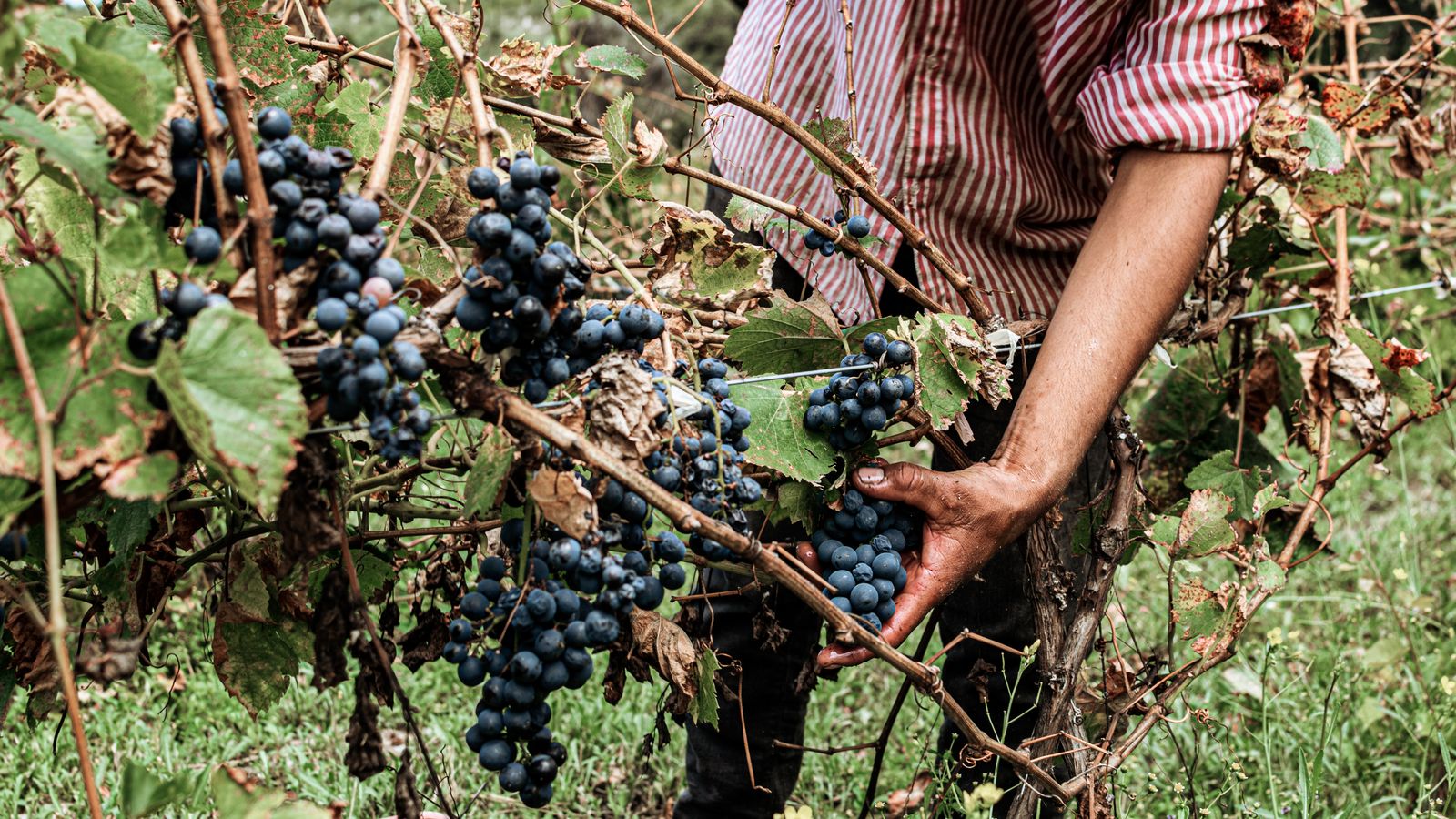
Behind every Grand Cru or Premier Cru lies hard work, both in the vineyard and in the cellar. Harvesting is often done by hand, allowing for rigorous grape selection and preserving the integrity of the bunches. The harvest date is a crucial decision: too early, and the wine will lack ripeness and body; too late, and its fresh aromas and natural acidity will be compromised.
In the cellar, fermentation is handled with meticulous care. Barrels, often made from new oak for Bordeaux Grands Crus, bring tannic structure and oaky aromas that complement the wine’s aromatic profile. In Burgundy, winegrowers generally favor less assertive barrels so as not to mask the expression of terroir. The final blend calls for rare experience and sensitivity to harmonize the different parcels or grape varieties into a coherent cuvée.
Some domaines also practice négociant winemaking, buying grapes or bulk wine from partner winegrowers to create their own cuvées. Long criticized, this practice has produced some of France’s greatest wines in the hands of talented négociants.
Distinctive Features and Impact on Price
Grand Cru and Premier Cru wines share high quality, remarkable aromatic complexity, and excellent aging potential. However, Grand Cru wines are generally seen as even more exceptional and singular, thanks to the specific terroir they come from.
Burgundian Grand Cru red wines made from Pinot Noir are marked by aromas of red and black fruit, a beautiful structure of silky tannins, great finesse, and a complex aromatic palette of floral bouquet, forest floor, and spice. With age, these old vintages develop incomparable depth. The great Pinot Noirs of the Côte de Nuits (Chambertin, Musigny, Échézeaux) rank among the most expensive and sought-after wines in the world.
Grand Cru white wines, whether from Montrachet, Corton-Charlemagne, or Chablis Grand Cru, express deep minerality, razor-sharp acidity, and aromas of great purity, ranging from fresh citrus to buttery, honeyed notes depending on their maturity and winemaking. Meursault, as a Premier Cru, offers a remarkable balance of freshness, fruit, and finesse, at a more accessible price point.
As for price, Grand Cru wines tend to be significantly more expensive than Premier Cru wines. That’s due to their perceived quality, relative rarity, and the strong demand they enjoy. Premier Cru wines, however, often offer excellent value, delivering very high quality at a more approachable cost.
In Conclusion
The distinction between Grand Cru and Premier Cru wines rests mainly on the quality of the terroir where the grapes are grown. Grands Crus come from the most prestigious vineyards, while Premiers Crus come from vineyards of very high, but slightly lesser, quality. That distinction shows up in both quality and price, with Grands Crus generally seen as superior and commanding higher prices.
These classifications are valuable guides, but your palate and preferences, the occasion, and food and wine pairings remain decisive. Comparative tastings are still the best way to understand these nuances. And sometimes, a well-chosen Premier Cru from an outstanding vintage can outshine a Grand Cru from an ordinary year. That’s the magic of French wine, and its endless ability to surprise.
Good to know:
The best way to get better at tasting is to write down what you taste: colour, nose, palate, and above all what you thought of it. Over time, your notes reveal your preferences far better than any guide. In Oeni, every bottle in your cellar has its own tasting sheet, ready to fill in within seconds.