Summarize this article with
Wine lovers know that some bottles do more than please the palate. They also become investment pieces. Among them, large-format wine bottles are attracting more and more collectors. But do they really deliver better resale returns? Let’s take a closer look.
If articles about the world of wine interest you, download our app on iOS or Android. It gives you access to our wine glossary, our articles, and our innovative solution, designed for every wine consumer and collector.
An imposing presence, greater potential
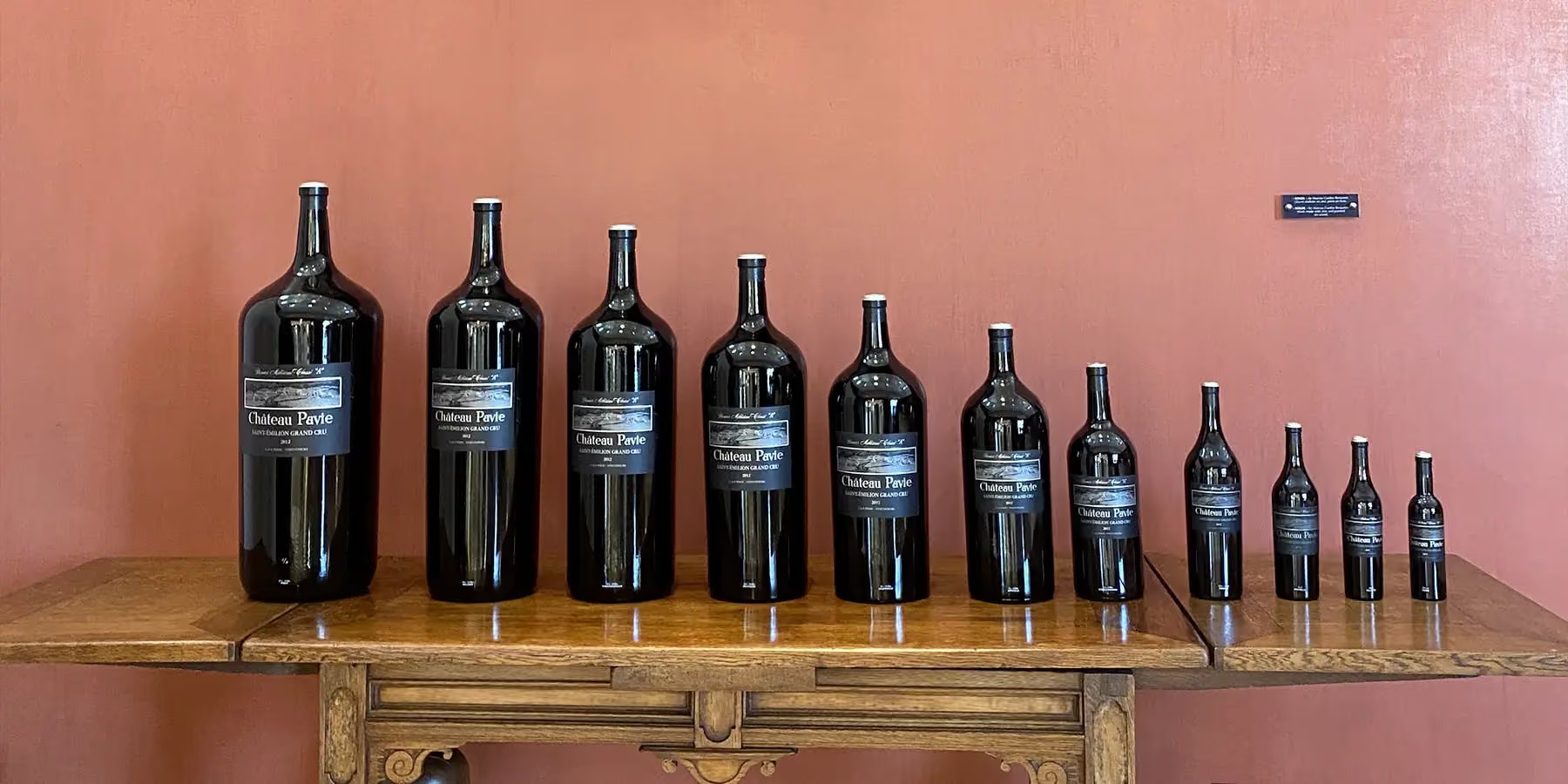
Size matters, especially when it comes to wine. A magnum, holding 1.5 liters, is equivalent to two standard bottles. Some formats go even further, reaching 3 or 6 liters. These prestigious containers appeal for aesthetic reasons, but also for technical ones.
Large-format wine ages more slowly. Thanks to a lower air-to-wine ratio, oxidation slows down. That helps preserve aromas more effectively. As a result, these bottles stay appealing for longer. That factor plays a key role in their long-term investment appeal.
Figures that confirm the trend
The market confirms this appeal. At auction, large formats often generate significant price increases. Some bottles in balthazar (12 liters) or imperial (6 liters) see their value double or triple compared with the standard version.
Rarity also plays a part. Estates produce these formats in limited quantities. That strengthens their collectible potential. Buyers are looking for something exceptional, and large formats deliver that with style.
A specific audience, but a loyal one
Fans of large formats make up a targeted audience. They value prestige as much as investment potential. At major dinners or high-profile events, a magnum makes an impression. It becomes the centerpiece of the evening.
Hospitality professionals are also keen on these formats. They elevate their cellar and build customer loyalty. That creates steady demand, which is a plus for the profitability of large-format wine.
Logistical costs to factor in
That said, this enthusiasm needs some nuance. Large formats require specific logistics. Storage takes up more space. Transport costs more. You also need suitable supports for display or storage.
Insurance can rise too. Some companies charge higher premiums to cover rare formats. These costs reduce the net margin at resale. It’s therefore crucial to anticipate them carefully from the moment you buy.
A strong diversification tool
Wine investment doesn’t rely on standard bottles alone. Diversifying with a few magnums can help balance a portfolio. These formats offer interesting stability, especially during periods of fluctuation.
What’s more, vintages in large formats tend to hold their value for longer. That makes it possible to plan a later resale, often at a better price. This flexibility offers a valuable lever for seasoned investors.
The role of specialized platforms
Several sites now offer services dedicated to large-format wine bottles. They handle authentication, valuation, and listing for sale. This kind of support reduces the risks tied to resale. It also opens access to an international audience.
Some premium platforms even offer themed auctions. These highlight rare formats. They help secure higher sale prices for wine investors.
Choosing the right wine, the right format

Not every wine is suited to this kind of investment. You need to target well-known estates with sought-after cuvées. A magnum of classified Bordeaux or a Burgundy grand cru will hold its value better than a table wine in large format.
The ideal format also depends on your goal. For short-term resale, a double magnum remains easier to handle. For the long term, choose an imperial or a jeroboam. These rare formats benefit from an even stronger rarity effect.
When should you resell to maximize value?
Wine investment profitability also depends on timing. You need to follow trends and keep an eye on events such as centenaries or the release of new vintages. These moments can trigger spikes in demand.
Keeping a bottle for 10 to 15 years can multiply its purchase price. But storage matters. Poor temperature control can ruin a wine, even in a large format. That’s why a well-managed cellar is so important.
Practical examples: profitability in action
A magnum of Romanée-Conti 2002, bought for €2,000, was resold for more than €9,000 ten years later. A jeroboam of Château Lafite Rothschild topped €20,000 at a recent sale. These examples confirm the appeal of large formats on the market.
Of course, these gains are not guaranteed. They depend on many factors: storage condition, vintage reputation, and cuvée quality. Investment is therefore best left to connoisseurs or to people who have good advice.
Adding large formats to a private cellar
For an enthusiast, adding a few large-format bottles to a cellar makes it possible to combine passion and strategy. You need to plan for suitable racks and check temperature and humidity conditions.
Some enthusiasts buy en primeur, as soon as the wine is released. That can mean more attractive pricing. Reselling a few years later can generate a worthwhile gain, provided storage has been carefully managed.
A market in full growth
The fine wine collecting sector is evolving. Younger investors are taking an interest. Magnum formats and beyond are drawing attention. Their rarity and visual appeal also attract an international clientele looking for unique products.
This trend benefits producers too. They are betting on limited-edition large formats, often vintage-dated. That creates anticipation and scarcity, which fuels investment momentum.
If you enjoyed this article, feel free to read the next one, "Wine market indices: how to read them", which may also interest you!
Good to know:
The best way to get better at tasting is to write down what you taste: colour, nose, palate, and above all what you thought of it. Over time, your notes reveal your preferences far better than any guide. In Oeni, every bottle in your cellar has its own tasting sheet, ready to fill in within seconds.