Summarize this article with
Oeni and predictive analysis: when to open which bottle?
Building a wine cellar is easy. Knowing when to open each bottle is another story. Between the right vintage, the grape variety, cellar aging, and personal preferences, it can be hard to keep track. Thanks to new technology, Oeni offers a simple and effective solution.
If you are interested in articles about the world of wine, download our app on iOS or Android. It will give you access to our wine glossary, our articles, and our innovative solution, designed for all wine consumers and collectors.
Why the right moment really matters
A great wine opened too early is a disappointment. It can seem closed, unbalanced, or expressionless. The same wine opened too late may have become bland, oxidized, or lost its finesse. Finding the optimal moment for a wine means giving every bottle the chance to shine.
A wine's evolution depends on many factors: grape variety, vintage, winemaking, and storage conditions. It becomes difficult to track all these parameters yourself, especially with a medium-to-large cellar. This is where predictive wine analysis comes in.
How does predictive analysis work with Oeni?
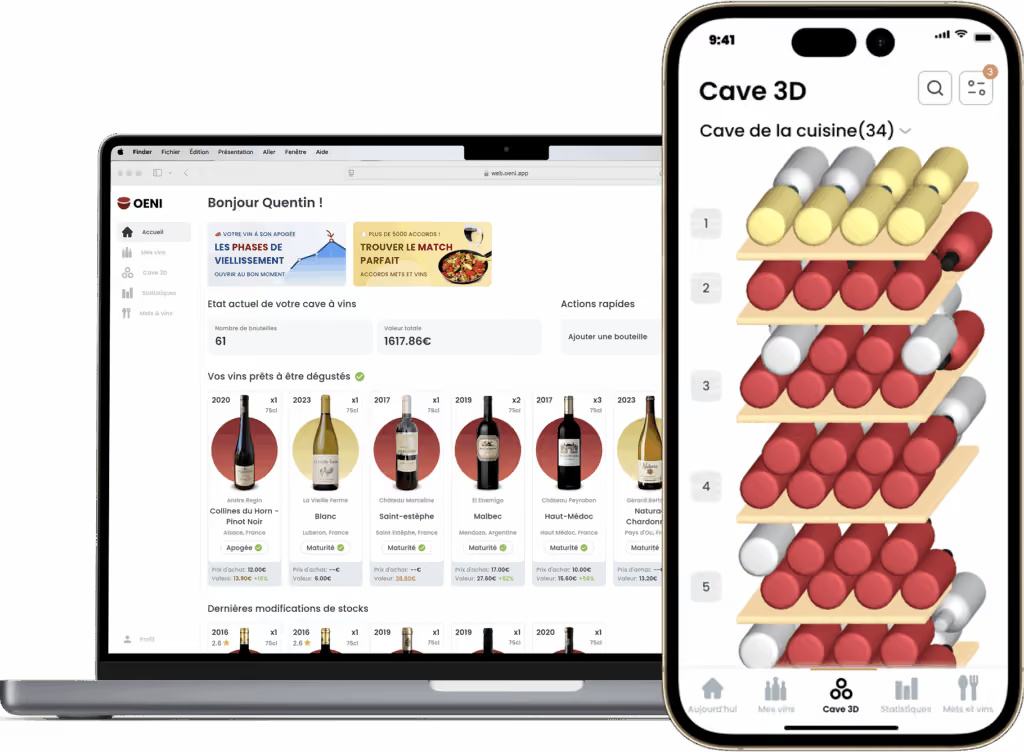
The Oeni algorithm is based on a machine learning model trained on tens of thousands of wine profiles and tasting data. Here is how it works in practice:
1. Data collection
Oeni cross-references several sources for each bottle: grape variety, vintage, appellation, aging method (oak, tank, amphora), professional critic ratings, and your cellar conditions (temperature, humidity).
2. Modeling the evolution curve
The AI calculates a maturity curve specific to each wine. It identifies three phases: the closed phase (young wine, tight tannins), the peak phase (optimal balance), and the decline phase (fading aromas).
3. Personalized results
Oeni provides you with three key dates:
- Early maturity : the wine begins to open up
- Peak : the ideal time to enjoy it
- Cellaring limit : beyond this, the wine loses its appeal
4. Real-time updates
If you change your storage conditions (e.g., moving your cellar, temperature increase), Oeni automatically recalculates the dates. The prediction always remains anchored in your reality.
Alerts so you never miss a bottle again
One of Oeni's greatest strengths is its ability to anticipate. You receive notifications when certain bottles are approaching their optimal drinking window. This prevents oversights or opening them too late.
You can also filter your searches based on your preferences: wines to open now, to keep for another five years, or to monitor closely. This predictive wine analysis becomes your ally in planning meals, events, or tastings.
A personalized evolution curve
Every wine is unique. Two vintages from the same estate do not evolve the same way. One may need five years, another eight. Oeni's features take these variations into account with precision.
The platform allows you to visualize the estimated evolution of each wine via a clear graph. You can see if the vintage is on the rise, at its peak, or in decline. This makes choosing easier, even for wines you don't know yet.
Technology useful for beginners and experts alike
Wine novices often lack reference points. Oeni guides them step by step. The application provides simple, clear, and personalized recommendations. You gain confidence, stress-free.
For connoisseurs, predictive wine analysis becomes an optimization tool. You refine your cellar. You open your wines at the best time. You avoid losses, regrets, and uncertainty.
Managing a living cellar
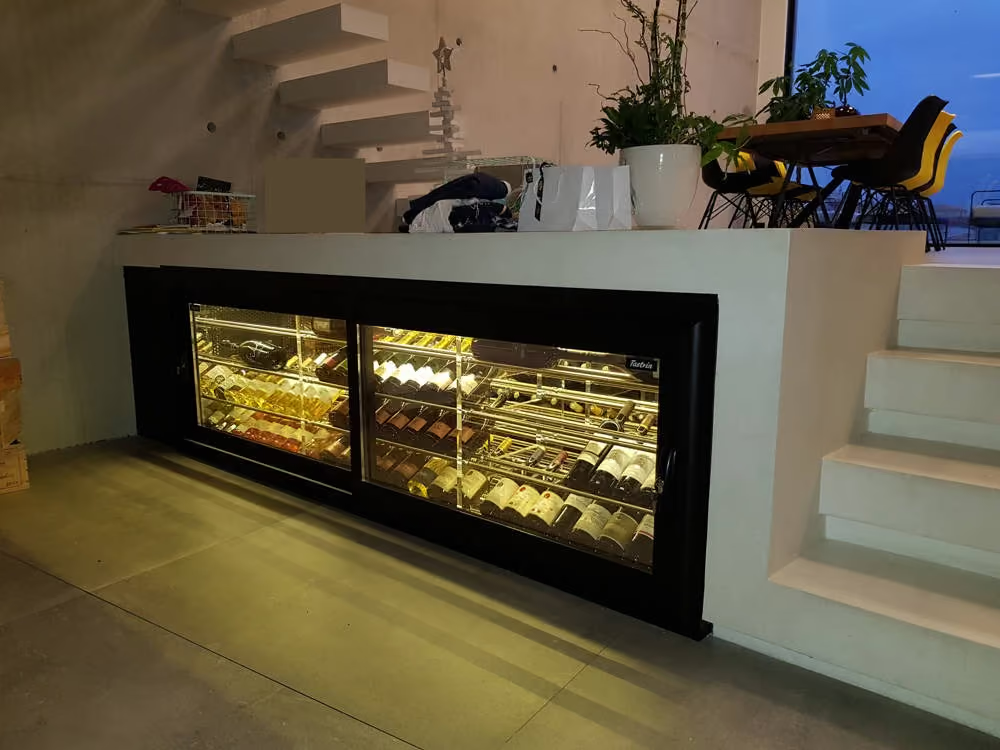
Oeni does more than just keep an inventory. The tool tracks the actual evolution of your cellar. Every addition or removal updates the data. Your preferences, tastings, and comments all feed into the system.
With these Oeni features, your cellar comes to life. You can track what is being drunk, what is aging, and how it is evolving. You can adjust your purchases and organize your tastings with logic and enjoyment.
Accounting for storage conditions
Poorly stored wine ages faster. Oeni incorporates this parameter into its predictive wine analysis. The app takes into account temperature, humidity, and even potential light exposure.
If your cellar is stable and cool, Oeni adjusts the aging curve accordingly. If it is warmer or less consistent, the drinking window will be moved up. You gain precision, even in imperfect conditions.
Oeni vs. traditional methods: which tool helps you decide when to open a bottle?
Note that each app is available on Google Play and iOS.
User reviews
Feedback on Oeni
Oeni enjoys an excellent reputation among its users, with a 4.7/5 rating based on over 6,000 reviews. Enthusiasts particularly appreciate its intuitive interface and advanced features, although some find the price of the premium version a bit high.
It is indeed a solution that may not be the best fit for small cellars, but it can be a real game changer for an amateur wine merchant or a true connoisseur.
Feedback on Viniou
Viniou, while less well-known, has a slightly higher rating of 4.8/5, though based on a smaller sample of 350 reviews. Users praise its ease of use and efficiency in the daily management of their cellar.
Verdict: Which is the best app?
At the end of this analysis, it appears that Oeni and Viniou cater to different user profiles. Oeni, with its advanced features and sophisticated interface, will appeal to seasoned enthusiasts and passionate collectors who want to manage their cellar like a true asset. Its ability to provide detailed analysis and personalized recommendations makes it a top choice for those who view their cellar as a significant investment.
Viniou, on the other hand, positions itself as an ideal solution for beginners or those just starting out in the art of cellar management. Its simplified approach and practical tools make it the perfect companion for anyone wanting to get into cellar management without feeling overwhelmed by too many features.
Ultimately, the choice between Oeni and Viniou will depend on your level of expertise, your expectations in terms of features, and the importance you place on your wine collection. Your decision should be based on your goals and the oenological experience you are looking for.
FAQ
Is Oeni really better than Viniou?
Oeni is more comprehensive for collectors and enthusiasts (3D cellar, database of over 600,000 references, advanced food and wine pairings, GDPR compliance). Whatever wine you have, you will know exactly how to store it to get the most out of your purchases. Viniou is better suited for beginners and those who want to access their cellar from a computer or manage spirits.
What is the price difference between Oeni and Viniou?
Oeni Plus costs €59.99/year with a 30-day free trial. Viniou offers a permanent free version and a premium version at €44.99/year. This price difference is justified by the quality of the features and the app itself.
Can Oeni be used on a computer?
No. Oeni is only available on iOS and Android. Viniou is accessible on mobile, tablet, and web browsers, which is an advantage for those who prefer to manage their cellar from a large screen.
Does Viniou have a wine database?
No. Viniou does not have a pre-established database: wine information is generated by artificial intelligence, which can sometimes lead to inaccuracies. Oeni relies on a database of over 600,000 verified bottles.
Do both apps track the financial value of bottles?
Yes, both offer market value tracking with monthly price updates. Oeni also includes a history feature to track the value of your cellar over time.
Does Viniou manage whiskies?
Yes. Viniou allows you to catalog whiskies (Scotch, Japanese, French, etc.) with the same features as for wine. Oeni is exclusively dedicated to wine.
Which app is GDPR compliant?
Oeni is explicitly GDPR compliant and only collects strictly necessary data (email, password, username). Viniou's GDPR compliance is not clearly confirmed at the time of account creation.
Can you import your cellar from Excel in both apps?
Yes, both applications accept imports from an Excel file. Viniou also offers CSV/PDF export to save or share your inventory.
Good to know:
The best way to get better at tasting is to write down what you taste: colour, nose, palate, and above all what you thought of it. Over time, your notes reveal your preferences far better than any guide. In Oeni, every bottle in your cellar has its own tasting sheet, ready to fill in within seconds.