Summarize this article with
The world of wine is a realm of passion, tradition, and innovation, where every detail matters. Among those details, the choice of closure is far from trivial.
It has a direct impact on preservation, aging, and the tasting experience. Oeni, your wine cellar management app with a sommelier on iOS and Android, invites you to take a closer look at the different types of closures and how they influence wine.
The Different Types of Wine Closures
1) Natural Cork: Tradition and Breathability
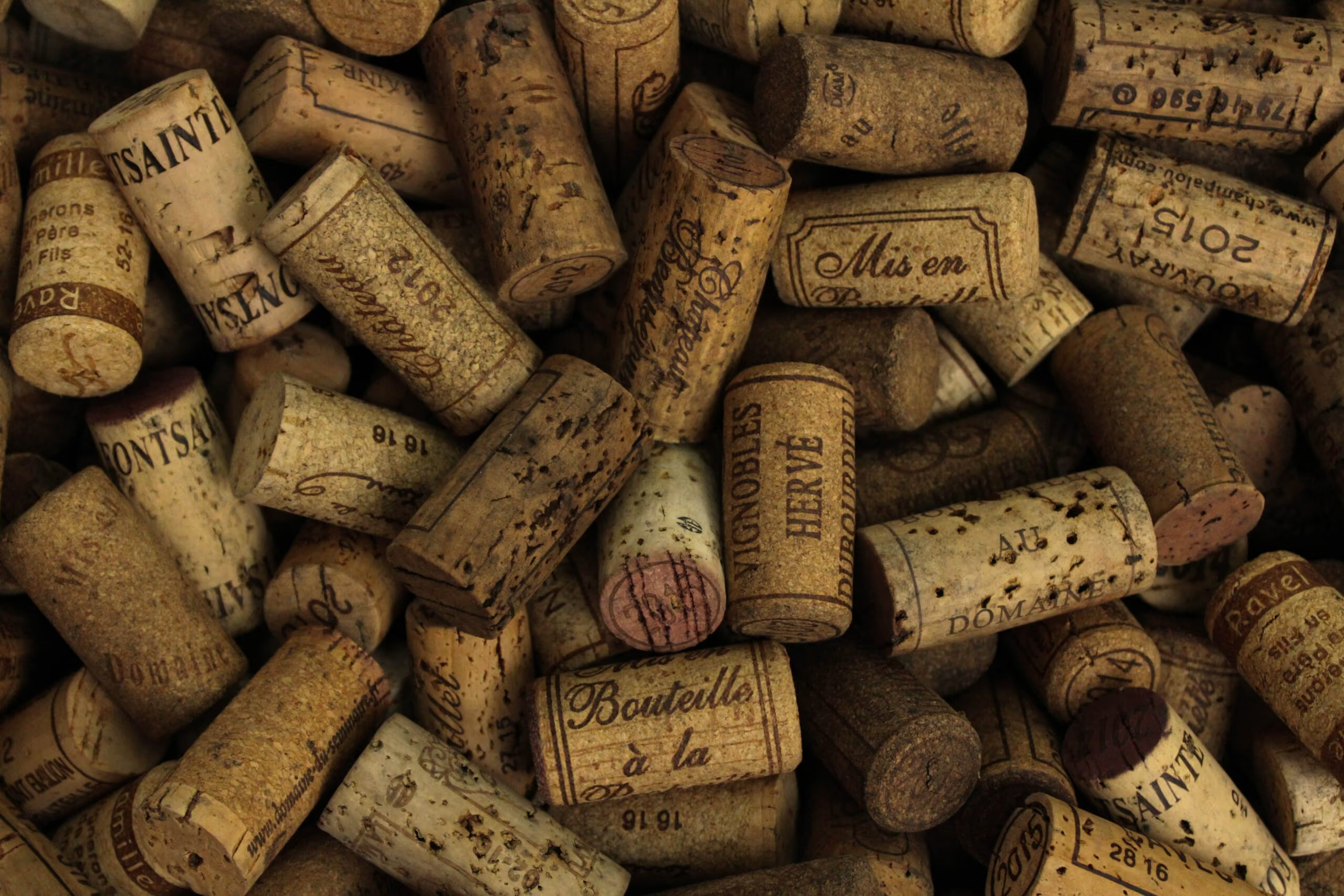
Natural cork represents wine tradition at its most iconic. Made from the bark of the cork oak and harvested mainly in Portugal, this closure is prized for its near-miraculous properties.
It is both elastic and impermeable, allowing the wine to evolve and age under optimal conditions. Cork’s ability to “breathe” allows for a measured exchange of oxygen, which is essential for aging red wines meant for the cellar.
However, natural cork can sometimes suffer from quality variations and is vulnerable to “cork taint,” an aromatic fault caused by chemical compounds such as TCA (trichloroanisole).
2) Agglomerated Cork: Economy and Uniformity
To address quality variations and reduce costs, the industry developed agglomerated cork closures.
These closures are made from cork granules bound together with resin, offering greater consistency and a lower cost.
They’re generally intended for young wines meant to be consumed within two years of bottling, since they don’t have the same elastic and durable properties as natural cork.
3) Synthetic Cork: Innovation and Consistency
In response to the challenges posed by cork, the wine industry saw the rise of synthetic closures.
These closures, often made from plastic or petroleum-based materials, provide a barrier against TCA and consistent closure quality. They don’t break down and won’t alter the wine’s flavor as it ages.
However, they’re less permeable to oxygen, which can be a drawback for wines intended for long maturation.
4) Screw Cap: Practicality and Modernity
The screw cap has revolutionized the wine industry by offering a practical alternative to traditional closures. It provides an airtight seal and almost completely eliminates the risk of cork-related faults. Screw caps are especially popular for wines meant to be enjoyed young, such as many white and rosé wines.
They also make reopening and resealing easy, which is ideal for consumers who don’t finish a bottle in one sitting.
5) Glass Stopper: Elegance and Performance
The glass stopper is a relatively recent innovation and offers an elegant, high-performing solution for sealing wine bottles.
These closures provide a perfect seal and are reusable, which appeals to environmentally conscious consumers. In addition, they have a premium look and are often used for higher-end wines.
The Evolution and Future of Wine Closures
The wine industry continues to search for innovative solutions to improve closure quality. Recent developments include technical closures that combine materials such as cork and plastic to take advantage of each material’s strengths.
Other research focuses on using sustainable and biodegradable materials, such as recycled cork or plant-based polymers, to reduce environmental impact.
Choosing a Closure, a Reflection of the Winemaker’s Philosophy
The choice of closure reflects the winemaker’s philosophy and intentions for the wine. Whether for extended aging, immediate drinking, or environmental considerations, each type of closure has its advantages and drawbacks.
The debate between tradition and innovation continues to spark lively discussion among wine lovers and professionals alike. What’s certain is that the closure remains a crucial element in how wine expresses itself and how it’s preserved.
Good to know:
The best way to get better at tasting is to write down what you taste: colour, nose, palate, and above all what you thought of it. Over time, your notes reveal your preferences far better than any guide. In Oeni, every bottle in your cellar has its own tasting sheet, ready to fill in within seconds.