Summarize this article with
Germany is often associated with beer, but its winemaking heritage is just as impressive. German grape varieties offer a remarkable range of unique flavors and aromas that deserve a place in your collection. From the famous Riesling to lesser-known varieties, foreign wines from Germany stand out for their quality and their ability to pair with a wide range of dishes.
Germany, an exceptional wine terroir
Germany enjoys ideal conditions for growing vines.
- Cool climate : Moderate temperatures encourage slow grape ripening.
- Diverse soils : Slate, limestone, and sandstone bring unique nuances to the wines.
- Leading regions : Mosel, Rheingau, and Franconia produce some of the finest German grape varieties.
This combination makes it possible to produce Riesling wines and other varieties with bright acidity and complex aromas.
Germany’s iconic grape varieties
1. Riesling: the king of German wines
Riesling is without a doubt Germany’s most famous grape variety.
- Characteristics : Notes of citrus, peach, and sometimes a mineral edge.
- Varied styles : Dry, off-dry, or sweet depending on the region and producer.
- Perfect pairings : Seafood, Asian dishes, or fruit desserts.
- Why add it to your cellar? Riesling wines offer remarkable diversity and exceptional aging potential.
2. Spätburgunder: German Pinot Noir
Spätburgunder, the German equivalent of Pinot Noir, produces elegant, refined reds.
- Characteristics : Notes of cherry, strawberry, and gentle spice.
- Styles : Light red or lightly oaked, depending on the winemaking.
- Perfect pairings : Braised dishes, poultry, or mild cheeses.
3. Silvaner: a historic grape variety
Silvaner has been grown in Germany for centuries and remains an essential grape variety.
- Characteristics : Freshness, herbal notes, and minerality.
- Styles : Dry and lively, perfect as an aperitif.
- Perfect pairings : Asparagus, white fish, or vegetarian dishes.
4. Grauburgunder: German Pinot Gris
Known internationally as Pinot Gris, this grape produces rich, aromatic wines.
- Characteristics : Notes of yellow fruit, almond, and honey.
- Perfect pairings : Foie gras, poultry, or creamy dishes.
5. Müller-Thurgau: a versatile grape variety
Müller-Thurgau is appreciated for how easy it is to grow and for its light wines.
- Characteristics : Floral and fruity notes, low acidity.
- Perfect pairings : Salads, light aperitifs, or seafood.
Germany’s must-know wine regions
1. Mosel
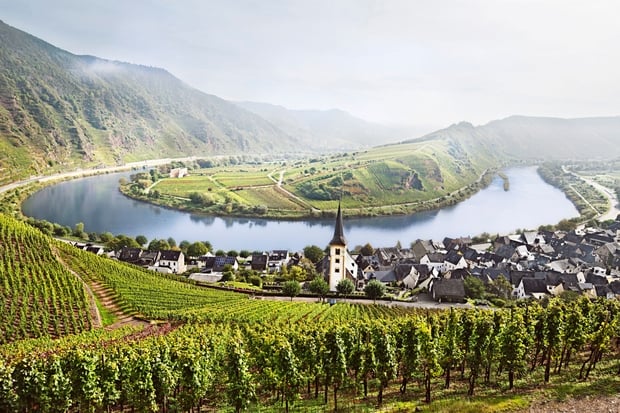
Mosel is famous for its steep slopes and its exceptionally pure Riesling wines.
- Soils : Slate, ideal for mineral-driven wines.
- Signature wines : Dry Rieslings and late-harvest wines.
2. Rheingau
Rheingau produces elegant wines with beautiful acidity.
- Main grape varieties : Riesling and Spätburgunder.
- Highlights : Exceptional crus, perfect for aging.
3. Franconia
Franconia is known for its iconic flat-flask bottles.
- Main grape varieties : Silvaner, Müller-Thurgau.
- Style : Dry, structured wines.
Why collect German wines?

1. Exceptional diversity
German grape varieties span a wide range of styles, from dry to sweet.
2. Impressive aging potential
Riesling wines, in particular, age beautifully, developing complex aromas over time.
3. Excellent value for money
Compared with other great European wines, Germany’s foreign wines are often still accessible.
How do you choose German wines for your collection?
1. Focus on renowned producers
Producers such as Egon Müller or Robert Weil guarantee consistent quality.
2. Explore late-harvest wines
Made from overripe grapes, these wines offer elegant sweetness and exceptional aging potential.
3. Vary the grape varieties
Don’t hesitate to diversify your collection with varieties like Silvaner or Spätburgunder.
Food and wine pairings with German grape varieties
1. Riesling
- Pairings : Seafood, sushi, spicy Asian dishes.
- Tip : An off-dry Riesling pairs beautifully with fruit desserts.
2. Spätburgunder
- Pairings : Red meats, game, or braised dishes.
- Tip : Serve it slightly chilled to bring out its freshness.
3. Silvaner
- Pairings : Salads, asparagus, white fish.
- Tip : Ideal for light meals or vegetarian dishes.
Current trends in German wines
1. A return to traditional practices
Many winegrowers are turning to biodynamic methods that respect the environment.
2. Exploring lesser-known terroirs
Regions like the Palatinate or Baden are growing in popularity thanks to wines of remarkable finesse.
3. The rise of sparkling wines
German sparkling wines, known as Sekt, are winning fans with their freshness and attractive price point.
Conclusion: add German grape varieties to your cellar
German grape varieties offer aromatic richness and diversity that will enrich your collection. From Riesling, king of the whites, to Spätburgunder, elegant and refined, each grape variety tells a unique story. Explore Germany’s varied terroirs to discover high-quality foreign wines that are perfect for every occasion.
If you enjoyed this article, don’t hesitate to read the next one, "How to pair wine and spices for successful pairings", which might interest you too!
Good to know:
The best way to get better at tasting is to write down what you taste: colour, nose, palate, and above all what you thought of it. Over time, your notes reveal your preferences far better than any guide. In Oeni, every bottle in your cellar has its own tasting sheet, ready to fill in within seconds.