Summarize this article with
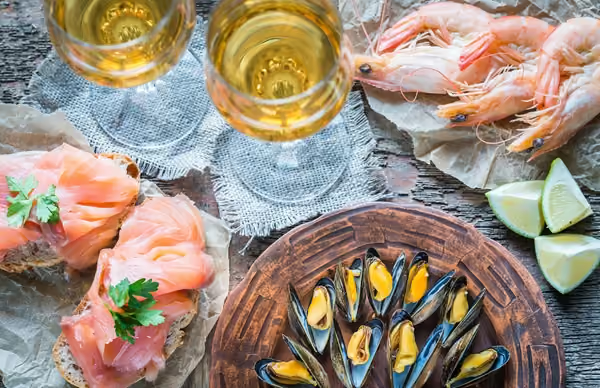
Seafood offers a delicate, wide-ranging tasting experience, and it calls for the right wines to bring out its flavors. Seafood wine, often a white wine, stands out for its freshness and finesse.
Why choose a specific wine for seafood?
Pairing seafood with the right wine isn’t just a matter of tradition. It elevates the tasting experience by balancing the flavors.
1. Bring out delicate flavors
Seafood has subtle aromas. A poorly chosen wine can overpower those flavors, while the right one complements them.
2. Add freshness
Dry, fresh white wines balance the richness of seafood, creating beautiful harmony on the palate.
3. Create interesting contrasts
Some pairings play on contrast, like a slightly acidic wine that offsets the sweetness of shrimp or scallops.
Why do mineral white wines work so well with seafood?
Wine and seafood pairing rests on 3 precise chemical mechanisms.
1. Tannins react with iodine
The tannins in red wines bind with the iodized proteins in seafood and create a metallic, bitter sensation. That’s why a tannic red wine (Cabernet, Syrah) is best avoided. Only very light, low-tannin reds (Pinot Noir, Gamay) can really work with cooked seafood.
2. Acidity “cleanses” the palate
Acidity between 5 and 7 g/L (tartaric + malic) refreshes the mouth between bites and balances the richness of the flesh. That’s the secret behind Muscadet with oysters or Chablis with scallops.
3. Minerality creates a marine echo
Lees-aged wines (Muscadet sur lie, Chablis 1er Cru) develop iodized, saline notes that echo the taste of the sea. This effect, linked to the wine’s natural sulfur compounds, creates immediate flavor harmony.
The best wines for each type of seafood
1. Oysters
Oysters call for mineral, light white wines that echo their marine environment.
- Wine examples : Muscadet, Chablis, Picpoul de Pinet.
- Characteristics : Lemon notes, minerality, great freshness.
2. Shrimp and prawns
Shrimp pair well with fruity white wines, offering lovely roundness to complement their natural sweetness.
- Wine examples : Sauvignon Blanc, Viognier, dry Riesling.
- Characteristics : Tropical fruit aromas, moderate acidity.
3. Scallops
Scallops, often cooked with butter or cream, need more structured wines.
- Wine examples : unoaked Chardonnay, Chenin Blanc, Savennières.
- Characteristics : Roundness, aromatic richness.
4. Lobster and langoustine
These noble shellfish pair with complex, lightly oaked white wines that highlight their refined texture.
- Wine examples : Meursault, Puligny-Montrachet, Champagne blanc de blancs.
- Characteristics : Buttery notes, elegant structure.
5. Mussels and clams
These seafood dishes pair beautifully with lively, light wines that complement their iodized flavor.
- Wine examples : Muscadet, Entre-Deux-Mers, Albarino.
- Characteristics : Freshness, pronounced acidity.
Food pairings with cooked seafood
1. Grilled seafood
Grilling brings smoky notes that pair well with lightly oaked white wines or rosés.
- Wine examples : Côtes de Provence rosé, lightly oaked Chardonnay.
- Characteristics : Balance between fruit and structure.
2. Bouillabaisse and fish soups
These rich, spiced dishes need fuller-bodied white wines that can stand up to the powerful aromas.
- Wine examples : Bandol blanc, Marsanne, Roussanne.
- Characteristics : Roundness, aromatic richness.
3. Sushi and sashimi
Japanese dishes made with raw seafood pair with lively, delicate white wines.
- Wine examples : Sancerre, Grüner Veltliner, Albariño.
- Characteristics : Floral notes and bright acidity.
Top wine regions for pairing with seafood
- Loire Valley : Muscadet, Sancerre, Pouilly-Fumé. Minerality, freshness, citrus notes.
- Burgundy : Chablis, Meursault, Puligny-Montrachet. Elegance, structure, complex aromas.
- Languedoc : Picpoul de Pinet, Clairette. Simplicity, freshness, affordable prices.
- Spain and Portugal : Albariño, Vinho Verde. Brightness, floral and fruity aromas.
Mistakes to avoid with wine and seafood
- Choosing a tannic red wine : Tannins don’t pair well with seafood and create an unpleasant metallic sensation.
- Overlooking the wine’s freshness : A wine that lacks freshness can make delicate dishes like oysters or scallops feel heavy.
- Ignoring secondary ingredients : Sauces and seasonings influence the wine choice. Adjust your pairings accordingly.
Current trends around seafood wine
1. A return to natural wines
Wine lovers are increasingly looking for natural or biodynamic wines to pair with simple, authentic dishes.
2. Experimenting with sparkling wines
Sparkling wines like Crémants or Pét-Nat are growing in popularity for festive seafood pairings.
3. Interest in rare grape varieties
Less familiar grape varieties, like Vermentino or Melon de Bourgogne, are winning people over with their freshness and originality.
In short: which wine should you choose with seafood?
Choosing a successful seafood wine comes down to balancing freshness, minerality, and structure. Whether it’s an elegant white wine for your oysters or a structured rosé for grilled seafood, thoughtful food and wine pairings bring out the best in every bite.
If you enjoyed this article, feel free to read the next one, "Rare grape varieties to discover to enrich your cellar", which may also interest you!
FAQ
Which white wine should you drink with oysters?
Muscadet Sèvre et Maine sur lie is the classic, unbeatable match (6-12 €). For a more festive occasion, go for a Chablis 1er Cru (20-35 €) or a Champagne brut nature (35-80 €). Avoid dosed Champagnes at all costs (demi-sec, doux), which flatten the oyster’s iodized finesse.
Can you drink red wine with seafood?
As a rule, no. The tannins in red wines react with the iodine in seafood and create an unpleasant metallic sensation. Exception: a very light Pinot Noir (Burgundy red, 12-18 €) can work with seafood cooked in tomato sauce or spices, but it’s a compromise pairing.
Which wine goes with a mixed seafood platter?
Albariño is the most versatile choice: fruity, saline, fresh, it pairs with oysters, shrimp, mussels, and octopus. Otherwise, a white Sancerre or a village-level Chablis will cover most of the seafood on the platter.
Which wine goes with mussels marinière?
Muscadet Sèvre et Maine sur lie is the perfect match — it’s also often the wine used in the sauce itself. Entre-Deux-Mers (Bordeaux white, 8-15 €) is an excellent, more accessible alternative.
Which wine goes with lobster?
Meursault (Burgundy white, 30-60 €) is the benchmark pairing. For a more accessible budget, a Chablis Grand Cru (30-50 €) or a Champagne blanc de blancs (35-80 €) offer similar elegance.
Which wine goes with grilled octopus?
Corsican Vermentino (10-18 €) is the ideal match thanks to its Mediterranean aromas and slight bitterness. Spanish Albariño (10-20 €) is an excellent alternative and easier to find.
What temperature should you serve wine at with seafood?
Between 8 and 12°C for the vast majority of dry white wines. Fuller-bodied wines (Meursault, Chablis Grand Cru) can be served at 12-14°C to fully express their aromas. Never go above 14°C with seafood.
How can Oeni help me choose my wine with seafood?
Oeni analyzes your dish (type of seafood, cooking method, sauce), your budget, and your taste preferences to recommend the ideal wine in just a few seconds. The app includes a database of more than 3 million wines and an AI sommelier available 24/7. Download Oeni for free.
Good to know:
The best way to get better at tasting is to write down what you taste: colour, nose, palate, and above all what you thought of it. Over time, your notes reveal your preferences far better than any guide. In Oeni, every bottle in your cellar has its own tasting sheet, ready to fill in within seconds.