Summarize this article with
Decanting wine is an essential technique for revealing aromas and improving the tasting experience of a wine. Whether you want to aerate a young wine or separate an older wine from its sediment, decanting is an indispensable step for enthusiasts.
Why decant wine?
Decanting serves several purposes, depending on the type of wine you want to taste.
1. Aerating young wines
Young wines, especially tannic reds, need oxygen to release their aromas. Decanting softens the tannins and brings the flavors into balance.
Example: A young Cabernet Sauvignon can seem austere without aeration.
2. Separating sediment
Older red wines or some unfiltered wines contain sediment. Decanting makes it possible to separate these solid particles for a more enjoyable tasting.
Example: A Bordeaux over 10 years old can accumulate sediment.
3. Enhancing aromas
Decanting develops the complexity of the aromas and prepares the wine to show its full potential at tasting.
The benefits of decanting wine
- Better tasting experience: A decanted wine offers more expressive aromas and a more harmonious palate.
- Respect for tradition: Decanting is a time-honored practice that adds an elegant touch to your tasting evenings.
- Preserving purity: By removing sediment, decanting ensures a tasting experience free of unpleasant surprises.
- A smart part of wine cellar management: Good wine cellar management includes knowing which wines need decanting and which don’t.
Wine accessories for successful decanting
1. The decanter
The decanter is the main tool. Its wider shape encourages contact between the wine and the air, speeding up aeration.
Tip: Choose a clear model so you can watch the wine evolve.
2. Filters and funnels
Filters remove sediment as the wine is transferred into the decanter. Funnels make this step easier.
3. The capsule cutter
A precise capsule cutter ensures a clean, professional opening before uncorking.
4. Additional accessories
Vacuum pumps: They help preserve opened bottles. Wine carafes: Ideal for serving wine while preserving its aromas.
How do you decant wine perfectly?

- Prepare your space: Make sure you have all the necessary accessories within easy reach.
- Inspect the bottle: Check the cork and the bottle for any sign of sediment.
- Open the wine carefully: Use a quality corkscrew to avoid breaking the cork.
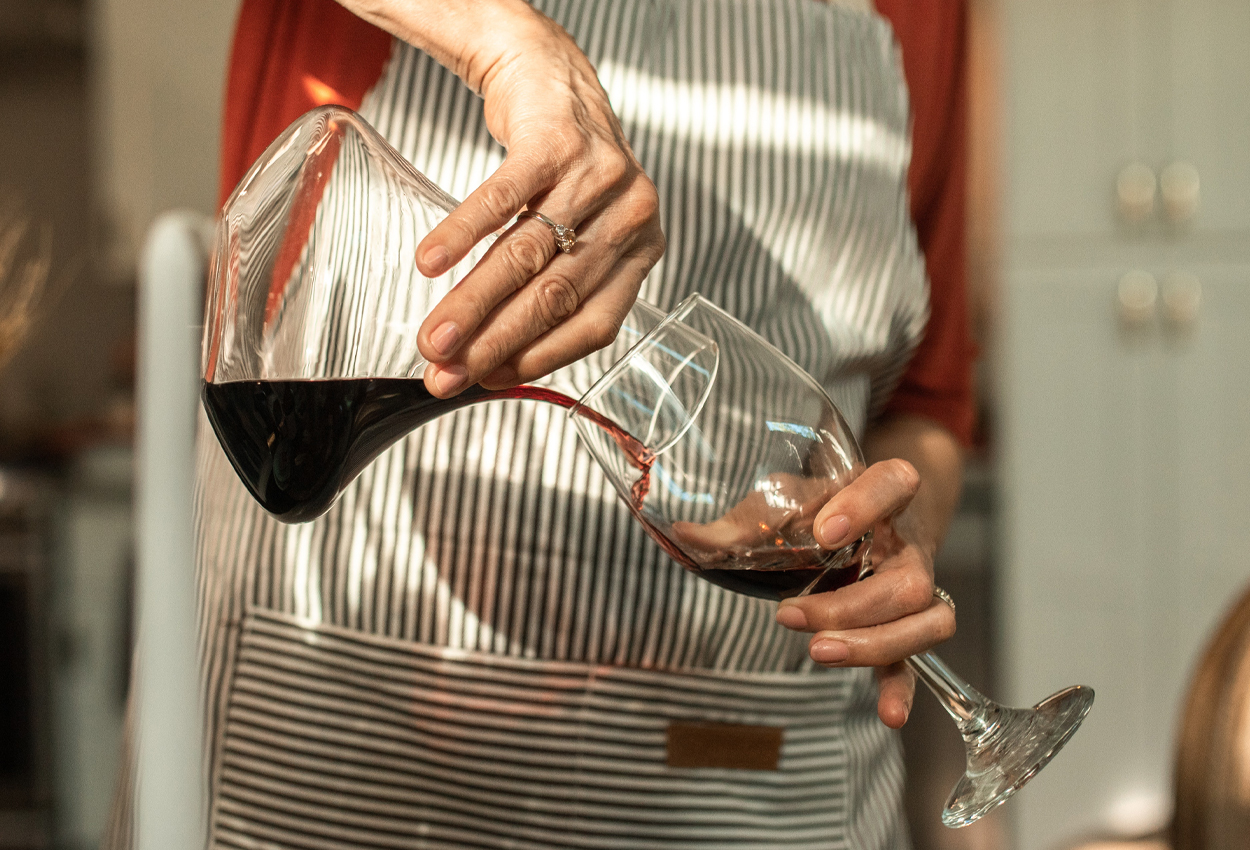
- Transfer the wine slowly: Tilt the bottle and pour slowly into the decanter, taking care not to disturb the sediment.
- Watch it evolve: Let the wine breathe for 30 minutes to 2 hours, depending on its type and age.
Which wines need decanting?
- Tannic red wines: Young, powerful red wines such as Cabernet Sauvignon or Syrah benefit most from aeration.
- Aged wines: Older Bordeaux or Burgundy wines gain clarity through sediment separation.
- Some white wines: Great rich whites, such as Burgundy Chardonnays, can also open up with a light decant.
Mistakes to avoid when decanting wine
- Decanting a fragile wine for too long: Older wines can lose their aromas if you expose them to air for too long.
- Using the wrong decanter: A decanter that’s too narrow won’t allow proper aeration.
- Shaking the bottle before decanting: This can mix up the sediment and make the wine cloudy.
- Ignoring temperature: A wine that’s too warm or too cold loses some of its tasting quality.
Why wine cellar management matters when decanting
- Identifying bottles to decant: Cellar management tools help you track your wines and anticipate their aeration needs.
- Preserving ideal conditions: Storing your wines in optimal conditions ensures their aromas will fully develop after decanting.
- Planning your tastings: Organize your tastings based on each wine’s characteristics and whether it needs decanting.
Decanting or carafing: what’s the difference?
Decanting
Decanting aims to separate sediment and aerate the wine, especially reds.
Carafing
Carafing is mainly used to quickly aerate a young wine or a white wine.
Conclusion
Decanting wine improves your tastings by revealing the richness of the aromas and removing sediment. With the right wine accessories and good wine cellar management, you’ll be ready to enjoy every bottle to the fullest.
If you enjoyed this article, don’t hesitate to read the next one, "Common mistakes to avoid when storing wine", which may also interest you!
Good to know:
The best way to get better at tasting is to write down what you taste: colour, nose, palate, and above all what you thought of it. Over time, your notes reveal your preferences far better than any guide. In Oeni, every bottle in your cellar has its own tasting sheet, ready to fill in within seconds.