Summarize this article with
The pursuit of excellence in viticulture pushes domaines to explore modern processes. Among them, wine nanofiltration stands out as a major breakthrough. This technique is attracting more and more oenologists because it improves quality without altering the identity of the wines.
If articles about the wine world interest you, download our app on iOS or Android. It gives you access to our wine glossary, our articles, and our innovative solution, designed for every wine consumer and collector.
Understanding Wine Nanofiltration
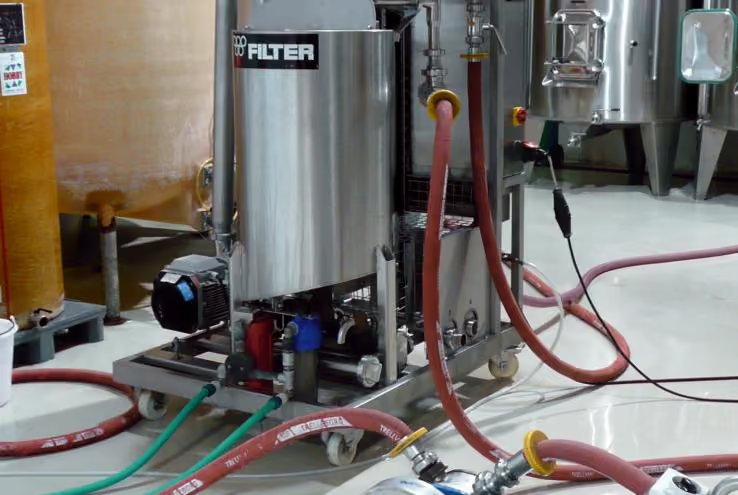
Wine nanofiltration uses very fine membranes capable of retaining certain molecules. It sits between ultrafiltration and reverse osmosis. This method makes it possible to control the concentration of tannins, sugars, and acids. Winemakers gain unprecedented precision when fine-tuning aromatic profiles. Contrary to popular belief, this technique does not distort the wine. It acts as a subtle adjustment tool.
The Role of Membranes in Wine Filtration
The membrane is the heart of the wine filtration system. Its pores measure just a few nanometers, which is where the name nanofiltration comes from. They let water and small molecules pass through, but retain heavier compounds. Thanks to this process, the balance between freshness and structure can be adjusted. The precision of this wine technology appeals to many domaines looking to stand out.
A Tool for Winemaking Innovation
Using wine nanofiltration reflects true innovation in winemaking. It makes it possible to reduce alcohol content without harming flavor. This approach responds to growing demand for lighter wines. It also helps reduce excessive bitterness in certain grape varieties. Winemakers have a lever they can use to adapt their production to current trends.
Controlling Oenological Parameters
Nanofiltration helps regulate several key elements of winemaking. Acidity can be corrected with remarkable precision. Residual sugar is adjusted according to the desired style. Some winemakers also use it to reduce heavy metal concentration. Every stage of wine filtration can be adapted to the domaine’s goals. This flexibility satisfies both enthusiasts and demanding connoisseurs.
Wine Technology in the Service of Flavor

Wine technology is evolving to support the age-old art of viticulture. Nanofiltration is not meant to turn wine into an artificial product. Instead, it aims to reveal the potential of each cuvée. A winemaker can bring out the finesse of a grape variety or reinforce the power of a blend. Winemaking innovation then becomes an ally of authenticity.
Reducing the Risks Linked to Faults
Wine nanofiltration also helps limit certain faults. It can reduce excess volatile acidity that disrupts aromatic balance. This process can also correct overly pronounced bitterness. The membranes help prevent microbial deviations. Wine filtration therefore becomes a prevention tool. That reduces losses for the winemaker and ensures greater consistency across cuvées.
Nanofiltration and Environmental Sustainability
Wine technology must also respond to environmental challenges. Nanofiltration consumes less energy than other processes. It reduces the need for corrective additives. Many domaines see it as a more environmentally friendly solution. Winemaking innovation is thus put at the service of sustainable viticulture.
The Limits of Wine Nanofiltration
Although promising, this technique also has its limits. The cost of membranes remains high for some small producers. Regular monitoring is necessary to maintain efficiency. Wine filtration can also alter certain delicate balances. Winemakers must therefore find the right dosage in how they use it. Wine technology requires precise training to ensure harmonious results.
How Wine Professionals Receive It
Some purists criticize wine nanofiltration, seeing it as too interventionist. Yet many prestigious domaines are already using it successfully. Oenologists see it as a complementary tool rather than a total revolution. Winemaking innovation always rests on a balance between tradition and modernity. Wine filtration is thus becoming a strategic option for improving quality.
A Winemaking Innovation Focused on the Future
The future of viticulture will depend on the alliance between ancestral know-how and advanced wine technology. Nanofiltration makes it possible to meet consumers’ varied expectations. It also opens the door to new aromatic explorations. The coming years will no doubt see these processes integrated more and more widely. Winemaking innovation will remain a driving force for change in the sector.
If you enjoyed this article, don't hesitate to read the next one, "Which wines should you give to a wine lover without taking a risk?", which might also interest you!
Good to know:
The best way to get better at tasting is to write down what you taste: colour, nose, palate, and above all what you thought of it. Over time, your notes reveal your preferences far better than any guide. In Oeni, every bottle in your cellar has its own tasting sheet, ready to fill in within seconds.