Summarize this article with
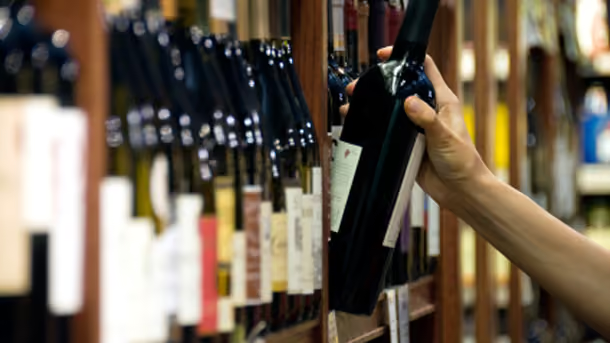
Buying wine in a supermarket may seem simple, but it’s easy to make the wrong choice when faced with such a wide selection. Discover the most common mistakes when buying wine in a supermarket and how to avoid them.
1. Relying only on price when choosing a supermarket wine
Price is often a deciding factor when buying wine in a supermarket, but it shouldn’t be the only thing you consider.
- A very cheap wine (under €5) has often been produced in large quantities, with little attention to quality.
- A high price doesn’t guarantee a good wine either. Some wines are overpriced because of marketing.
Tip : Look for the best value for money by aiming for a bottle between €7 and €15.
2. Buying a wine based only on the label

A beautiful label catches the eye, but it doesn’t guarantee a good wine. Some brands focus more on design than on what’s inside the bottle.
- A modern or luxurious look doesn’t mean the wine is well made.
- Marketing phrases like "Special Selection" or "Prestige Cuvée" are often misleading.
Tip : Read the essential information on the label, such as the appellation, vintage, and grape variety.
3. Ignoring the appellation and origin of the wine
A good supermarket wine should state its appellation, origin, and sometimes its producer.
- A wine with Appellation d’Origine Contrôlée (AOC) is often more reliable than a "Vin de France" wine with no specific mention.
- Major wine regions such as Bordeaux, Burgundy, or the Loire are good options, but some lesser-known appellations also offer excellent value for money.
Tip : Choose wines with an AOC, AOP, or IGP for greater quality assurance.
4. Choosing a wine without checking the vintage
The vintage is a key factor when choosing a good wine in a supermarket.
- A wine that’s too young may lack maturity and complexity.
- A wine that’s too old may have lost its aromas if it isn’t meant for aging.
Tip : For red wines, aim for vintages that are 3 to 5 years old. For whites, 1 to 3 years is enough.
5. Buying a wine without knowing the grape variety
The grape variety directly influences the taste of the wine. Some varieties are more approachable and appeal to a wide audience.
- Sauvignon Blanc : Ideal for a fresh, fruity white wine.
- Merlot : Smooth, easy-drinking red.
- Cabernet Sauvignon : More tannic and structured, well suited to red meat.
Tip : If you don’t know a grape variety, look it up before you buy.
6. Not paying attention to storage in the store
A poorly stored supermarket wine can be damaged before it even gets home with you.
- A wine stored under harsh lighting can lose its aromas.
- Bottles kept upright for too long can dry out the cork and spoil the wine.
Tip : Choose a bottle stored in the shade, in a section with good stock turnover.
7. Trusting tempting promotions
Promotions can be appealing, but they sometimes hide unsold stock or low-quality wines.
- A discounted wine may be old stock that the store is trying to clear out.
- Some steep discounts apply to wines produced in excessive quantities, often at the expense of quality.
Tip : Check the vintage and origin before buying a discounted wine.
8. Buying a wine without knowing what to pair it with
A wine should suit the dishes it’s served with for a better tasting experience.
- Dry white wine : Perfect with seafood and fresh cheeses.
- Light red wine : Ideal with white meats and vegetarian dishes.
- Sparkling wine : Great for aperitifs and light desserts.
Tip : Read food and wine pairing suggestions to make the right choice.
9. Forgetting to try different bottles
Don’t stay loyal to just one wine, even if you love it. Trying different labels lets you discover new gems.
- Each vintage and each producer brings subtle flavor differences.
- Some supermarket wines are surprisingly good despite their affordable price.
Tip : Experiment by buying one or two new labels each time you visit the aisle.
10. Rushing in without comparing reviews
Before buying a wine in a supermarket, it can be helpful to check reviews from other consumers.
- Some wine websites or apps provide ratings and detailed comments.
- Supermarket wine fairs also offer advice from sommeliers.
Tip : Use apps like Vivino to see consumer reviews.
Tips for choosing a good supermarket wine
- Set a budget between €7 and €15 to get good value for money.
- Choose AOC, AOP, or IGP wines for greater assurance.
- Check the vintage to avoid a wine that’s too young or too old.
- Pick a grape variety you enjoy based on your taste.
- Check the condition of the bottles and how they’re stored on the shelf.
Conclusion: succeeding with your supermarket wine purchase
Buying a good supermarket wine takes a little attention if you want to avoid marketing traps and classic mistakes. By following these tips, you’ll be able to choose a good wine in a supermarket without any unpleasant surprises.
If you enjoyed this article, feel free to read the next one, "How to choose a wine for a gift: tips and recommendations", which might interest you too!
Good to know:
The best way to get better at tasting is to write down what you taste: colour, nose, palate, and above all what you thought of it. Over time, your notes reveal your preferences far better than any guide. In Oeni, every bottle in your cellar has its own tasting sheet, ready to fill in within seconds.