Summarize this article with
Spring marks a crucial period for viticulture. Young vine shoots are especially vulnerable to frost. Winegrowers must act quickly to limit losses. Different vine protection techniques exist, depending on the climate and the resources available.
If you’re interested in articles about the wine world, download our app on iOS or Android. It gives you access to our wine glossary, our articles, and our innovative solution, designed for every wine consumer and collector.
Understanding the risks of vine frost
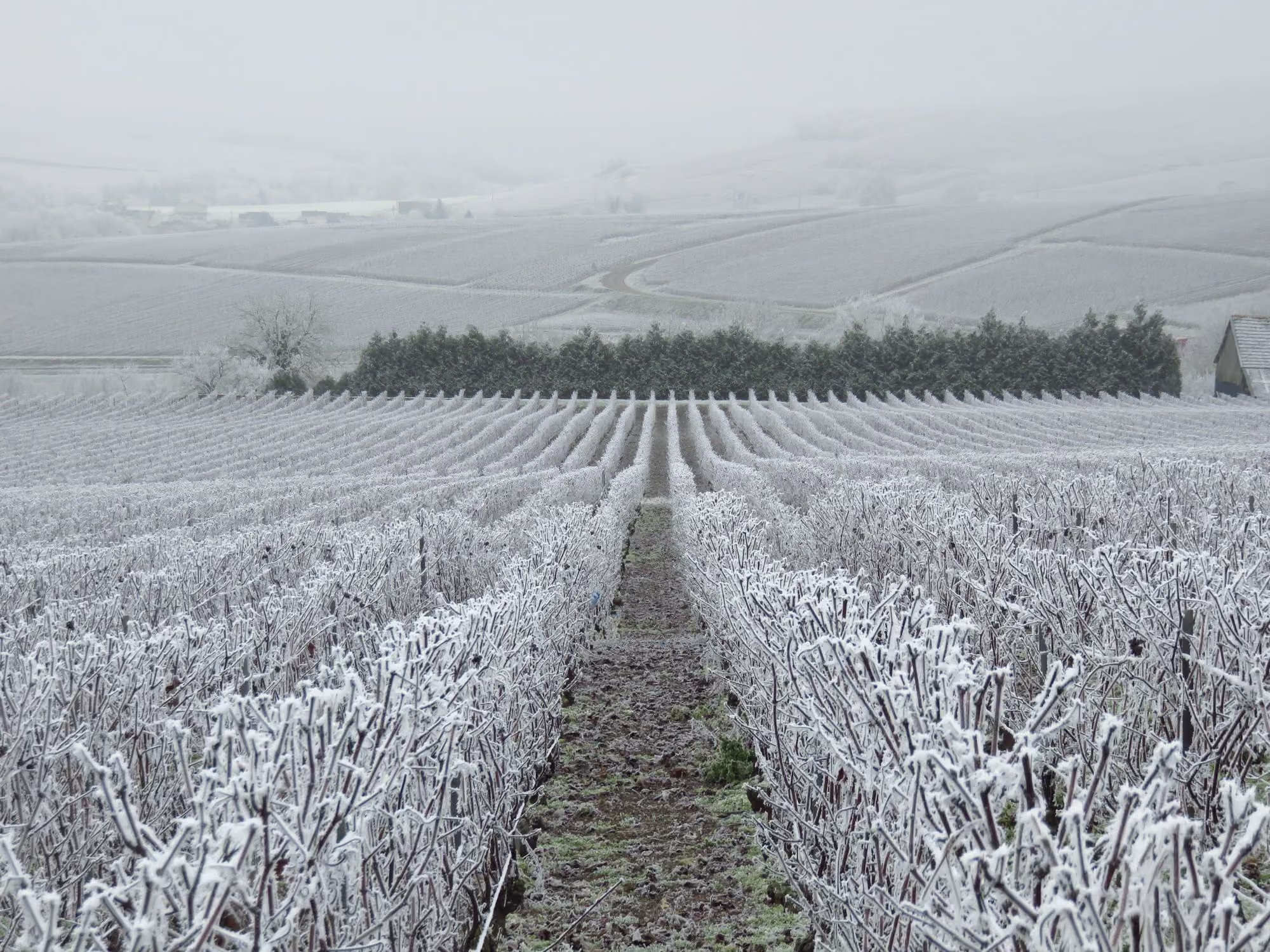
Vine frost occurs when temperatures drop below freezing at budburst. Water-laden buds crystallize and die. Losses can sharply reduce the yield of a parcel. In regions with a cold or unstable wine climate, this risk comes back year after year. Winegrowers keep a close eye on weather forecasts. Extra vigilance makes it possible to act before the damage becomes irreversible.
Weather monitoring in the service of viticulture
Modern viticulture relies on connected weather stations. They measure air and soil temperature continuously. Winegrowers can anticipate vine frost episodes thanks to real-time alerts. This precise monitoring of the wine climate helps guide the choice of protection method to put in place.
Anti-frost candles to protect the vines
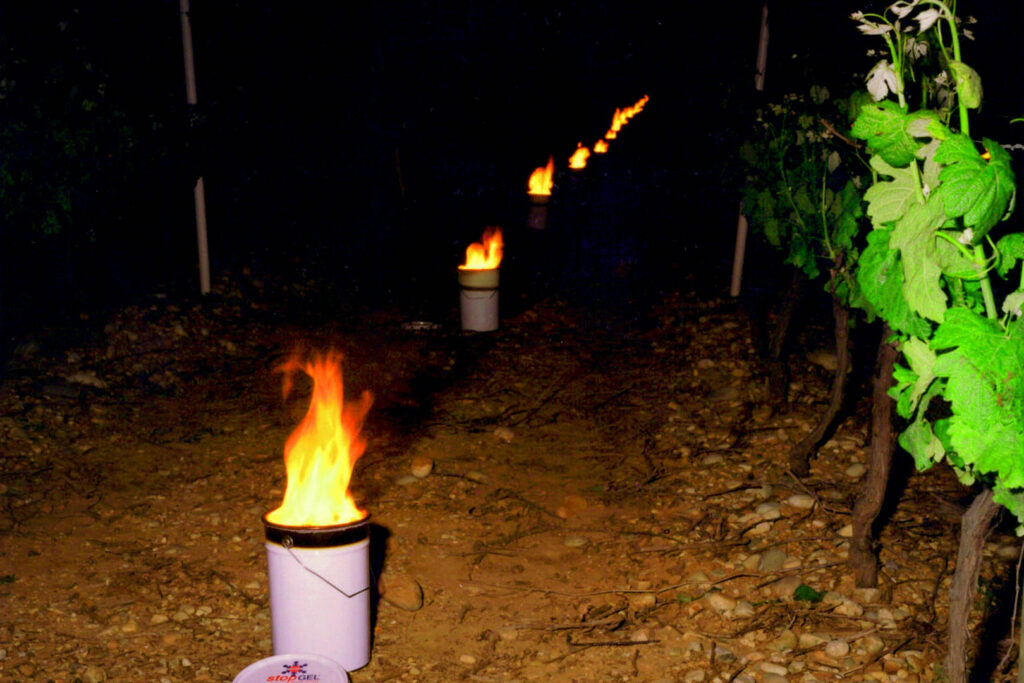
Anti-frost candles are one of the traditional vine protection techniques. Placed between the rows, they give off heat. Their effect raises the ambient temperature slightly around the buds. This solution is expensive, but effective on critical nights. It remains well suited to small parcels or prestigious crus.
Sprinkling water to counter vine frost
Sprinkling involves watering the vines when frost threatens. The water forms a thin film that freezes around the buds. This phenomenon protects the internal temperature of the plant tissues. This viticulture technique requires an abundant water supply and suitable equipment. It offers reliable vine protection, even in intense cold.
Anti-frost towers to circulate the air

Anti-frost towers use large propellers to mix the air. They move warmer air from higher up down toward the vines. This method limits the impact of vine frost on calm, clear nights. The towers run on fuel oil, electricity, or gas. They’re common in vineyards exposed to a continental wine climate.
Mobile heaters for emergency situations
Winegrowers can install mobile heaters between the vine rows. These devices send targeted heat toward the buds. They’re often used alongside other vine protection methods. This setup remains costly and requires constant monitoring. It’s especially suited to small estates or high-value parcels.
The role of nets and thermal covers
In some areas, winegrowers use nets or thermal tarps. These protections create a barrier against the night cold. They reduce heat loss from the soil and the vines. This kind of preventive viticulture works well for young plants. It does, however, require strong logistical organization in spring.
Adapting pruning and vine training
Pruning choices affect resistance to vine frost. Winegrowers sometimes delay pruning to push back budburst. Later growth escapes spring frosts more easily. Training systems also influence air circulation in the vineyard. Good airflow limits pockets of cold air near the buds.
Soil work to optimize vine protection
Well-maintained soil stores heat more effectively during the day. That heat is released at night and reduces the impact of vine frost. Winegrowers can mechanically weed to encourage this thermal buildup. This soil work is part of a broader sustainable viticulture strategy.
Choosing grape varieties suited to the wine climate
Choosing the right grape variety is essential to limit frost-related losses. Winegrowers sometimes favor varieties with later budburst. In a high-risk wine climate, that choice reduces damage. Vine protection also depends on adapting plantings to local conditions.
The importance of training and exchange among winegrowers
Fighting vine frost requires a solid understanding of the methods available. Specialized training helps professionals optimize their vine protection. Exchanging experiences among winegrowers makes it possible to learn from effective solutions. That sense of solidarity is invaluable in regions where viticulture regularly suffers losses.
If you enjoyed this article, don’t hesitate to read the next one, "Setting up a wine cellar in a garage: the steps to follow", which may also interest you!
Good to know:
The best way to get better at tasting is to write down what you taste: colour, nose, palate, and above all what you thought of it. Over time, your notes reveal your preferences far better than any guide. In Oeni, every bottle in your cellar has its own tasting sheet, ready to fill in within seconds.