Summarize this article with
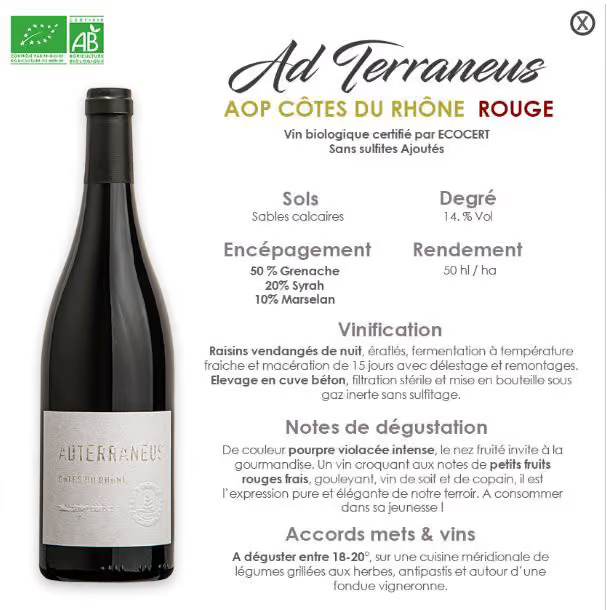
When you buy a bottle, the wine technical sheet gives you precise information about its composition and tasting potential. Yet many consumers don’t always know how to interpret it. Understanding the details on this sheet helps you appreciate the wine more fully, make informed choices, and anticipate how it will evolve.
Why consult a wine technical sheet?
A wine technical sheet is a detailed document prepared by the producer or distributor. It helps you understand:
- The wine’s origin and characteristics.
- The grape varieties used.
- The winemaking techniques applied.
- Tasting advice and food and wine pairings.
It’s useful for both enthusiasts and professionals when selecting bottles.
The essential elements of a wine technical sheet
IMAGE WITH URL [https://www.somm-it.com/wp-content/uploads/Capture-de%CC%81cran-2018-03-08-a%CC%80-11.49.46-1.png] GOES HERE
1. Wine identification
The first part of the sheet provides general information about the bottle:
- Wine name: It may mention the appellation, the domaine, or a specific cuvée.
- Region and appellation: Indicates the origin and the regulations in force (AOC, IGP, VDP).
- Vintage: Tells you the harvest year, which influences quality and aging potential.
This information lets you identify the wine’s character at a glance.
2. The grape varieties used
The wine technical sheet specifies the grape varieties that make up the wine.
- A single-varietal wine (e.g., Chardonnay, Merlot) highlights one dominant grape variety.
- A blended wine combines several grape varieties to balance structure, aromas, and acidity.
The grape varieties listed give you a sense of the wine’s aromatic profile and structure.
3. Winemaking details
The winemaking section covers all the steps that transform grapes into wine. The technical sheet often includes these details:
- Type of fermentation: In stainless steel, concrete, or oak, which influences flavor and texture.
- Aging period: A wine aged in barrel develops oaky aromas and a more complex structure.
- Maceration and extraction: For red wines, the length of maceration affects the concentration of tannins and aromas.
This information gives you clues about the wine’s style and longevity.
4. Sensory analysis
A good wine technical sheet describes the wine’s sensory profile in three ways:
- Appearance: Indicates color and brilliance, revealing the wine’s age and intensity.
- Nose: Describes the aromas perceived (red fruit, citrus, spices, oaky notes).
- Palate: Analyzes texture, the balance between acidity and sweetness, and the length of the finish.
A sensory wine analysis guides the consumer toward the tasting experience they can expect.
5. Technical characteristics
Some scientific data appear on the technical sheet:
- Alcohol content: A wine at 12% will be lighter than one at 15%.
- Acidity (pH): Influences the wine’s freshness.
- Residual sugar content: Indicates whether the wine is dry, off-dry, or sweet.
- Tannin level: Relevant for structured red wines.
These figures help you better understand the wine’s balance.
6. Serving and food pairing advice
The wine technical sheet also gives recommendations for enjoying the wine at its best:
- Serving temperature: Whites between 8 and 12°C, reds between 14 and 18°C.
- Decanting or aeration: Some young, tannic wines benefit from being decanted.
- Food and wine pairings: Suggestions for matching the wine with harmonious dishes.
These tips make tasting easier and bring out the wine’s flavors.
7. Aging Potential
Some wines are meant to be enjoyed young, while others evolve over time. The technical sheet often mentions:
- Short aging potential (1-3 years) for light, fruity wines.
- Medium aging potential (5-10 years) for balanced reds.
- Long aging potential (+10 years) for powerful, complex wines.
Knowing how long to keep a wine helps you optimize its aging in the cellar.
How do you use a technical sheet to choose a wine?
When you analyze a wine technical sheet, ask yourself the right questions:
- Do the grape variety and appellation match my tastes? If you enjoy fruity wines, go for a Pinot Noir or a Gamay.
- Do the wine’s characteristics match the dish I’m planning? A crisp white wine like Sauvignon Blanc will pair better with seafood than an oaky Chardonnay.
- Is this wine meant to be drunk young, or should I age it? A structured, tannic wine will gain maturity after a few years in the cellar.
- Am I comfortable with the alcohol and acidity levels? A light, fresh wine will suit a summer tasting better than a powerful wine at 15% alcohol.
Understanding these elements helps you make a better choice and get the most out of your wine.
Mistakes to avoid when reading a technical sheet
- Looking only at the alcohol level: A wine at 14% isn’t necessarily more powerful than one at 12%; it all depends on the overall balance.
- Ignoring the winemaking: A wine aged in barrel will have a different aromatic profile from one aged in stainless steel.
- Forgetting the food pairings: Choosing a wine without thinking about the dishes it will be served with can lead to an unbalanced match.
- Not taking aging potential into account: Some young wines are too tannic to enjoy right away.
Reading a wine technical sheet well to better enjoy your tasting
The wine technical sheet is a valuable tool for understanding a wine before you even open it. It provides information on winemaking, wine analysis, and food and wine pairings. Knowing how to decode it helps you choose a bottle that suits your preferences and your tasting occasions.
The next time you buy wine, take the time to read its technical sheet. It’ll help you anticipate its flavor, its aging potential, and nail your food pairings.
If you enjoyed this article, feel free to read the next one, "How to Organize a Wine Tour in France", which might interest you too!
Good to know:
The best way to get better at tasting is to write down what you taste: colour, nose, palate, and above all what you thought of it. Over time, your notes reveal your preferences far better than any guide. In Oeni, every bottle in your cellar has its own tasting sheet, ready to fill in within seconds.