Summarize this article with
In the world of luxury, every detail matters. Aesthetics, refinement, and history all help shape a powerful perception. Luxury wine perfectly embodies these values. It becomes a powerful tool for asserting a premium positioning.
If articles about the wine world interest you, download our app on iOS or Android. It gives you access to our wine glossary, our articles, and our innovative solution, designed for every wine consumer and collector.
Wine, a universal symbol of sophistication
Wine evokes culture, rarity, and taste. These elements fit the world of luxury perfectly. A prestigious bottle expresses elegance without needing words. Luxury wine sends a powerful message, often stronger than an advertisement.
The great houses understand this language. They weave wine into their events, gift sets, and campaigns. This subtle association strengthens brand image and reinforces a well-thought-out brand strategy.
LVMH, a model of integration between wine and luxury
The LVMH group perfectly illustrates this logic. It owns prestigious estates: Dom Pérignon, Château d’Yquem, Krug, and Cheval Blanc. These names embody the group’s premium positioning. They extend the codes of luxury into the world of wine.
LVMH doesn’t just sell champagne or wine. It offers an experience, a way of life. Luxury wine becomes a pillar of its image. It fuels the brand’s credibility across all its worlds: fashion, watchmaking, cosmetics, and more.
Wine as a vehicle for emotion and heritage
Wine carries a story. Every cuvée tells of a terroir, a vintage, and a craft passed down through time. These elements strengthen the message of luxury brands, which are often centered on tradition and transmission.
A luxury wine ages, keeps, and gains value. It symbolizes patience, mastery, and timelessness. These qualities fit perfectly into a high-end brand strategy. They inspire trust, respect, and admiration.
Premium positioning and limited editions
Brands often use rare cuvées to create exclusivity. Some fashion houses launch limited-edition wines dressed by their designers. Loyal clients receive these bottles at private events.
This premium positioning rests on rarity, bespoke craftsmanship, and prestige. Luxury wine becomes a coveted object, reserved for a select few insiders. It strengthens the feeling of belonging to an exclusive circle, one that is central to the luxury world.
Artistic collaborations and exceptional packaging
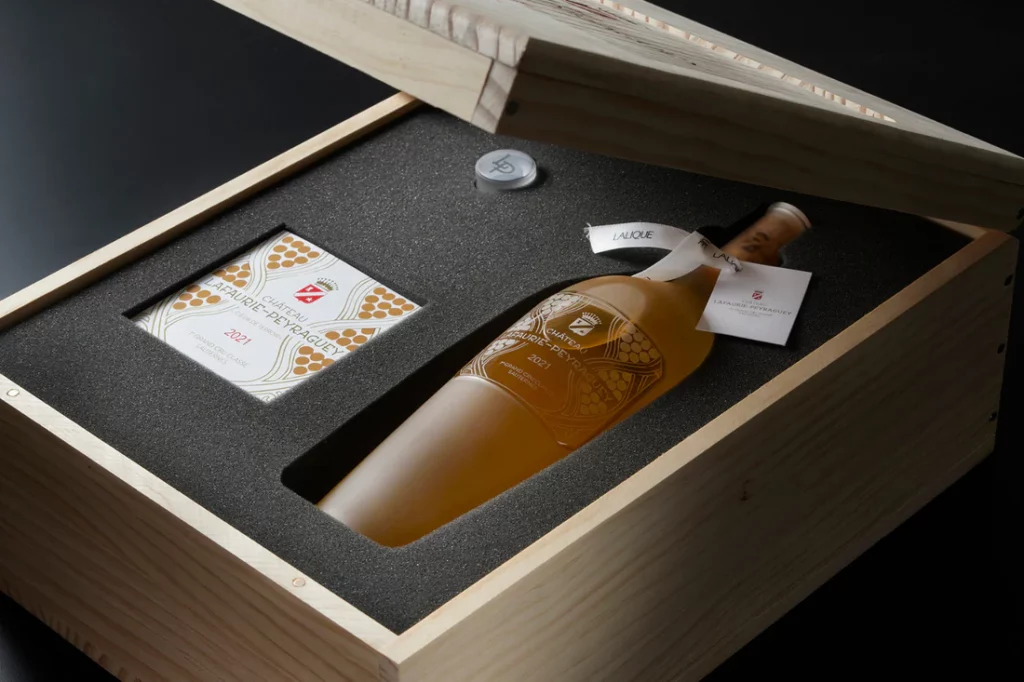
Design plays a key role in a wine’s visual impact. Many luxury brands collaborate with artists to create unique bottles. Think, for example, of labels signed by Jeff Koons or Takashi Murakami.
These creations turn luxury wine into a work of art. The bottle no longer simply contains. It becomes collectible. This move fits into a broader brand strategy: making every detail an expression of refinement.
The customer experience: tastings and exceptional settings
Major brands also invest in the experience. They host private tastings in sumptuous settings. They invite clients to visit prestigious estates, sometimes closed to the public.
Premium positioning comes through these extraordinary moments. Luxury wine becomes the thread running through a lasting memory. It creates emotion. It builds loyalty. It turns a commercial relationship into an emotional and cultural bond.
Wine in advertising campaigns
Some brands subtly incorporate wine into their communication. A watch placed beside a glass of Burgundy. A fragrance photographed in front of an old cellar. The message is clear: our product is for lovers of elegance and taste.
Luxury wine acts as a visual symbol. It evokes mastery, harmony, and measured pleasure. It strengthens brand image without overload. It creates a coherent universe where everything speaks of quality.
Showcasing terroir and authenticity
In a world dominated by digital life, a return to the real feels precious. Wine embodies that authenticity. It comes from the earth, the climate, and manual labor. It speaks to those looking for meaning.
Premium positioning no longer rests on ostentatious luxury alone. It is enriched by values: sustainability, origin, and traceability. Luxury brands use luxury wine to embody that depth. They show that they respect time, craftsmanship, and nature.
Reaching a cultured, passionate clientele
Wine attracts a demanding audience. These are often aesthetes, connoisseurs, and collectors. Luxury brands find a natural audience here. By associating themselves with estates or wine events, they speak directly to this segment.
This choice strengthens their brand strategy. It creates a natural affinity with lovers of culture, art, and gastronomy. Luxury wine becomes a bridge to consumers with strong purchasing power.
A trend growing fast
More and more luxury brands are investing in wine. Some are creating their own estates. Others are striking exclusive partnerships. Global demand for luxury wine is rising, especially in Asia and the United States.
This momentum reinforces the strategies already in place. Premium positioning becomes more global and more cross-functional. Wine is no longer an isolated sector. It fits into a 360-degree vision of luxury.
If you enjoyed this article, don't hesitate to read the next one, "A look at the great Bordeaux appellations: Médoc, Saint-Émilion, and Graves", which may also interest you!
Good to know:
The best way to get better at tasting is to write down what you taste: colour, nose, palate, and above all what you thought of it. Over time, your notes reveal your preferences far better than any guide. In Oeni, every bottle in your cellar has its own tasting sheet, ready to fill in within seconds.