Summarize this article with
Knowing the right moment to open a bottle of wine lets you enjoy all its richness. A wine’s shelf life varies according to many factors. Some wines are meant to be drunk young, while others reach their peak after several years.
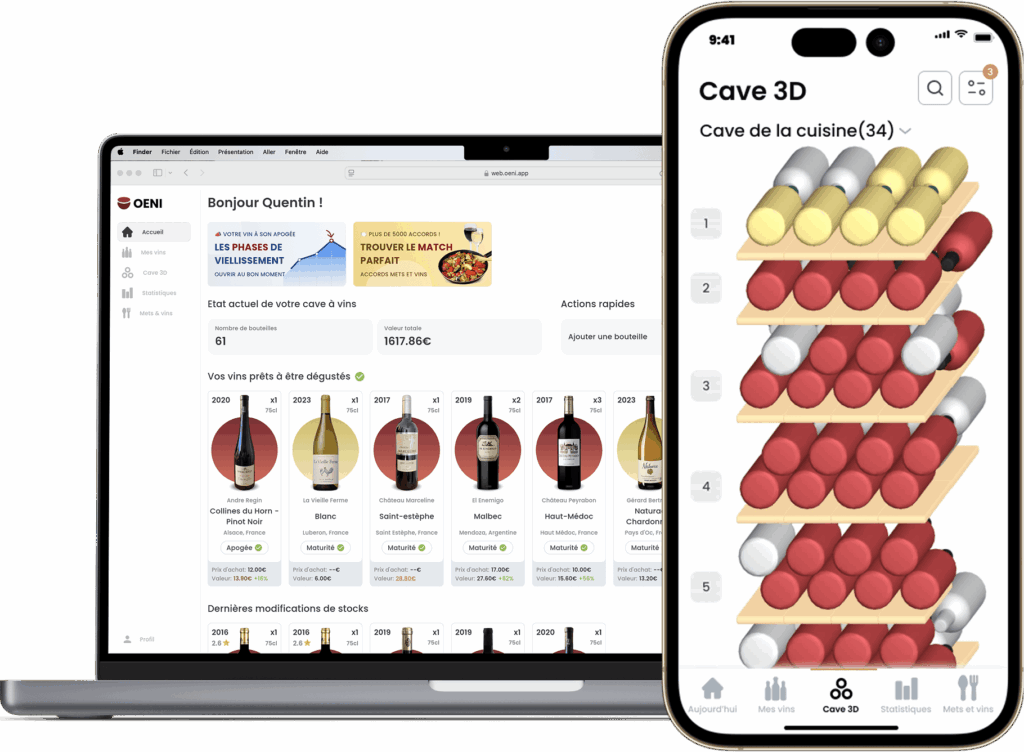
If articles about the world of wine interest you, download our app on iOS or Android. It gives you access to our wine glossary, our articles, and our innovative solution, designed for every wine consumer and collector.
The factors that influence a wine’s shelf life
Several elements affect a wine’s aging potential. The grape variety, harvest year, winemaking, and wine style all matter a great deal. A tannic red wine keeps better than a light rosé. Likewise, great wines often have greater aging potential than simpler cuvées.
Acidity and tannins play a key role. A wine with bright acidity or plenty of tannins ages better. The balance between alcohol, structure, and freshness also ensures graceful evolution. Understanding these elements helps you decide when to drink a wine without losing its aromas.
Wines to drink young
Some wines are best enjoyed quickly. That’s the case with many dry whites, rosés, or fruity reds. They offer freshness, lift, and simplicity. There’s no need to wait years; in fact, their aromas would fade.
For example, a Muscadet, a Beaujolais Nouveau, or a Côtes-de-Provence rosé is best enjoyed within the year or the following year. Their wine shelf life rarely exceeds two to three years. You’ll want to plan to open them within that window.
Age-worthy wines: patience and reward
Other bottles are worth waiting for. Some Bordeaux, red Burgundy, Hermitage, or Barolo improve in the cellar. Their tannins soften, and the aromas evolve toward complex notes of forest floor, leather, or spice.
A great Bordeaux can age for 10 to 20 years. A Châteauneuf-du-Pape often ages for 8 to 15 years. But be careful: everything depends on the vintage. A good cellar, with a stable temperature and low light, helps optimize bottle aging.
White wines with serious aging potential
Contrary to popular belief, some white wines age beautifully. That’s true of great Burgundy, German Riesling, and sweet wines. Their acidity allows them to stand the test of decades.
A Savennières or a Meursault can keep for 10 to 15 years. A Sauternes or a Tokay can age even longer. Wines like these develop aromas of honey, dried fruit, and beeswax. Their wine shelf life often surprises newcomers.
When to drink a wine according to the vintage year
The vintage has a major influence on the ideal drinking window. A warm year often produces wines that are rich and approachable sooner. A cooler year gives more taut wines that often take longer to open up.
Specialized guides help estimate when to drink a wine based on its region, domaine, and harvest. Some websites or apps offer personalized advice. Keeping track of your bottles also makes it easier to decide when to open them.
How can you assess a wine’s condition without opening it?
Several clues help you estimate a bottle’s maturity. The label, fill level, color, and sediment all offer useful hints. A wine that looks too pale or oxidized may signal a storage problem.
Gently shaking the bottle can help you spot sediment. That doesn’t mean you should throw the bottle away. On the contrary, sediment can be a sign of good bottle aging. But you’ll need to decant the wine before serving it.
Mistakes to avoid when storing wine
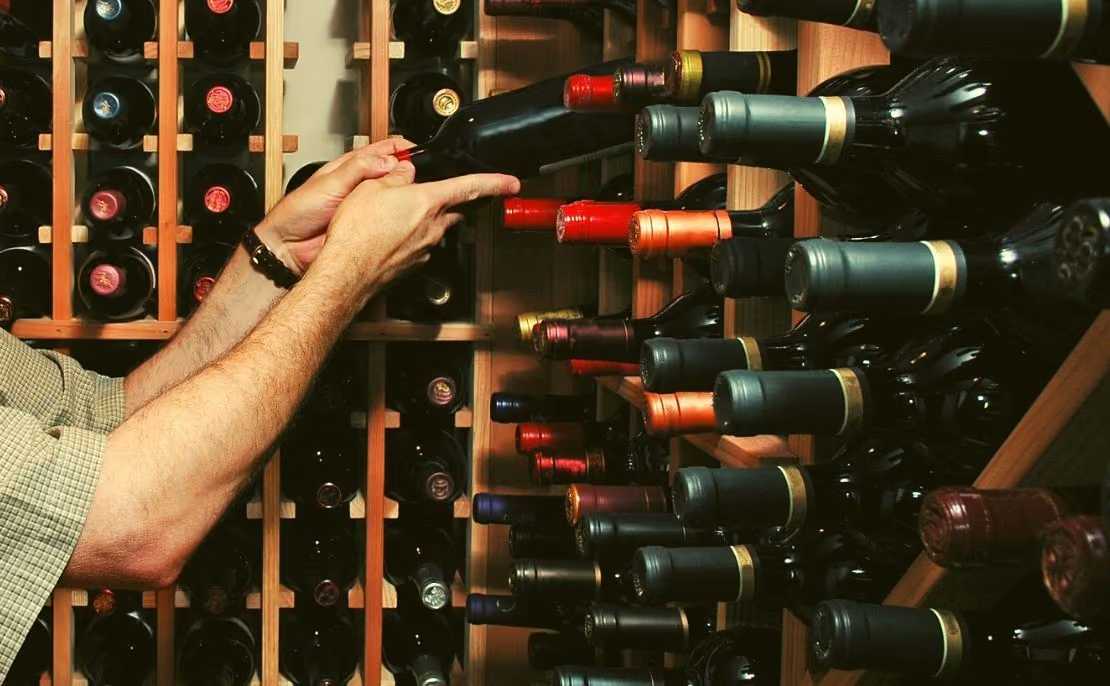
Poor storage compromises wine quality. Light, vibration, temperature swings, and upright storage all harm proper aging. You need a stable, dark environment, with a temperature between 12 and 14 °C.
Keeping a bottle in a warm kitchen or a bright cupboard speeds up aging. The wine then loses its aromas and freshness. A proper cellar or wine fridge remains essential, even for wines with a short shelf life.
The role of the wine cellar in aging

A well-calibrated wine cellar extends the life of your bottles. It keeps the temperature stable, maintains proper humidity, and protects against shocks. Multi-zone models let you adapt conditions to different wine styles.
That means you can store reds, whites, or Champagne in the same space. It makes smart cellar management easier and helps optimize bottle aging. Investing in this kind of equipment can pay off handsomely over the long term.
What if you open a bottle too early?
Drinking a wine too young deprives you of its complexity. The aromas stay closed, the tannins feel aggressive, and the balance remains unfinished. You’ll need to decant the wine for a long time, sometimes two to three hours.
This oxygenation speeds up evolution. But it doesn’t replace real aging. It’s better to wait a few more years to reveal its full potential. Knowing when to drink a wine helps you avoid wasting a beautiful bottle.
What if you open it too late?
By contrast, a wine that’s too old loses its structure. The aromas go dull, the acidity fades, and the pleasure diminishes. A good wine has an optimal drinking window.
That’s why you need to follow your bottles’ evolution regularly. Noting dates, tastings, and impressions helps you manage your cellar more effectively. Using a tracking app also makes that management simpler.
If you enjoyed this article, don’t hesitate to read the next one, "Wine regions you can reach by train from Lyon", which may also interest you!
Good to know:
The best way to get better at tasting is to write down what you taste: colour, nose, palate, and above all what you thought of it. Over time, your notes reveal your preferences far better than any guide. In Oeni, every bottle in your cellar has its own tasting sheet, ready to fill in within seconds.