Summarize this article with
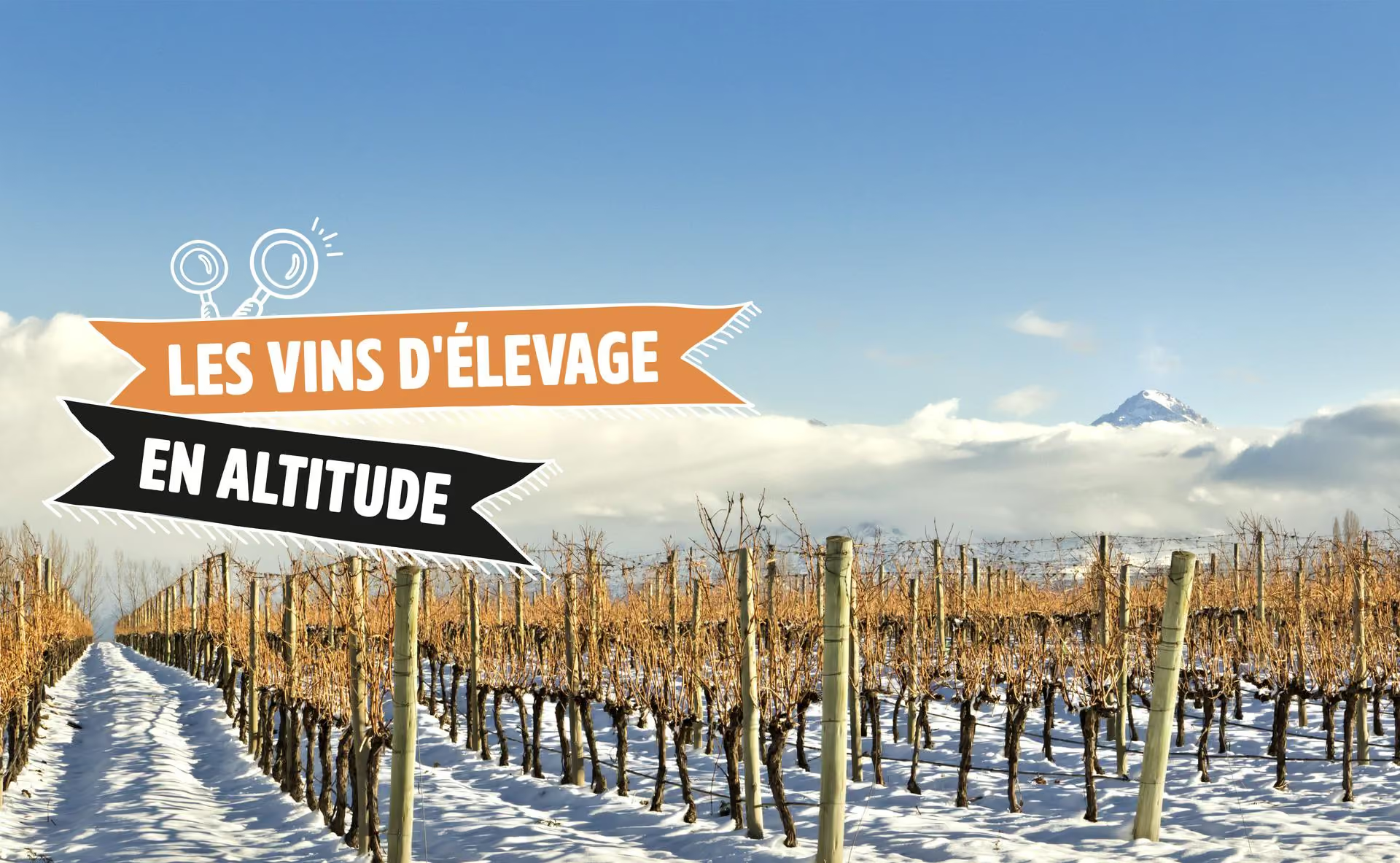
Les vins d'altitude séduisent par leur fraîcheur, leur finesse et leur capacité à refléter un terroir unique. Cultivés dans des régions en haute altitude, ces vins sont souvent issus de cépages rares adaptés aux climats extrêmes.
Qu'est-ce qu'un vin d'altitude ?
Un vin d'altitude provient de vignobles situés à une hauteur supérieure à 500 mètres au-dessus du niveau de la mer.
1. Les caractéristiques des vins d'altitude
- Fraîcheur marquée : Les températures plus basses favorisent une acidité naturelle et des arômes vifs.
- Complexité aromatique : Les cycles de maturation plus longs permettent le développement de saveurs complexes.
- Structure élégante : Ces vins présentent souvent des tanins fins et une grande précision en bouche.
2. L'impact de l'altitude sur la vigne
- Amplitude thermique : Les écarts de température entre le jour et la nuit intensifient les arômes.
- Lumière intense : À haute altitude, la lumière solaire favorise la concentration des polyphénols dans les raisins.
- Sol pauvre et drainant : Ces sols limitent le rendement, augmentant la qualité des raisins.
Pourquoi l'altitude transforme le vin ? 3 mécanismes scientifiques
1. La règle des -1°C par 100 mètres
La température baisse d'environ 1°C tous les 100 mètres d'altitude. À 1 000 mètres, un vignoble est donc naturellement 10°C plus frais qu'en plaine. Ce ralentissement de la maturation préserve l'acidité naturelle du raisin et permet aux arômes de se développer progressivement, sans jamais atteindre la surmaturité.
2. L'amplitude thermique jour/nuit
En altitude, les nuits sont fraîches même en été. Cet écart thermique (parfois 20°C entre midi et minuit) bloque la combustion des acides la nuit, tout en permettant la montée en sucre le jour. Résultat : des vins à la fois mûrs et frais, avec une tension aromatique unique.
3. La pression atmosphérique réduite
En altitude, la pression atmosphérique est plus basse et le taux d'oxygène diminue. Des expérimentations menées à Val-Thorens (1 450 m et 2 300 m) ont confirmé que les vins stockés en altitude deviennent plus denses, plus longs et plus harmonieux. Les cépages Syrah, Tannat, Pinot et Cabernet Sauvignon sont tout particulièrement sujets à ces conditions.
Les cépages rares adaptés à l'altitude
Les vignobles en altitude favorisent souvent la culture de cépages rares, capables de résister à des conditions climatiques extrêmes.
1. Cépages rouges
- Cornalin : Originaire des Alpes suisses, il donne des vins riches et épicés.
- Piedirosso : Cultivé en Campanie, il offre des arômes fruités et floraux.
- Tannat : Présent dans les Pyrénées, ce cépage produit des vins tanniques et robustes.
2. Cépages blancs
- Petit Arvine : Typique de la Suisse, il se distingue par ses arômes d'agrumes et sa vivacité.
- Riesling : Idéal pour les climats frais, il donne des vins minéraux et équilibrés.
- Godello : Cultivé dans les montagnes espagnoles, il produit des vins blancs complexes et élégants.
3. Pourquoi ces cépages ?
Ces cépages s'épanouissent dans des environnements où les températures fraîches et les sols rocailleux favorisent une maturation lente et équilibrée.
Les grandes régions viticoles d'altitude à explorer
1. Les Alpes (France, Suisse, Italie)
Les vignobles alpins offrent des vins d'altitude d'une grande élégance, souvent issus de cépages rares.
- France : La Savoie produit des vins blancs minéraux à base de Jacquère ou d'Altesse.
- Suisse : Le Valais est célèbre pour ses vins de Cornalin et de Petite Arvine.
- Italie : Le Trentin-Haut-Adige cultive le Lagrein et le Gewurztraminer, des cépages adaptés aux altitudes élevées.
2. Les Andes (Argentine, Chili)
Les vins d'altitude argentins sont produits dans des vignobles situés entre 800 et 3 000 mètres.
- Argentine : Le Malbec de Mendoza, cultivé à 1 500 mètres, est particulièrement réputé pour sa profondeur aromatique.
- Chili : Les vignobles de l'Elqui et de Limarí produisent des vins frais et minéraux.
3. Les Pyrénées (France, Espagne)
Les vignobles pyrénéens combinent altitude et diversité de cépages.
- France : Le Madiran, avec son Tannat puissant, est emblématique de cette région.
- Espagne : La Ribera Sacra, en Galice, produit des vins élégants à base de Mencía.
4. L'Atlas (Maroc)
Les vignobles situés à flanc de montagne, jusqu'à 1 200 mètres, offrent des vins épicés et généreux avec une grande fraîcheur et des arômes d'épices.
5. Autres régions émergentes
- Australie : Les vignobles des Alpes australiennes produisent des vins frais et élégants.
- États-Unis : La Sierra Foothills en Californie est connue pour ses vins rouges structurés.
Les spécificités de la dégustation des vins d'altitude
1. Pronounced freshness
High-altitude wines are distinguished by their natural acidity, which makes them particularly lively and refreshing.
2. Distinct minerality
Poor, rocky soils contribute to a unique minerality, often found in whites and certain reds.
3. Great finesse
Their tannins are often fine and elegant, offering a silky texture on the palate.
4. Food and wine pairings
- Red wines : Perfect with grilled red meats or mountain dishes like fondue.
- White wines : Ideally accompany fish, seafood, or vegetarian dishes.
Mistakes to avoid with high-altitude wines
1. Ignoring their aging potential
Some high-altitude wines, thanks to their acidity and tannins, age very well.
2. Serving them at the wrong temperature
Serve reds slightly chilled (16°C) and whites at 10-12°C to fully appreciate their aromas.
3. Overlooking the grape varieties
Each grape variety has its own specificities. Learn about their characteristics to make an informed purchase.
Current trends in high-altitude wines
1. Growing interest in extreme terroirs
Consumers are looking for authentic, unique wines produced under challenging conditions.
2. Exploring new grape varieties
Winemakers are experimenting with rare grape varieties to produce original and expressive wines.
3. Eco-friendly initiatives
Many high-altitude vineyards are adopting organic or biodynamic practices to preserve their ecosystems.
In summary: which high-altitude wine should you choose?
Golden rule: the higher the altitude, the more the wine gains in freshness, acidity, and aromatic finesse, at the expense of body and warmth.
An invitation to explore high-altitude wines
High-altitude wines, with their freshness, complexity, and true reflection of their terroir, offer a unique experience. By discovering these wine regions and their rare grape varieties, you will enrich your wine knowledge and your cellar. These wines deserve a place of honor for their exceptional qualities and authentic character.
If you enjoyed this article, be sure to read the next one: "Common mistakes to avoid when storing wine", which you might also find interesting!
Good to know:
The best way to get better at tasting is to write down what you taste: colour, nose, palate, and above all what you thought of it. Over time, your notes reveal your preferences far better than any guide. In Oeni, every bottle in your cellar has its own tasting sheet, ready to fill in within seconds.