Summarize this article with
Nestled between Europe and Asia, Georgia is home to one of the world’s oldest winemaking heritages. Its history stretches back more than 8,000 years. And yet, many people still overlook the richness of this wine country. Today, Georgian wine is enjoying a renewed wave of international interest.
If you’re interested in articles about the world of wine, download our app on iOS or Android. It gives you access to our wine glossary, our articles, and our innovative solution, designed for every wine consumer and collector.
A land of wine since time immemorial
The first traces of winemaking in Georgia date back to 6000 BC. Archaeologists have uncovered clay jars containing fermented grape residue. These discoveries confirm that traditional viticulture was born here long before it spread across the rest of Europe.
Since then, grape growing has been woven into Georgian identity. Wine is part of every celebration, every meal, every religious gathering. People drink it with family, with friends, or during the famous “supra” feasts, ritual banquets where toasts are raised at every turn.
Ancient grape varieties: a preserved treasure
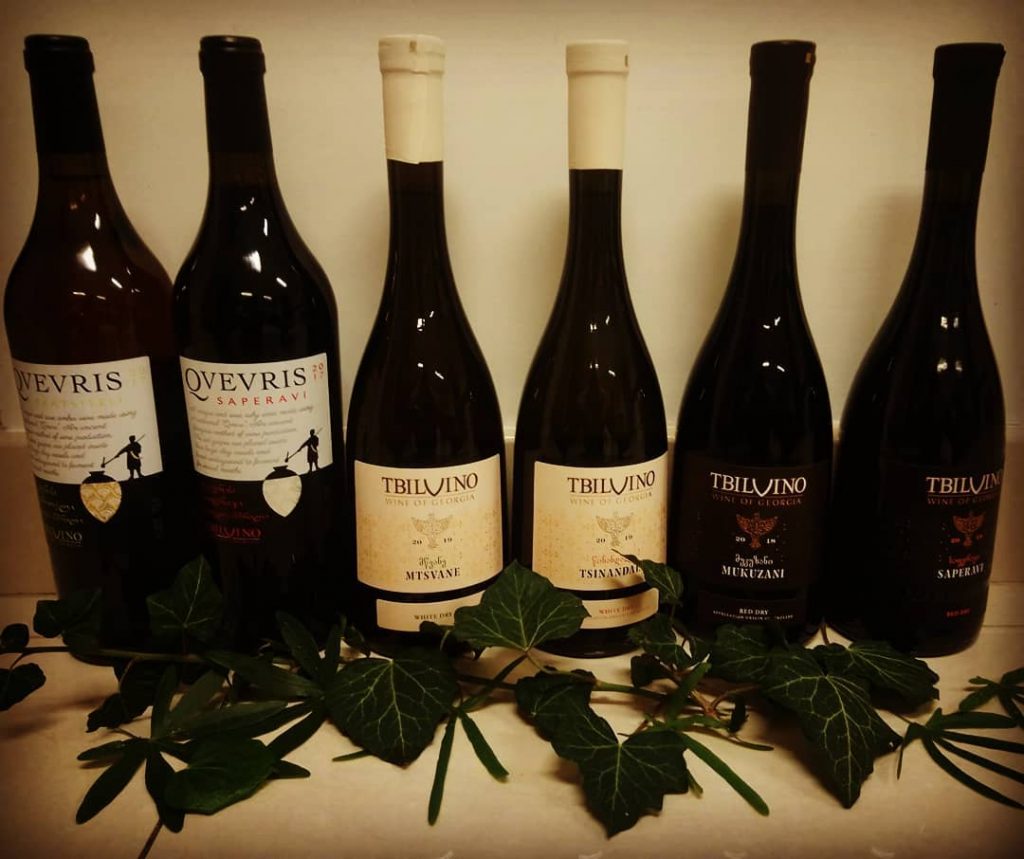
Georgia is home to more than 500 indigenous grape varieties. That’s a world record. Thanks to their geographic isolation, these varieties have survived epidemics and standardization.
Among the best-known ancient grape varieties, you’ll find:
- Saperavi, deep red, powerful, and rich in tannins.
- Rkatsiteli, a fresh white with notes of green apple and herbs.
- Mtsvane, floral and lively, ideal for dry or amber wines.
These grape varieties give Georgian wines a character all their own, far from Western standards. They offer surprising aromas, beautiful freshness, and remarkable complexity.
The Qvevri method: a millennia-old winemaking tradition
The most iconic feature of Georgian wine is its production method: qvevri winemaking. These large terracotta jars are buried in the ground, which helps maintain a stable temperature during fermentation.
The grapes, crushed whole with their skins, seeds, and sometimes stems, ferment naturally in the qvevri. The wine is then left to macerate for several months. This ancient technique gives the wines a distinctive texture and a pronounced tannic structure, even in whites.
This process, with no added commercial yeasts, follows the principles of traditional viticulture. It gives rise to so-called “amber” wines, often confused with orange wines. But here, the method rests on ancestral know-how passed down from generation to generation.
Viticulture rooted in popular culture

In Georgia, almost every home has its own vine. Making your own wine remains a living tradition. Families tend their ancient grape varieties with care. They press their harvest by hand and store the wine in family qvevris. This closeness to the land keeps traditional viticulture alive.
The gestures are the same as they’ve been for centuries. The goal isn’t mass production. It’s not about yield, but about quality and the honesty of the product. This respect for terroir is winning over more and more wine lovers around the world.
The revival of Georgian wines on the world stage
After the Soviet era, Georgia turned toward a more independent style of viticulture. Family domaines took back the reins. They began highlighting ancient grape varieties once again, many of them long forgotten.
Today, Georgian bottles are finding their place on some of the best tables. Sommeliers recommend them for their authenticity. Georgian wine doesn’t try to imitate the great French or Italian wines. It stands apart, and that’s exactly what people love about it.
In France and beyond, curiosity about these wines keeps growing. People seek them out for their originality, their history, and their honesty.
A diversity of styles for every palate
Georgian wine comes in many styles. You’ll find deep reds, crystalline whites, complex amber wines, and even a few artisanal sparkling wines. Every region produces something different. Climate, altitude, and soil vary widely, offering a broad aromatic spectrum.
In the west of the country, lighter wines are favored, often off-dry. In the east, the reds are fuller-bodied. These regional differences only add to the richness of Georgia’s wine landscape.
Wine as a way of life
In Georgia, wine is more than a drink. It’s part of a way of life. It’s shared, honored, and tells a story. During supra feasts, the tamada, or toastmaster, guides the toasts with poetry and wisdom. Every glass carries a message, a memory, or a wish.
This spiritual and social dimension gives wine a sacred importance. It brings generations together, celebrates the living, and honors the departed. This tradition makes Georgian wine a powerful symbol of national culture.
The challenges ahead
Despite its growing success, Georgian wine faces several challenges. Climate change is altering growing cycles. Small producers must adapt without betraying traditional viticulture.
What’s more, pressure from the international market could push some producers to standardize their production. Fortunately, many winemakers are holding firm. They prefer to keep showcasing their ancient grape varieties and their expertise.
Local initiatives support this approach. They help preserve old vines and encourage more respectful farming.
Why taste a Georgian wine?
Discovering a Georgian wine means tasting a living memory. Every sip tells a story that stretches back thousands of years. It’s also an invitation to slow down, savor, and marvel at a product that feels raw and sincere.
Whether you’re a seasoned wine lover or simply curious, let yourself be tempted by the experience. Explore the colors, textures, and aromas. You’ll surely find a wine that speaks to you, surprises you, or moves you.
If you enjoyed this article, don’t hesitate to read the next one, "Decoding Burgundy appellations: terroirs, climats, and hierarchy", which may also interest you!
Good to know:
The best way to get better at tasting is to write down what you taste: colour, nose, palate, and above all what you thought of it. Over time, your notes reveal your preferences far better than any guide. In Oeni, every bottle in your cellar has its own tasting sheet, ready to fill in within seconds.