Summarize this article with
Identifying a wine without knowing its name, origin, or grape variety is a demanding challenge. Yet that’s exactly what hundreds of enthusiasts take on every year. They enter wine competitions where only the palate decides. This practice, far from being reserved for professionals, is winning over more and more curious amateurs.
If articles about the world of wine interest you, download our app on iOS or Android. It gives you access to our wine glossary, our articles, and our innovative solution, designed for every wine consumer and collector.
What Is a Blind Tasting?
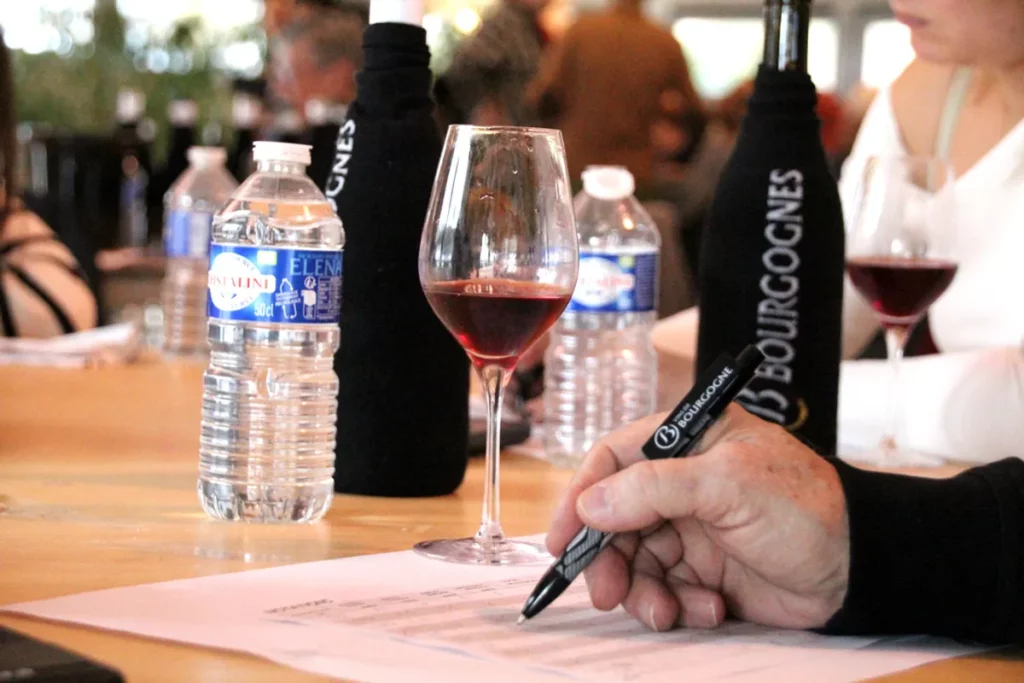
A blind tasting means tasting a wine without knowing the bottle it came from. The participant has no visual cues. The wine is served in a neutral glass. The label is hidden. Only the appearance, aromas, and taste guide the judgment.
This type of tasting has existed for a long time. It removes bias. A wine that is famous, prestigious, or expensive can impress. Blind, only what’s in the glass matters. It puts every wine on equal footing.
The Great Blind Wine Competitions
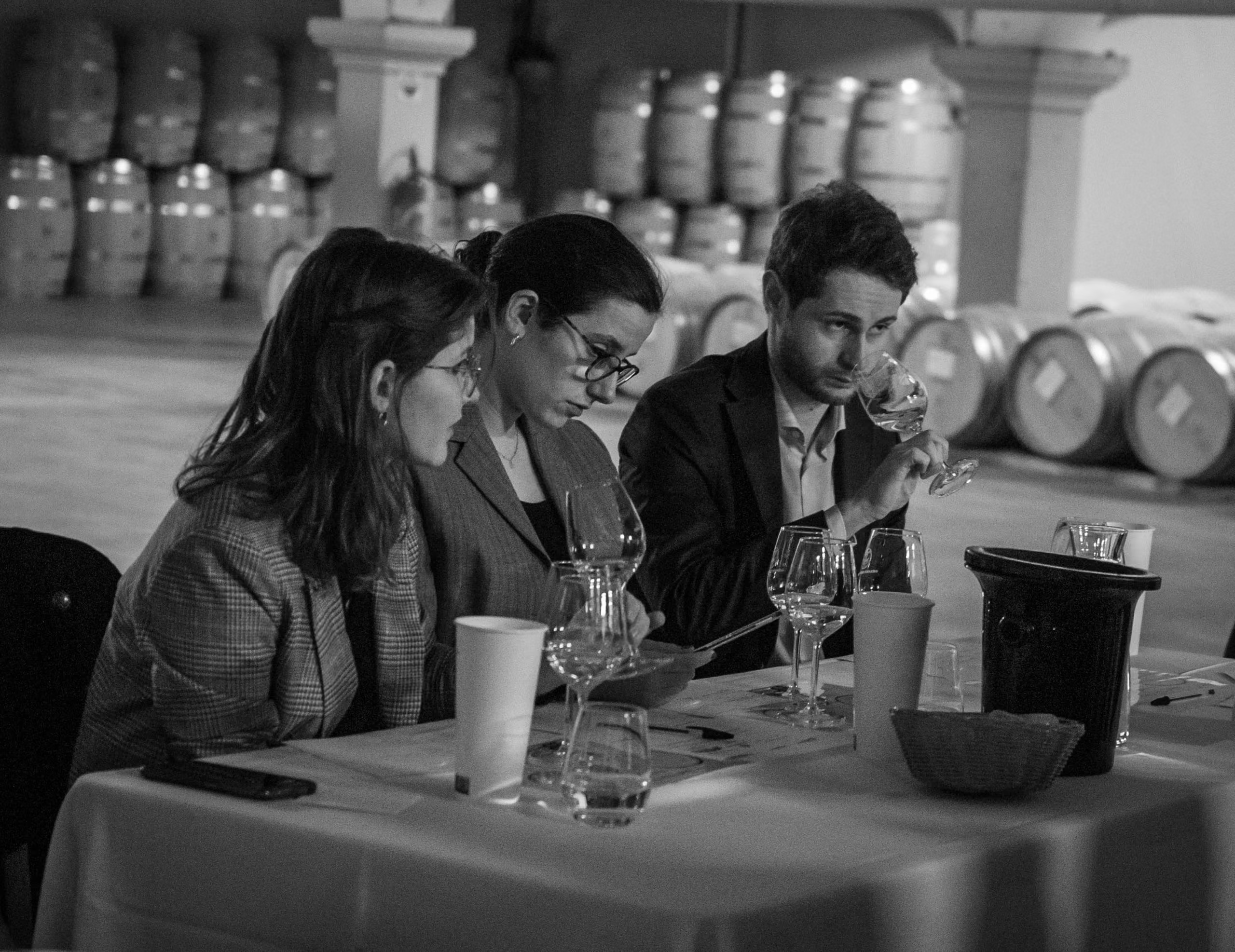
Prestigious wine competitions have emerged in several countries. In France, La Revue du Vin de France organizes a national blind tasting championship every year. Sciences Po even has its own highly active wine club.
Internationally, the World Blind Tasting Championship brings together the best teams from around the globe each year. Regional and inter-school events keep that momentum going. Blind tasting is becoming a serious discipline, and sometimes a spectacular one.
A Wine Game Anyone Can Enjoy
What makes blind tasting so fascinating is its dual nature. It’s both technical and playful. It stimulates the mind while delivering real pleasure. You can take part as an amateur, in a club, or with friends.
This wine game relies on memory, the nose, the palate, and logic too. Every wine offers clues. The goal is to guess its origin, grape variety, vintage, or aging method. Sometimes, all it takes is learning to trust your senses.
The Skills It Calls On
A good blind taster develops several skills:
- Observation: color, intensity, brilliance.
- Smell: aroma family, intensity, evolution.
- Tasting: structure, acidity, tannins, alcohol.
- Memory: comparison with wines already tasted.
- Analysis: consistency between the elements perceived.
This wine game demands concentration, but also a certain humility. Even the best get it wrong. Wine remains a living product, and sometimes an unpredictable one.
Why Does Blind Tasting Fascinate Us So Much?
Blind tasting puts everyone on the same level. It strips away prestige, marketing, and preconceived ideas. A grand cru can seem flat. A modest wine can impress. That apparent objectivity only adds to the appeal of wine competitions.
It also reveals wine’s richness. Every glass becomes a puzzle to solve. You engage your senses. You explore your memory. You challenge yourself. It’s an intellectual adventure, almost a sporting one.
The Importance of Training

Taking part in a wine competition takes practice. You need to taste regularly, compare, take notes, and memorize. Many clubs organize weekly sessions. Some enthusiasts keep a very detailed tasting notebook.
The ideal approach is to taste as a group. Discussion enriches the analysis. Everyone picks up on different things. The wine game becomes collective. It encourages listening, teaching, and sharing.
Common Mistakes to Avoid
During a blind tasting, certain mistakes come up again and again:
- Relying too quickly on a first impression.
- Trying desperately to find the right answer.
- Forgetting structure in favor of aromas.
- Confusing concentration with power.
It’s better to build your reasoning step by step. Observe, smell, taste, then deduce. A well-run wine competition depends more on method than instinct.
The Benefits of Blind Tasting
Beyond the playful side, blind tasting genuinely improves your knowledge of wine. It strengthens your ability to describe, compare, and assess. It sharpens critical thinking.
You discover your own biases. You learn to taste without prejudice. You broaden your horizons. This wine game becomes a powerful learning tool, just as useful for amateurs as it is for professionals.
Bringing This Practice Home
You can organize blind tasting evenings at home. All you need are a few covered bottles, identical glasses, and an answer sheet. Everyone writes down their impressions, then compares them with the reality.
This playful moment strengthens curiosity and memory. It creates a freer, more open relationship with wine. Blind tasting becomes a ritual to share, repeat, and deepen.
A Discipline in Full Expansion
As wine becomes more accessible, wine competitions are multiplying. Younger generations are taking a growing interest in them. Social media shares tasting clips, scores, and analyses. The wine game is becoming visible, lively, and exciting.
Some schools even offer dedicated training modules. Podcasts, YouTube channels, and apps make it possible to train online. Blind tasting is entering a new era, one that’s more accessible and more interactive.
If you enjoyed this article, don't hesitate to read the next one, "Oak Barrel Aging or Tank Aging: What Impact Does It Have on the Taste of Wine?", which might interest you too!
Good to know:
The best way to get better at tasting is to write down what you taste: colour, nose, palate, and above all what you thought of it. Over time, your notes reveal your preferences far better than any guide. In Oeni, every bottle in your cellar has its own tasting sheet, ready to fill in within seconds.