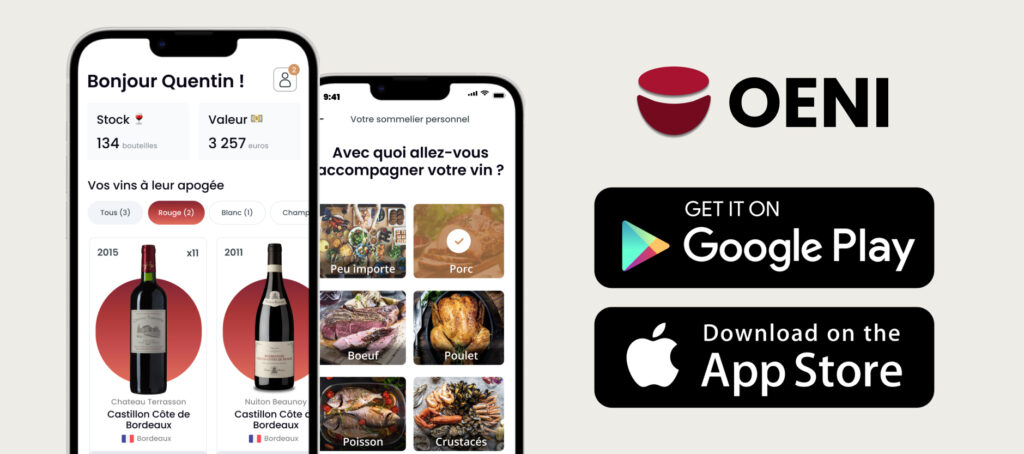

The democratization of technology now facilitates small-scale winemaking. Cellar-connected objects are transforming the way everyone can manage their personal production. Thanks to sensors, mobile applications and automated alerts, beginners and experienced wine-lovers alike are gaining in precision.
If you're interested in wine-related articles, download our app for IOS or Android. It will give you access to our wine lexicon, our articles and our innovative solution, designed for all wine consumers and collectors.
Winemaking sensors for monitoring key parameters
At the heart of this revolution are winemaking sensors. These small connected devices measure temperature, density (°Brix), pH, and even humidity levels in real time. Installed directly in the must or in the tanks, they send data to an app. Amateur winemakers can then monitor the fermentation process remotely. They can react quickly in the event of an anomaly, such as the onset of secondary fermentation or a drop in temperature.
These sensors replace manual readings, which are prone to errors. They provide accuracy comparable to that of professional systems. In addition, they maintain a centralized and secure record. The primary benefit, therefore, is greater confidence in the winemaking process.
What role do connected objects play in personal winemaking?
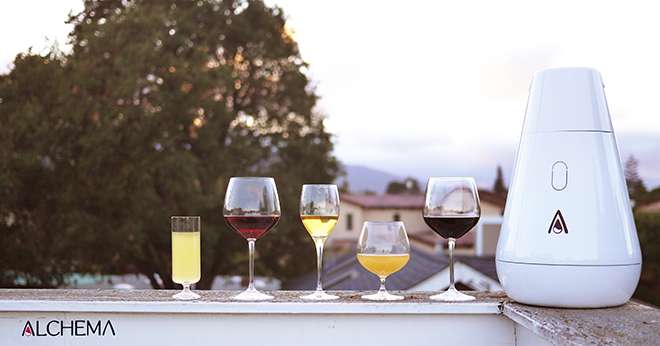
Smart wine-making technology enables intelligent control of the fermentation process. Some systems automate temperature control using heating elements or cooling units. They can also activate a pump to mix the must.
The mobile app allows users to set parameters, schedule fermentation stages, and receive alerts in case of deviations. This automation helps prevent human error and reduces the need for physical monitoring, especially at night or on weekends.
Data to refine methods
With connected cellar devices, we’re building a true digital logbook. Each vintage generates graphs, notes, and feedback. This helps us identify what works—and what doesn’t—and adjust the winemaking process for the next batch.
For example, if the pH is too high at the end of fermentation, it can be corrected with a slight acidification. If the specific gravity drops too quickly, it may indicate that the fermentation is generating too much heat. Each piece of data serves as a reference point for the next vintage.
Traceability and remote monitoring
Imagine being able to check on the progress of your fermentations from your phone, even from the other side of the world. This is now possible thanks to connected cellar devices and mobile connectivity.
These tools also provide full traceability. Every stage of the winemaking process is documented: date of transfer to the tank, average temperature, fermentation duration, temperature fluctuations, etc. If a problem arises, you can review the history and identify the source.
Smart alarms: a valuable asset
Smart devices often include smart alerts. These alerts notify you if the temperature is too low or too high, if the pH is outside the acceptable range, or if the density remains unchanged.
These notifications reduce your mental workload. You no longer need to constantly monitor your fermenters. You receive an alert in case of an emergency. This allows you to take action early and prevent partial or total failure.
A guide to tasting and optimization
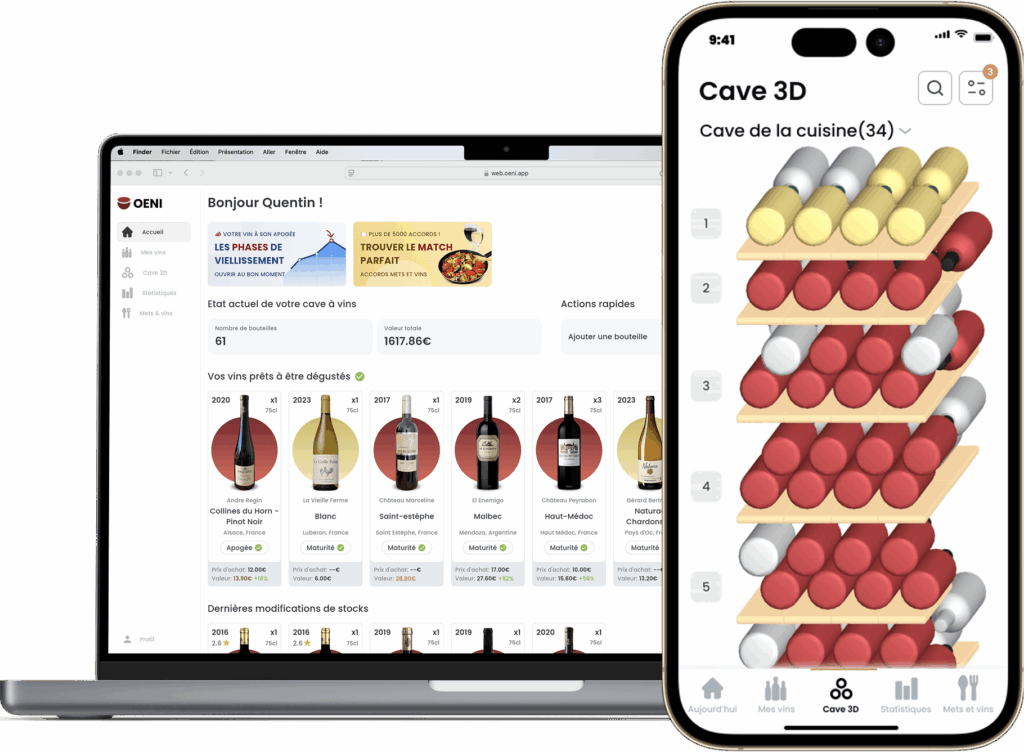
Some advanced systems use historical data to provide personalized recommendations. The app can indicate the best time to rack, stabilize, clarify, or bottle.
It can also help you identify fermentation profiles suited to your style: fruity, spicy, full-bodied, or light. The data analysis then serves as a decision-making tool and a guide for structuring your winemaking process.
Integration into the fan community
Smart wine technology also fosters a virtual community. On some apps, you can compare your progress charts with those of other amateur winemakers. You can also post comments on each step, exchange tips, or ask for feedback.
This networking provides both support and learning opportunities. You can learn from others’ mistakes and successes. This fosters a spirit of healthy competition and collective growth.
Affordability and technological choices
Winemaking sensors are becoming increasingly affordable. Complete kits are available starting at around a hundred euros. While some remain high-end, several low-cost versions already offer sufficient accuracy for amateur use.
Setting up a small home winery doesn’t require the same budget as a professional winery. This makes connected winemaking accessible to more amateur winemakers.
Limits to keep in mind
Of course, technology cannot replace sensory observation. Understanding the aroma of the must, observing the color, and assessing the texture of the wine remain essential. Connected devices are tools, not judges.
On the other hand, a malfunction, a faulty connection, or a cable error can skew the data. It is therefore necessary to perform regular manual checks, especially during critical moments such as tapping.
The Future of Home Winemaking
In the future, connected wine technologies will go even further. Nanosensors could measure free oxygen, volatile compounds, or alcohol in real time. Artificial intelligence will be able to identify aromatic profiles and recommend precise interventions.
Blockchain technology could ensure complete traceability, from harvest to the tasting glass. Every batch of must would be audited, analyzed, and evaluated.
Develop the right habits to get off to a good start
A few tips for getting started on this connected adventure:
Start with a basic kit: temperature + density.
Install the sensors according to the recommendations, ensuring they are fully submerged and stable.
Connect and test the app before harvest.
Record your methods and decisions as you work.
Compare data from multiple vintages to refine your protocol.
Share your results with a community to make progress together.
A revolution driven by passion
Smart wine cellar devices serve as a showcase for innovation. They make professional techniques accessible to everyone. They streamline the process. They enhance control over critical parameters. Finally, they transform what is often an empirical passion into a structured scientific approach.
But above all, they open up new possibilities for amateur winemakers. These winemakers become knowledgeable practitioners, capable of producing wines that are consistent, balanced, and true to their terroir. They can tell a story that comes to life in every glass.
If you enjoyed this article, be sure to check out the next one: “Cooking with Wine: Basic Rules and Mistakes to Avoid,” which you might also find interesting!