

The idea seems crazy, almost provocative: cloning a grand cru to replicate its taste, aroma, and structure. Yet scientific advances make this ambition technically feasible. But is it desirable? And above all, is it possible, given its complexity? Today, wine research is exploring surprising avenues, balancing innovation with respect for the terroir.
If you're interested in wine-related articles, download our app for IOS or Android. It will give you access to our wine lexicon, our articles and our innovative solution, designed for all wine consumers and collectors.
Cloning in viticulture: a well-established practice
In the world of wine, the term “cloning” is nothing new. Nursery growers already practice plant cloning. They reproduce identical vines from a carefully selected mother plant. This process makes it possible to propagate a plant with desirable characteristics, such as resistance, yield, or aromatic profile.
This type of wine cloning therefore involves the plant itself, not yet the finished product. The cloned vine grows in different soil and under different climatic conditions. It never produces exactly the same wine. The genome remains identical, but the result differs.
The central role of terroir
The real challenge of experimental winemaking is to go beyond the genetic aspect. After all, a great wine is not defined solely by its grape variety. It depends on the soil, the climate, the exposure, and the altitude. It also depends on human intervention, the timing of the harvest, and the choice of aging vessels.
Even if you clone the grape variety and replicate the winemaker’s techniques, you won’t get the same wine. Wine cloning doesn’t capture the terroir. It replicates the vine, not the soul of the place. Every detail, even the invisible ones, influences the final taste.
Breeding attempts around the world
Some experiments have already been conducted. In California, researchers attempted to recreate the conditions under which Bordeaux grand cru wines are produced. They planted the same grape varieties and followed the same protocols. The result: a high-quality wine, but with a different profile.
Other projects aim to replant heirloom grape varieties using rediscovered clones. Viticultural research relies on plant gene banks to revive forgotten grape varieties. These new wines are part of a heritage-based approach, not an industrial one.
This is what we call experimental wine, but within an ethical framework. The goal remains to enhance diversity, not to create a perfect replica.
The Scientific Limits of Wine Cloning

Even as genetics advances, wine cloning faces technical limitations. It is possible to replicate a grape variety, but not the weather conditions of a particular vintage. It is also impossible to standardize natural fermentation. The native yeasts, unique to each winery, vary depending on the environment.
Furthermore, the aging of wine depends on many factors. Temperature, humidity, type of wood, and aging time: all these elements influence the final structure. Science can isolate certain parameters, but not all of them.
Wine research therefore works with partial models. Its goal is to understand, not to reproduce things exactly.
Cloning a Grand Cru: A Matter of Philosophy
Behind the technical aspects lies a question of meaning. Should we strive to replicate a legendary wine, or respect its uniqueness? Wine is distinguished precisely by its variability. Even a single vineyard produces different vintages each year. That is what makes each vintage unique.
Experimental wine isn't necessarily intended to produce a clone. It allows winemakers to test new blends, new techniques, and even new regions. It paves the way for innovation without compromising authenticity.
Practical applications of viticultural research
Today, viticultural research is helping to adapt grape varieties to climate change. Thanks to plant cloning, winemakers can select vines that are more resistant to heat or drought. This ensures the survival of vineyards without compromising their identity.
Other research focuses on reducing inputs, disease management, and understanding aromas. Wine cloning, in the broadest sense, allows for better control of biological parameters. It does not replace the winemaker; rather, it helps them meet new challenges.
Experimental wine: a laboratory for the future
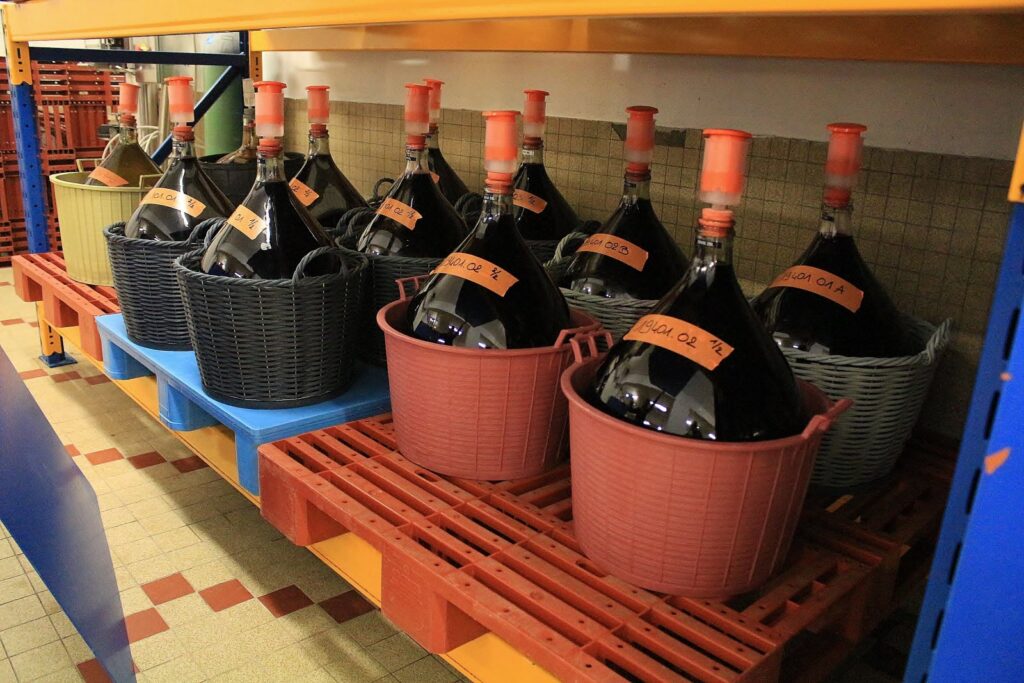
Experimental wine also serves to explore innovative approaches. We are testing fermentation in amphorae, underwater aging, and hybrid grape varieties. These experiments enrich our expertise and pave the way for future generations.
Some of the wines produced as a result of this research appeal to a curious audience. Wine lovers appreciate this boldness. They want to discover something other than the classics. Experimental wine has become a realm of freedom.
What should we make of these “cloned” wine projects?
Some projects aim to recreate a specific flavor based on chemical data. They analyze a fine wine, break down its aromas, and then attempt to replicate it in the laboratory. These projects are the subject of debate.
Can we still talk about wine if the vineyard disappears? Can we recreate an emotion without history, without a place, without culture? Wine cloning, in this industrial form, challenges our relationship with living things. It calls into question the value of wine as a product of the terroir.
A balance between science and tradition
The future of wine will undoubtedly hinge on a balance between experimentation and tradition. Viticultural research sheds light on the mysteries of winemaking. It supports winemakers as they navigate the challenges of climate change. But it must not overshadow the emotion, the unexpected, or the human touch.
Cloning a grand cru, strictly speaking, therefore seems illusory. Reproducing its excellence, its balance, and its character remains an ideal. It is an inspiring model, but one that cannot be replicated exactly.
If you enjoyed this article, be sure to check out the next one: “Building a wine cellar for special occasions,” which you might also find interesting!