
Knowing when to open a bottle is one of the greatest challenges for wine lovers. Open it too early, and the wine seems closed off. Open it too late, and it loses its vibrancy. Finding the perfect moment requires extensive experience and close attention. Today, technology is simplifying this task. Thanks to wine AI, it’s now possible to predict how a bottle will evolve with unprecedented precision.
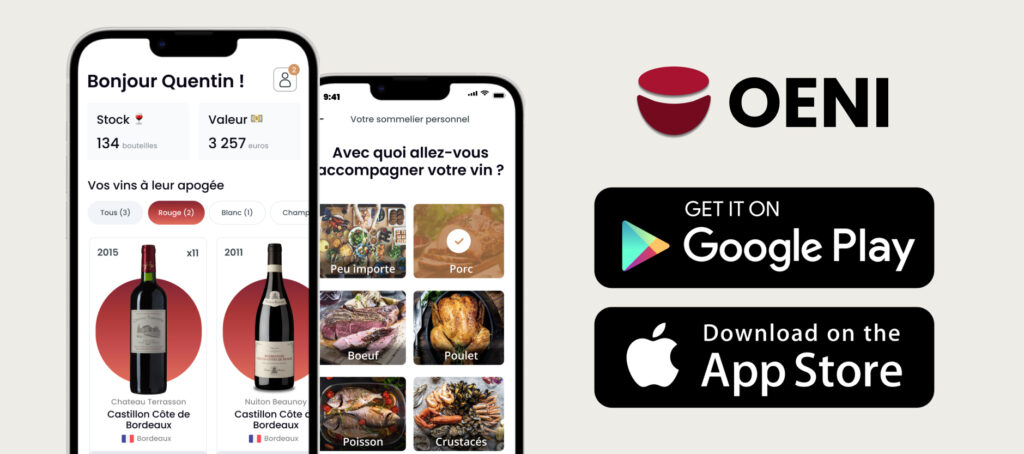
If you're interested in wine-related articles, download our app for IOS or Android. It will give you access to our wine lexicon, our articles and our innovative solution, designed for all wine consumers and collectors.
Understanding the concept of a wine’s maturity
A wine goes through various stages. It may be young, promising, or closed, and then reach a peak of balance. This peak marks the wine’s maturity. It is at this point that its aromas, structure, and acidity come together in perfect harmony.
This peak period varies depending on the grape variety, the vintage, the aging process, and how the wine is stored. Oenological technology now makes it possible to analyze all these factors. The goal is to determine exactly when a bottle reaches its full potential.
How AI is used in wine cellar management
Wine AI is based on data analysis. It takes into account thousands of variables: storage temperature, humidity, wine type, vintage, grape variety, bottle size, aging method…
This data feeds into algorithms capable of modeling a wine’s evolution. The AI predicts an aging curve. It identifies the optimal time to drink the wine. It adjusts its predictions based on actual storage conditions.
Machine learning for hobbyists
One of the most powerful tools in wine AI is machine learning. Every tasting entry made by a user enriches the database. The algorithm learns, refines its calculations, and improves its predictions.
Are you opening a bottle that’s too young? Do you notice a lack of balance? The AI adjusts its curve. It takes your feedback and similar profiles into account. It becomes more accurate the more you use it.
Smart solutions for tracking your bottles
Today, many apps and smart wine cellars use this wine-making technology. They track each bottle, monitor its temperature and humidity levels, and alert you when the wine is nearing its peak.
You receive notifications. You can schedule your tastings. You avoid opening bottles too early or too late. Your wine cellar becomes smart, dynamic, and perfectly managed.
Choose wines based on their profile
Not all wines age in the same way. A tannic red wine may need ten years to age. A crisp white wine is sometimes ready to drink as early as its second year. The wine AI takes these specific profiles into account.
It distinguishes between slow changes, rapid spikes, and periods of closure. This oenological technology is becoming a valuable tool for tailoring your purchases, organizing your tastings, or even planning your meals.
A tool that's just as useful for professionals
Sommeliers, wine merchants, and restaurant owners also use wine AI. It helps them manage their inventory, advise their customers, and refine their wine lists. This allows them to minimize losses and maximize the quality of their service.
By knowing the maturity level of each bottle, they provide an optimized experience. The customer discovers a wine at its peak. They are left with a lasting impression, true to the winemaker’s vision.
A constantly expanding scientific database
Behind these tools lies an impressive amount of data. Oenological technology incorporates research findings, producers’ observations, tasters’ notes, and climate trends.
This database is updated in real time. It evolves with each vintage. It becomes more relevant and nuanced. It bridges the gap between the science of taste and the passion of wine enthusiasts.
Getting more out of your home wine cellar
With wine AI, every bottle takes on new value. You know its potential. You track its development. You make informed decisions.
This turns wine cellar management into a daily pleasure. You plan ahead. You organize. You open the right bottles at the right time. Your cellar becomes a lively, dynamic space, managed with finesse.
Guidelines to Follow
AI isn't infallible. It offers predictions, not guarantees. Some wines may develop in unexpected ways. Corks, shipping, or defects can affect the outcome.
But in most cases, winemaking technology provides reliable and consistent support. It reduces risks, improves accuracy, and gives you solid benchmarks.
A blend of tradition and innovation
For a long time, wine cellar management has relied on experience. Today, it is enhanced by technology. Wine AI doesn’t replace passion—it complements it. It offers practical tools to help you enjoy wine more fully in your daily life.
It guides beginners, helps the curious, and supports experts. It bridges the gap between intuition and data. It opens a new chapter in the art of aging wine.
If you enjoyed this article, be sure to check out the next one: “Choosing a wine at a restaurant: avoiding common mistakes,” which you might also find interesting!