Résumer cet article avec
Understanding the different terms on a wine label helps you choose your bottle more wisely. Classifications such as AOC, IGP, and Vin de France shape the wine’s style, origin, and price. Here’s a clear guide to help you make sense of the differences.
Wine classification: a hierarchy of quality and origin
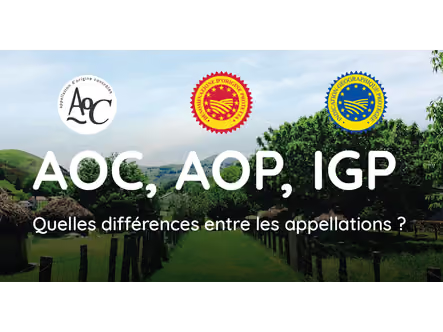
In France, wine classification is based on a system governed by European law. It has three main levels. Each one reflects a different degree of connection between the wine, its terroir, and the production rules. These categories guarantee the wine’s origin and quality.
The system promotes transparency for consumers. It also helps showcase regional know-how. Knowing these labels helps you make an informed choice, based on your expectations and budget.
AOC: the pinnacle of wine classification
The Appellation d’Origine Contrôlée (AOC) represents the strictest level. It guarantees that the wine comes from a precise geographic area and follows strict rules. These cover grape varieties, parcel size, winemaking methods, and yields.
Each AOC expresses the identity of a terroir. A Bordeaux or Chablis wine can only exist by respecting its specifications. This label demands a strong link between the soil, the climate, and the work of the winegrower.
Among the famous AOCs, you’ll find Pauillac, Hermitage, Châteauneuf-du-Pape, and Sancerre. These names often reassure wine lovers looking for wines with character and authenticity.
IGP wine: a smart balance between freedom and origin
The Indication Géographique Protégée (IGP wine) offers more flexibility. The wine must come from a defined geographic area, but the rules are looser. The winegrower can choose from more grape varieties and adapt their methods to suit their preferences.
IGP wine brings together creativity and traceability. It’s an excellent choice if you want to explore different wines while keeping a regional anchor. Think of IGP Méditerranée, Pays d’Oc, or Val de Loire.
These wines often offer excellent value for money. They’re ideal for curious wine lovers eager to discover a wide range of aromatic profiles.
Vin de France: freedom above all
Vin de France is the most flexible category. The winegrower can blend grapes from anywhere in France, without being tied to a specific origin. They can also use grape varieties not authorized in AOCs or IGPs.
This level offers enormous flexibility when it comes to creation. You’ll find innovative cuvées, natural wines, and unusual blends here. With fewer constraints, the results can be surprising.
However, Vin de France does not mention a region on the label. Only the grape varieties, vintage, and producer’s name appear. For lovers of freedom and discovery, these wines deserve your full attention.
What criteria distinguish AOC, IGP, and Vin de France?
The wine classification is based on three main criteria:
- The geographic area of origin
- The authorized grape varieties
- Cultivation and winemaking practices
AOC imposes a strong regional identity, while IGP wine combines origin and freedom. Vin de France, meanwhile, favors inventiveness and diversity.
Depending on your goal — whether you want to discover a terroir, explore a grape variety, or try an original style — these labels will guide you.
Which label should you choose based on your preferences?
Lovers of tradition and authenticity will gravitate toward an AOC. This label suits refined meals, formal occasions, or gifts.
IGP wine will appeal to those looking for an approachable, generous, well-made wine. It’s a great choice for simple meals or aperitifs with friends.
Vin de France is for the explorer. The one who likes to go off the beaten path, try new aromatic profiles, and support innovative craftsmanship.
A wine world in constant evolution
In recent years, well-known winegrowers have deliberately chosen to produce under the Vin de France designation. They reject appellation constraints in favor of creativity. Some major names in natural wine have adopted this approach.
Likewise, some IGP wine categories are gaining in quality and reputation. They’re becoming benchmarks, sometimes even at the expense of certain less rigorous AOCs.
Wine classification evolves over time. It adapts to market expectations, viticultural innovation, and climate realities.
The consumer at the heart of the system
Today, consumers are more informed than ever. They no longer rely on the label alone. They want to understand what they’re drinking, know where the grapes come from, and how the wine was made.
The distinction between AOC, IGP wine, and Vin de France helps decode that information. This simple reference point becomes an entryway into the complex world of wine.
Choosing a wine is no longer just about price or brand. It also reflects a philosophy, a way of drinking, and sometimes a commitment.
If you enjoyed this article, don’t hesitate to read the next one, "California wines: a wealth of terroirs and flavors", which may also interest you!