Résumer cet article avec
The democratization of technology now makes small-scale winemaking easier than ever. Connected cellar devices are changing the way anyone can manage their own production. Thanks to sensors, mobile apps, and automated alerts, both beginners and experienced enthusiasts gain in precision.
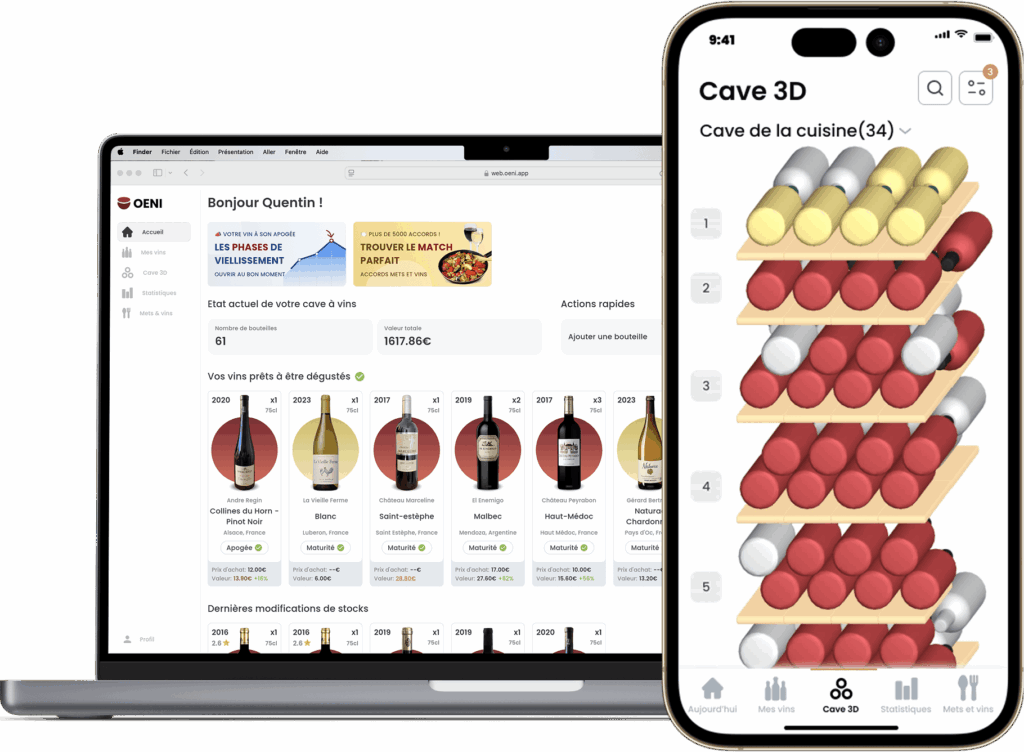
If articles about the wine world interest you, download our app on iOS or Android. It gives you access to our wine glossary, our articles, and our innovative solution, designed for every wine consumer and collector.
Winemaking sensors for monitoring key parameters
At the heart of this revolution are winemaking sensors. These small connected devices measure temperature, density (°Brix), pH, and even humidity levels in real time. Installed directly in the must or in the tanks, they send data to an app. The amateur winemaker can then track fermentation remotely. You can react quickly if something goes wrong, such as a start of refermentation or a temperature drop.
These sensors replace manual readings, which are prone to error. They deliver precision that comes close to professional setups. They also keep a centralized, secure history. The first benefit is greater confidence in the winemaking process.
What role do connected devices play in home winemaking?

Connected wine technology allows for intelligent fermentation control. Some systems automate temperature management through heating elements or cooling units. They can also activate a pump to homogenize the must.
The mobile app lets you adjust settings, program fermentation stages, and receive an alert if anything drifts off course. This automation avoids human error and reduces hands-on monitoring, especially overnight or on weekends.
Data to refine your methods
With connected cellar devices, you build a true digital logbook. Every vintage generates charts, notes, and feedback. That makes it easier to identify what works, what doesn't, and to adjust the next winemaking cycle accordingly.
For example, a pH that's too high at the end of fermentation can be corrected with a light acidification. Density that drops too quickly may signal fermentation that's running too hot. Every data point becomes a benchmark for the next cuvée.
Traceability and remote monitoring
Imagine being able to check the progress of your fermentations from your phone, on the other side of the world. That's now possible thanks to connected cellar devices and mobile connectivity.
These tools also provide complete traceability. Every stage of the winemaking process is documented: tanking date, average temperature, fermentation duration, stages, and more. If a problem arises, you can trace the history back and understand the source.
Smart alarms: a valuable asset
Connected devices often include smart alerts. They warn you if the temperature is too low or too high, if pH falls outside tolerance, or if density stalls.
These notifications lighten the mental load. You no longer need to watch your fermenters constantly. You get an alert in an emergency. That lets you step in early and avoid a partial or total failure.
Help with tasting and optimization
Some advanced systems use historical data to offer personalized advice. The app can point you to the right moment to rack, stabilize, fine-tune, clarify, or bottle.
It can also guide you toward fermentation profiles suited to your style: fruity, spicy, round, or light. Data analysis then becomes a decision-making tool and a guide for structuring your winemaking process.
Joining the community of enthusiasts
Connected wine technology also creates a virtual community. On some apps, you can compare your charts with those of other amateur winemakers. You can also post comments on each stage, exchange advice, or ask for feedback.
This kind of networking brings both support and learning. You benefit from other people's mistakes and successes. It creates momentum and a shared drive to improve.
Financial accessibility and technology choices
Winemaking sensors are becoming more affordable all the time. You can find complete kits starting at a few hundred euros. While some remain high-end, several low-cost versions already offer satisfying precision for amateur use.
To outfit a small workshop, you don't need the same budget as a professional cellar. That makes connected winemaking accessible to more amateur winemakers.
Limits to keep in mind
Of course, technology doesn't replace sensory observation. Understanding the smell of the must, watching the color, and feeling the texture of the wine remain essential. Connected devices are tools, not judges.
On the other hand, a breakdown, a faulty connection, or a cable error can distort the data. Regular manual checks are still necessary, especially during critical moments such as racking.
The future of home winemaking
Tomorrow, connected wine technologies will go even further. Nanosensors could measure free oxygen, volatile compounds, or alcohol in real time. Artificial intelligence could identify aromatic profiles and recommend fine-tuned interventions.
Blockchain could ensure complete traceability, from harvest to the tasting glass. Every ladleful of must would be audited, analyzed, and valued.
Adopting the right habits to get started
A few tips to help you launch this connected adventure: Start with a basic kit: temperature + density. Install the sensors according to the recommendations, fully immersed and stable. Connect and test the app before harvest. Note your methods and decisions when you intervene. Compare data from several vintages to refine your protocol. Share your results within a community so you can progress together.
A revolution in the service of passion
Connected cellar devices are a showcase for innovation. They make professional techniques easier to understand. They make the process more rigorous. They strengthen control over critical parameters. And above all, they turn a passion that is often empirical into a structured scientific approach.
Most of all, they open up new possibilities for amateur winemakers. They become informed actors, able to produce wines that are coherent, balanced, and expressive of their terroir. They can tell a story that becomes tangible in every glass.
If you enjoyed this article, don't hesitate to read the next one, "Cooking with wine: basic rules and mistakes to avoid", which might interest you too!