Résumer cet article avec
Organizing your wine cellar is essential if you want to preserve the quality of your bottles. Good wine cellar management helps you make the most of your space and ensures ideal conditions for aging. Here are practical tips to help you organize your home wine cellar successfully.
Choose the Ideal Location for Your Wine Cellar
Location is crucial if you want a wine cellar that’s both practical and perfectly suited to preserving wine. Avoid rooms near heat sources such as the kitchen or living room. Good wine cellar management starts with choosing the right place.
Why Are Storage Conditions So Important?
Wine is a living liquid: every change in its environment speeds up or slows down its evolution. Here are the 4 non-negotiable physical criteria.
1. Temperature: 10-14°C, stable
A rise of 8°C doubles the chemical aging speed of wine. At 20°C, a Bordeaux built for 20 years of aging can mature in 10 years — but poorly, with cooked aromas and a loss of freshness. Below 8°C, the wine goes dormant and stops evolving.
2. Humidity: 60-80 %
Below 50%, the cork dries out, lets air in, and oxidizes the wine within a few months. Above 85%, labels mold and corks swell. A hygrometer (10–30 €) is enough to keep an eye on this factor.
3. Total Darkness
UV rays damage polyphenols and tannins, creating a “light-struck” taste (a cardboard or sulfur note). Dark glass bottles offer partial protection, but darkness remains the best defense.
4. Horizontal Position
Storing a bottle on its side keeps the cork in constant contact with the wine. Upright, the cork dries out in 3 to 6 months and lets oxygen in. Exception: screw-cap bottles can be stored upright.
Optimize Your Storage Space
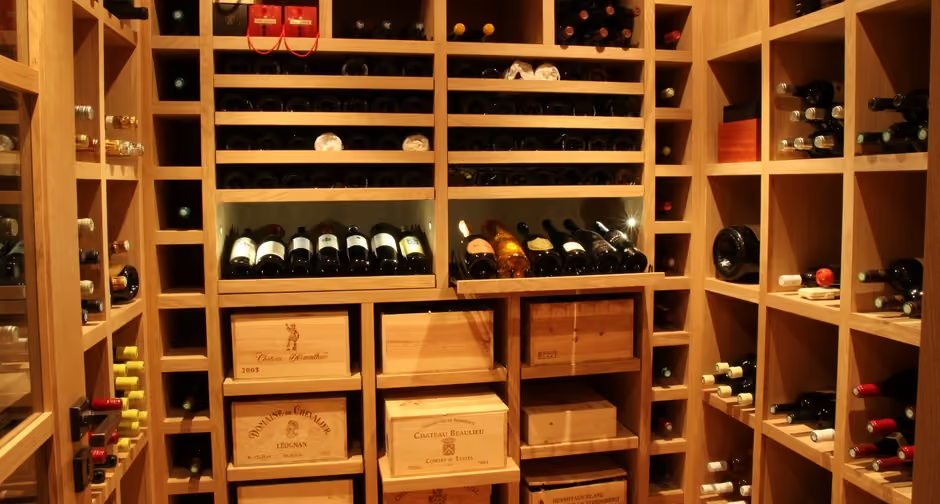
Efficient storage makes it easier to access your bottles. Organize your cellar by wine type, region, or vintage. Use suitable shelving to keep bottles from rolling or falling. Stackable racks are an excellent solution for a structured wine cellar organization system.
Plan a Detailed Inventory
Keep a record of the bottles you have on hand. Note details such as vintage, region, and purchase date. Wine cellar management apps exist to digitize your inventory. They help you track what you drink and plan future purchases.
Create a Bottle Rotation System
A good rotation system keeps you from letting some wines age too long. Sort your bottles by drinking order. Keep wines you want to drink soon within easy reach. It streamlines your wine cellar management by limiting losses.
Distinguish Age-Worthy Wines from Wines to Drink Soon
Identify wines with long aging potential and those ready to enjoy now. Wines built for aging should be stored in stable areas, while bottles ready to drink can be kept near the cellar entrance.
Secure Your Wine Cellar
For enthusiasts with rare or expensive bottles, security matters. Invest in a lock or a monitoring system. It gives you peace of mind and protects your precious vintages.
Maintain Your Cellar Regularly
Good maintenance extends the life of your bottles and your equipment. Clean the shelves and check the condition of the corks. Monitor changes in temperature and humidity. Successful wine cellar organization depends on careful upkeep.
Adapt Your Cellar to Your Collection
If your collection grows, rethink your cellar layout. Add shelving or invest in an electric wine cellar. These units offer precise control over storage conditions, ideal for modern wine cellar management.
Use Accessories for Better Wine Cellar Organization
Bottle labels or rack markers make it easier to identify wines. Angled supports let you read labels quickly without moving the bottles. These small details improve both management and organization.
Extra Tips for Successful Wine Cellar Management
- Store bottles horizontally : This keeps the cork moist and helps prevent oxidation.
- Buy in reasonable quantities : Match your purchases to the space you have so clutter doesn’t build up.
- Follow sommelier advice : It helps you choose wines that suit your cellar.
In Summary: Which Organization System Is Right for Your Cellar?
This table compares the various storage and organization systems so you can get a clear overview of the different options. The best system combines physical storage suited to your space AND digital tracking (inventory, maturity alerts, pairings).
If you enjoyed this article, don’t hesitate to read the next one, "How Do You Open an Old Bottle of Wine?", which may also interest you!
FAQ
What is the ideal temperature for a wine cellar?
Between 10 and 14°C, with absolute stability. Sudden swings (> 5°C in 24h) are more harmful than a slightly higher but constant temperature. The ideal is 12°C for age-worthy red wines, 10°C for whites and Champagne.
Can you organize a wine cellar in an apartment without a cellar?
Yes. A climate-controlled cabinet (300–2 000 €) recreates ideal conditions: temperature of 10–14°C, humidity of 60–80%, and darkness. Compact models (40–80 bottles) fit into a hallway or a corner of the living room.
Should all bottles be stored on their side?
Only bottles with cork closures. Screw-cap bottles (Alsatian Riesling, New Zealand Sauvignon) can be stored upright without any risk of oxidation.
How do you know when to open a bottle?
Every wine has a peak drinking window: the period when it shows its best. A Beaujolais Villages should be drunk within 2 years; a Pauillac 2016 will reach its peak around 2030–2040. The Oeni app automatically calculates these windows for every bottle in your cellar.
How many bottles can you store in an apartment?
A standard climate-controlled cabinet (60 cm wide) holds 80–150 bottles. For 200–300 bottles, plan on a double cabinet or a dedicated space (fitted closet, shared cellar).
Do you need a hygrometer in your cellar?
Yes, it’s the most cost-effective investment (15–30 €). It helps you spot humidity that’s too low (cork risk) or too high (mold) before the damage becomes irreversible.
How should you sort your wines: by region, vintage, or occasion?
By region for beginners (intuitive), by vintage for collectors (aging tracking), and by occasion for food lovers (aperitif, meal, gift). Oeni lets you combine all three systems in a single digital inventory.
Can Oeni replace a paper register?
Yes, and with far more features: label scanning, maturity alerts, value estimates, food and wine pairing suggestions, and tasting history. The app is free for basic features.