Résumer cet article avec
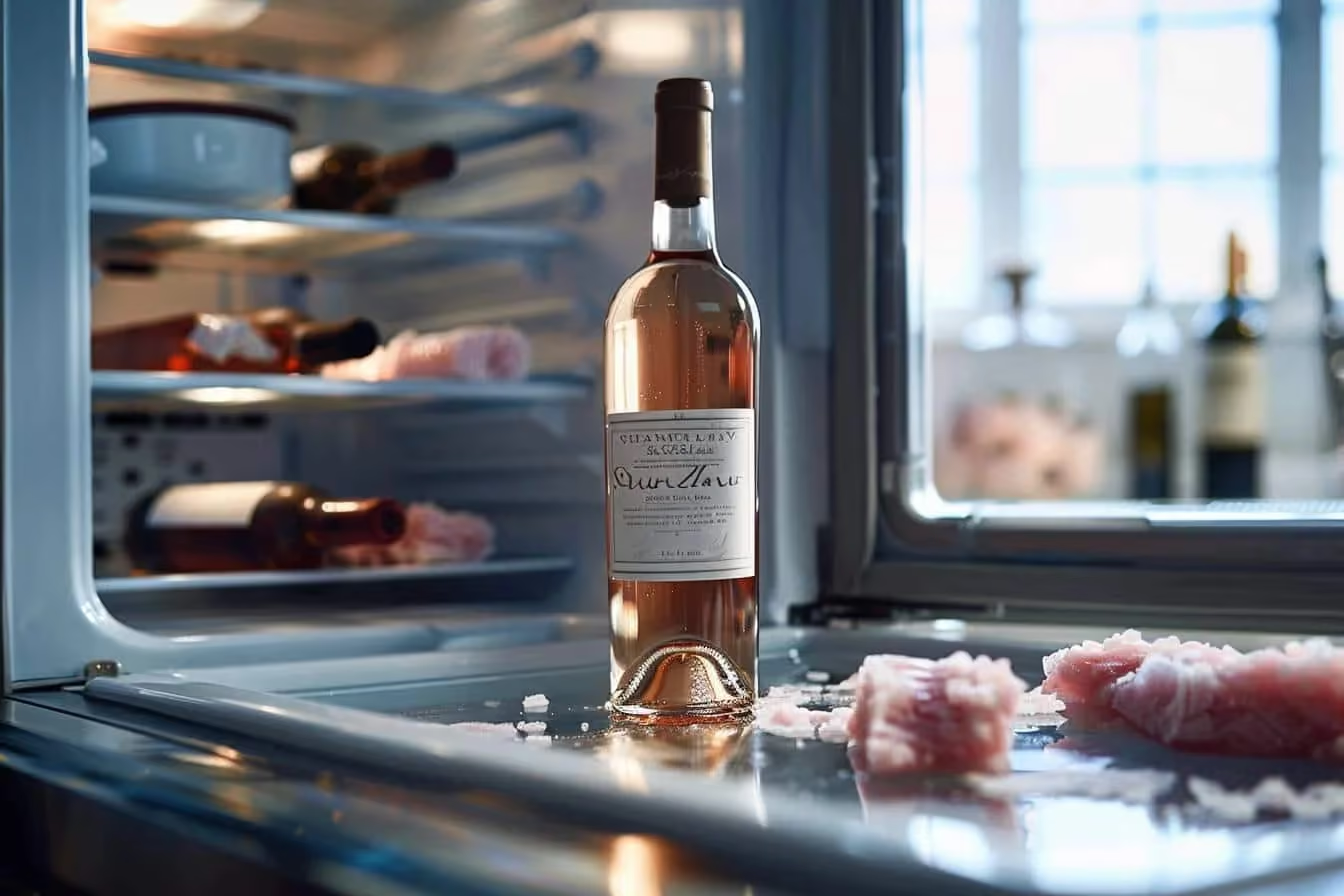
Many wine lovers store their bottles all over the place. But keeping wine near a freezer comes with risks. Temperature swings and vibration can damage your collection. Let’s take a closer look at why storing wine near a freezer is a problem.
If you’re interested in articles about the world of wine, download our app on iOS or Android. It gives you access to our wine glossary, our articles, and our innovative solution, designed for every wine consumer and collector.
The harmful effects of heat
Storing wine in an apartment near a freezer often means placing it close to a heat source. Compressors, pipes, and vents give off heat while running. Wine doesn’t tolerate temperatures above 20°C. These extremes can lead to premature aging or oxidation.
What’s more, daily or seasonal shifts intensify heat stress. A sudden burst of heat when the freezer kicks on can weaken the label, the cork level, or the wine’s flavor. Quality storage then becomes difficult.
Why wine cellar temperature needs to stay stable
An ideal cellar keeps a temperature around 12°C. It also has very little fluctuation, ideally ±2°C. That way, the wine preserves its balance, acidity, aromas, and cork. Any sudden change starts to erode its quality.
By contrast, a freezer can raise the ambient temperature by several degrees around it. Even if the bottle sits just a few inches away, it still absorbs the heat given off. The thermal range widens and damages the wine over time.
The effect of vibration on wine
A freezer uses a compressor that runs in cycles. Each start-up creates a small vibration. It may seem harmless. Yet constant vibration disturbs the natural sediment. It speeds up micro-oxidation. The wine turns cloudy and loses finesse. A stable position is essential to preserve its quality.
Humidity, an often overlooked factor

Alongside temperature, humidity also plays a major role. Ideal apartment wine storage keeps humidity around 60–75%. But a household freezer dries out the surrounding air. A dry environment causes the cork to shrink. From there, air seeps in, the capsule oxidizes, and the wine deteriorates prematurely.
Special case: the nearby refrigerator
You might think a refrigerator causes similar problems. In practice, it doesn’t. The heat it gives off is localized at the top of the appliance. If the bottle stays at a distance of at least 20 cm, the effect remains moderate. A freezer, on the other hand, has a more powerful motor. The thermal impact is greater.
Easy solutions for better storage
Create a thermal barrier: place a piece of furniture or a cabinet between the freezer and the bottles. This limits heat transfer.
Choose a cool spot first: pick a bright but temperate room, away from household appliances.
Go for an urban wine cellar: compact and refrigerated, this solution offers true, stable wine cellar temperature without excess heat.
Check the ambient temperature with a hygrometer-thermometer. That lets you monitor the conditions day after day.
If you’re short on space
A small apartment limits your options. Still, a closet and a thermal curtain are often enough. The curtain helps keep heat from spreading. You can also store your bottles in a shared cellar or with a friend. The key is to avoid hot or damp areas.
Why you should avoid utility areas
Utility rooms such as kitchens, laundry rooms, and pantries often generate heat and humidity. Between a freezer and a warming tray, temperatures fluctuate too much. Wine needs a calm, stable environment. It deserves a dedicated room, or a fitted space away from household appliances.
If you enjoyed this article, don’t hesitate to read the next one, "Why do some collectors buy bottles without ever opening them?", which might interest you too!