Résumer cet article avec
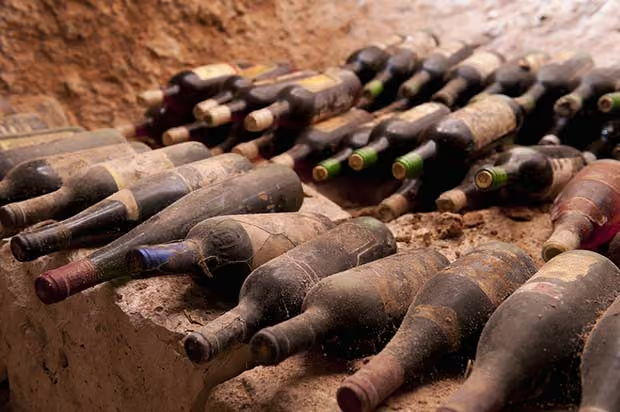
Aging wines are a special category of wines capable of maturing for several years while improving their qualities. Their aging potential makes them a favorite among wine lovers and collectors.
What Is an Aging Wine?

An aging wine is a wine designed to evolve beautifully over time, developing new aromas and refining its structure.
1. The characteristics of an aging wine
- Tannic structure: Red wines with powerful tannins age better.
- Acidity: Good acidity helps wines stay fresh and balanced.
- Aromatic potential: Aging wines develop complex aromas over time.
2. How it differs from wines meant to be drunk young
Unlike wines meant for immediate drinking, aging wines need several years to reach their peak.
How do you choose aging wines?
1. Select the right grape varieties
- Red grapes: Cabernet Sauvignon, Syrah, Nebbiolo, Malbec.
- White grapes: Riesling, Chardonnay, Chenin Blanc.
2. Choose renowned regions
- Bordeaux: Grands Crus classés, famous for their longevity.
- Burgundy: The reds of the Côte de Nuits and the whites of Meursault are highly sought after.
- Piedmont (Italy): Barolo and Barbaresco, made from Nebbiolo, age beautifully.
3. Check the vintages
The vintage plays a crucial role in aging potential. Learn which years were especially favorable for each region.
4. Trust respected producers
Great domaines and châteaux have a better command of winemaking techniques, allowing them to produce aging wines.
The steps of good wine cellar management
1. Maintain a constant temperature
Ideal: Between 12 and 14 °C. Problem: Temperature swings speed up aging.
2. Control humidity
Ideal range: Between 70 and 80%. Impact: Humidity that’s too low dries out corks, while excessive humidity encourages mold.
3. Avoid light
Risk: UV rays can alter a wine’s aromas and color. Solution: Keep your bottles in the dark or use UV-protective display cases.
4. Position the bottles correctly
On their side: The wine should stay in contact with the cork so it doesn’t dry out.
5. Use cellar management tools
- Dedicated apps: Track your bottles’ evolution and their peak drinking window.
- Labeling: Note the essential details for each wine (year, peak drinking window, grape variety).
Wine aging: what you need to know
1. How aromas evolve
Over time, primary aromas (fruity) give way to secondary aromas (oaky) and tertiary aromas (spiced, smoky, truffle-like).
2. Ideal aging duration
- Tannic red wines: 10 to 20 years (example: Bordeaux, Barolo).
- Dry white wines: 5 to 10 years (example: Meursault, Riesling).
- Off-dry or sweet wines: 15 to 50 years (example: Sauternes, Tokaji).
3. Identifying a wine’s peak
Peak is the moment when a wine reaches the perfect balance between aromas, structure, and maturity.
Mistakes to avoid with aging wines
- Storing bottles poorly: Improper storage can ruin an aging wine, even one from a great vintage.
- Waiting too long: A wine kept beyond its peak loses its qualities and often turns flat.
- Neglecting to open it properly: Some aging wines need extended aeration to reveal their aromas. Decant them carefully.
Food and wine pairings with aging wines
1. Red wines
Examples: Bordeaux or Barolo. Pairings: Red meats, game, sauced dishes.
2. White wines
Examples: Meursault or Riesling. Pairings: Fish, poultry, cream-based dishes.
3. Sweet wines
Examples: Sauternes or Tokaji. Pairings: Blue cheeses, fruit desserts, foie gras.
Trends around aging wines
1. A return to traditional practices
Natural and biodynamic wines are growing in popularity for their ability to age without additives.
2. Interest in emerging regions
Less well-known regions, such as Croatia or Greece, are now producing interesting aging wines.
3. Modern solutions for wine cellar management
Connected cellars let you track your bottles’ evolution in real time.
Conclusion
Choosing and storing aging wines takes patience and special care. Good wine cellar management and ideal conditions let you appreciate the full potential of wine aging. Take the time to get to know your bottles so you can drink them at exactly the right time.
If you enjoyed this article, don't hesitate to read the next one, "Current Trends in the Fine Wine Market in 2024", which may also interest you!